
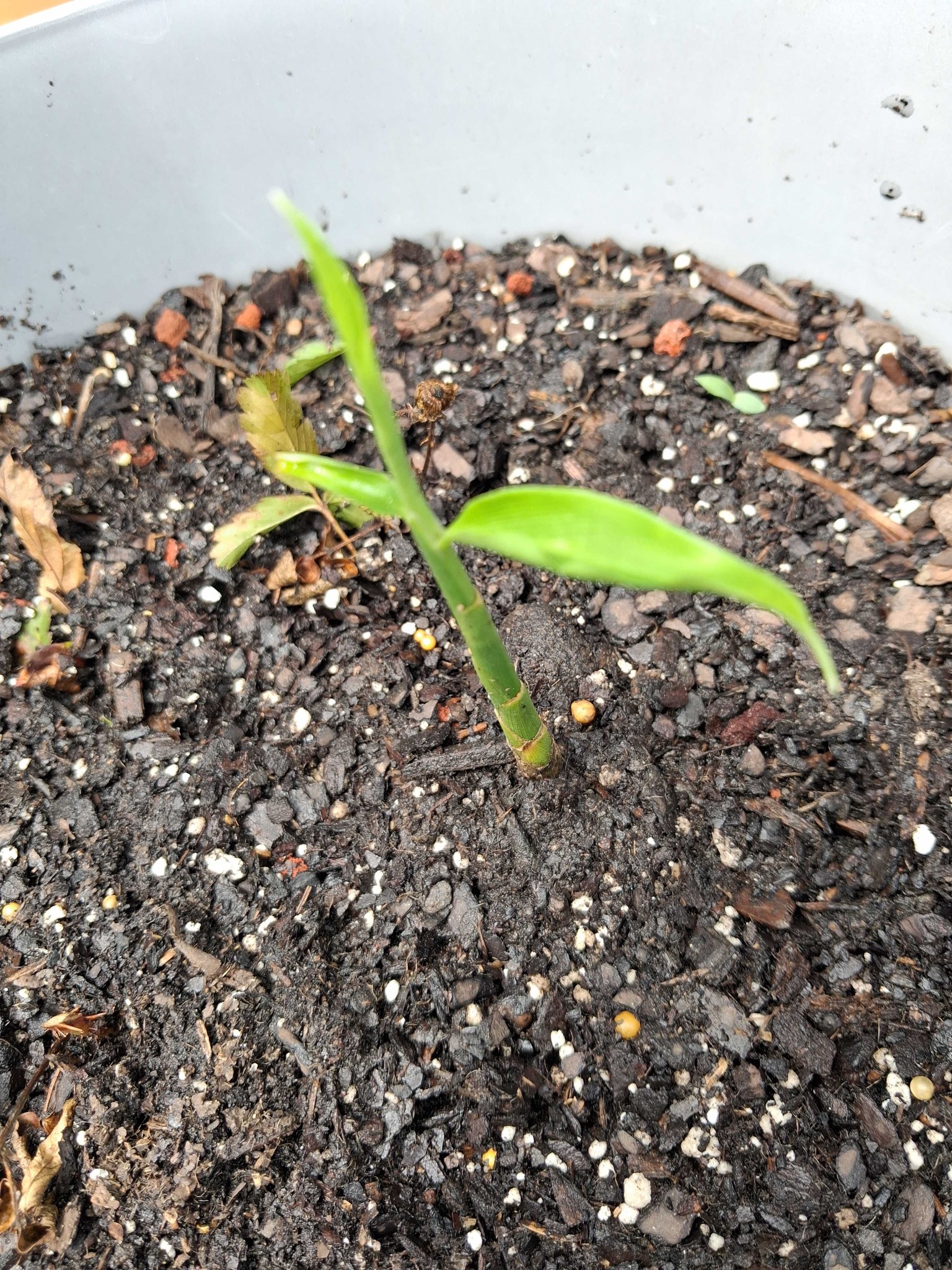
Ginger
Zingiber officinale
A herbaceous perennial with narrow, lance-shaped bright green leaves that grow from thick, knotty underground rhizomes. The stems are actually 'pseudostems' formed by leaf sheaths.
- Light
- Partial shade to bright indirect light; 2-5 hours of morning sun is ideal. Avoid harsh, direct afternoon sun.
- Water
- Requires frequent watering to keep soil moist. Water when the top inch of soil feels dry. Reduce watering in winter when the plant goes dormant.
- Growth
- Rhizomatous perennial with an upright growth habit. Can reach 3-4 feet in height with a similar spread in ideal conditions.
Care instructions
Provide bright indirect light or dappled shade. Keep the soil consistently moist but never waterlogged. Use a rich, well-draining potting mix and feed with a balanced liquid fertilizer every 2-4 weeks during the growing season.
Growing details
Sunlight
Partial shade to bright indirect light; 2-5 hours of morning sun is ideal. Avoid harsh, direct afternoon sun.
Watering
Requires frequent watering to keep soil moist. Water when the top inch of soil feels dry. Reduce watering in winter when the plant goes dormant.
Soil
Rich, loose, loamy soil with high organic matter and excellent drainage. Prefers slightly acidic pH (5.5 to 6.5).
Hardiness zone
USDA zones 9-12; it is a tropical plant and cannot survive freezing temperatures.
Growth habit
Rhizomatous perennial with an upright growth habit. Can reach 3-4 feet in height with a similar spread in ideal conditions.
Bloom season
Rarely blooms in cultivation; when it does, it produces conical, yellowish-green bracts with purple-speckled flowers in late summer or autumn.
Propagation
Identified primarily by rhizome division. Pieces of the root with visible 'eyes' or buds can be planted in spring.
Common pests & issues
Root rot from overwatering, spider mites, and leaf spot. Prevent by ensuring good drainage and maintaining moderate humidity.
Similar species
Turmeric (Curcuma longa), which has broader leaves, and Galangal (Alpinia galanga), which has a more robust, woody rhizome.