
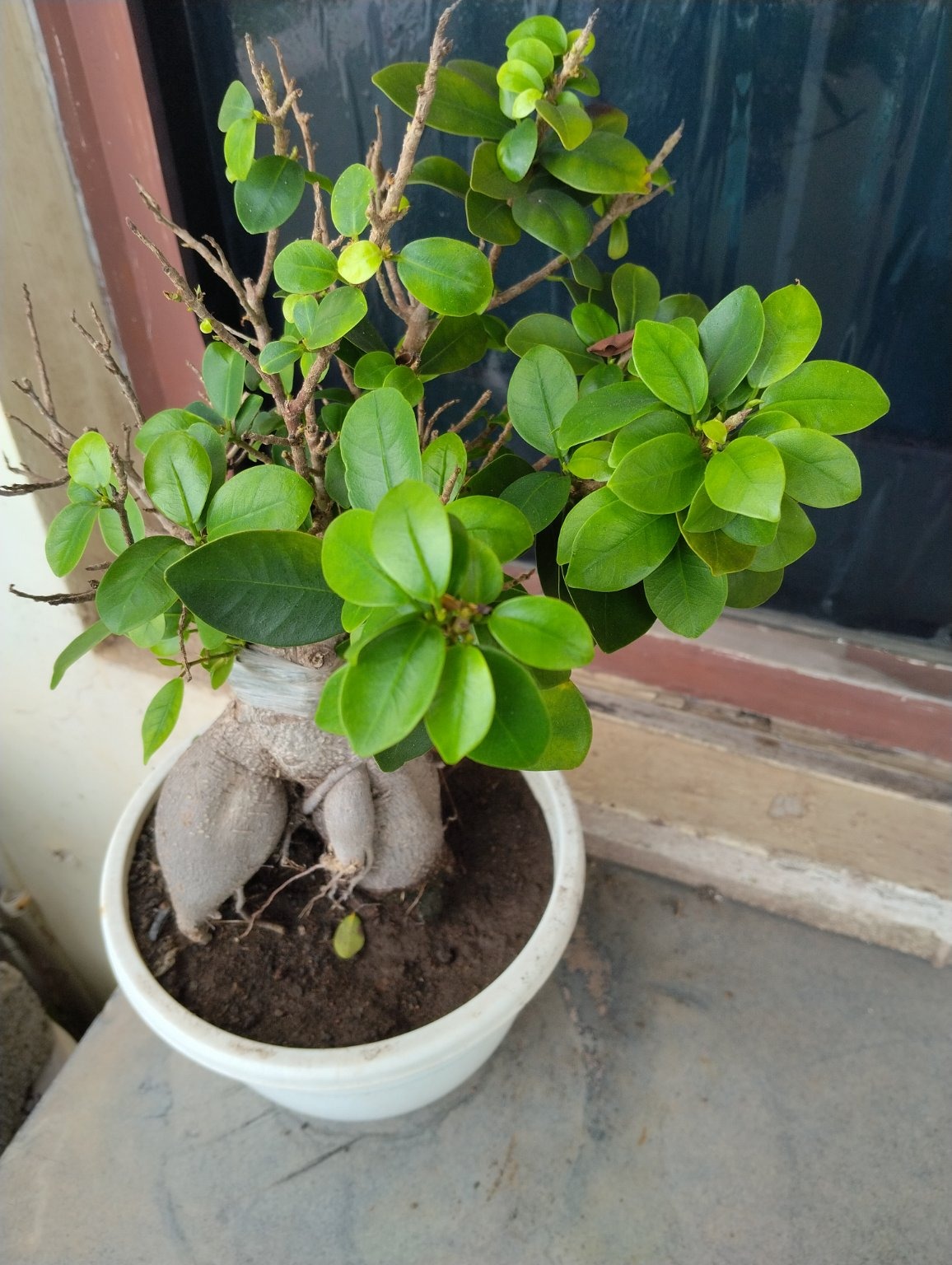
Ginseng Ficus
Ficus microcarpa
An evergreen woody plant grown widely as a bonsai, featuring prominent, thick, swollen aerial roots that resemble ginseng roots, supporting a canopy of dense, glossy, oval-shaped dark green leaves.
- Light
- Bright indirect light to partial sun, ideally 6 hours or more of indirect sunlight per day.
- Water
- Water thoroughly when the soil is partially dry. Avoid letting the pot sit in standing water. Tolerates slight underwatering better than overwatering.
- Growth
- Perennial evergreen tree grown in bonsai form, typically maintained between 1 to 3 feet in containers with a slow to moderate growth rate.
Care instructions
Provide bright indirect sunlight, water thoroughly when the top two inches of soil become dry, use a well-draining potting medium, and fertilize lightly during the active growing season.
Growing details
Sunlight
Bright indirect light to partial sun, ideally 6 hours or more of indirect sunlight per day.
Watering
Water thoroughly when the soil is partially dry. Avoid letting the pot sit in standing water. Tolerates slight underwatering better than overwatering.
Soil
Well-draining, nutrient-rich potting mix with a pH range of 6.0 to 6.5.
Hardiness zone
USDA zones 10 to 11 when grown outdoors; generally kept as an indoor container plant in cooler climates.
Growth habit
Perennial evergreen tree grown in bonsai form, typically maintained between 1 to 3 feet in containers with a slow to moderate growth rate.
Bloom season
Non-flowering in typical indoor container culture; produces tiny, enclosed inflorescences known as syconia in its natural outdoor habitat.
Propagation
Propagated via stem cuttings or air layering during the spring and summer active growing months.
Common pests & issues
Susceptible to scale insects, mealybugs, and spider mites. Leaf drop can occur if there are sudden changes in light, temperature, or watering routines.
Similar species
Ficus benjamina (Weeping Fig), which has a more delicate, weeping branch structure and standard roots rather than swollen ginseng-like caudices.