
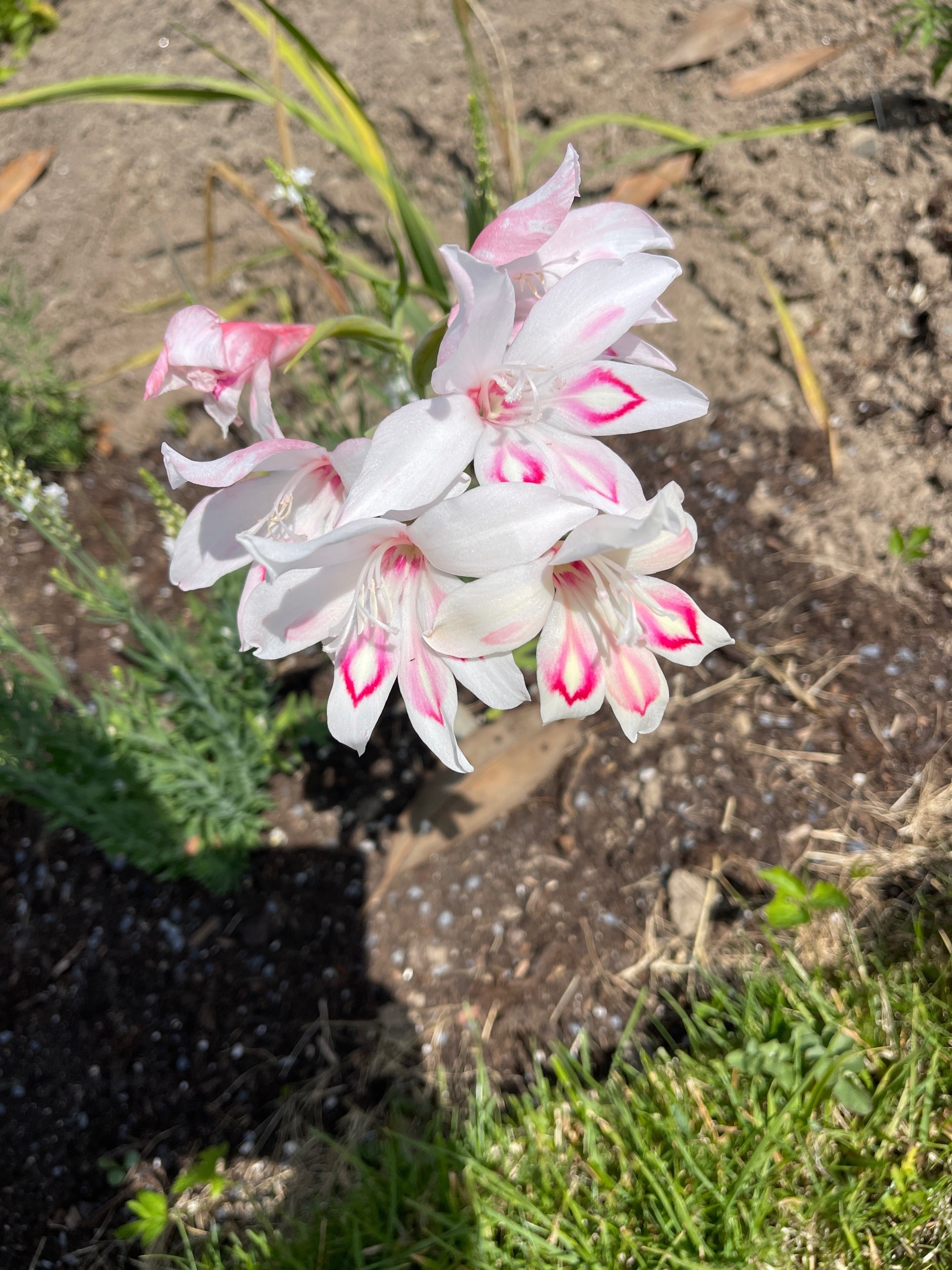
Gladiolus Nanus 'Nymph'
Gladiolus x colvillii 'Nymph'
A dwarf, hardy gladiolus featuring spikes of star-shaped, white flowers. Each petal boasts distinctive bright pink, diamond-shaped markings or 'lipstick' splashes on the lower tepals.
- Light
- Full sun, at least 6 to 8 hours per day
- Water
- Water regularly to keep soil moist but not waterlogged during the growing season; reduce watering once the foliage begins to yellow and go dormant.
- Growth
- Perennial corm; upright growth reaching 18-24 inches in height with a narrow spread of 4-6 inches.
Care instructions
Plant in a sunny, sheltered spot with rich, well-draining soil. Provide regular moisture during the growing season. In colder climates, lift corms after the first frost or provide heavy mulch for protection.
Growing details
Sunlight
Full sun, at least 6 to 8 hours per day
Watering
Water regularly to keep soil moist but not waterlogged during the growing season; reduce watering once the foliage begins to yellow and go dormant.
Soil
Rich, fertile, well-drained loamy soil with a neutral pH of 6.0 to 7.0.
Hardiness zone
8-11 (USDA)
Growth habit
Perennial corm; upright growth reaching 18-24 inches in height with a narrow spread of 4-6 inches.
Bloom season
Early to mid-summer; white funnel-shaped flowers with pink markings on slender stalks.
Propagation
Propagation by lifting the corms and separating the smaller 'cormlets' during the dormant season in autumn or spring.
Common pests & issues
Susceptible to thrips, spider mites, and gladiolus corm rot. Ensure good air circulation and avoid planting in waterlogged soils to prevent fungal issues.
Similar species
Gladiolus 'Prins Claus' is very similar but usually features more defined, darker magenta-pink splashes. It is distinguished from standard Gladiolus by its smaller size and earlier bloom time.