
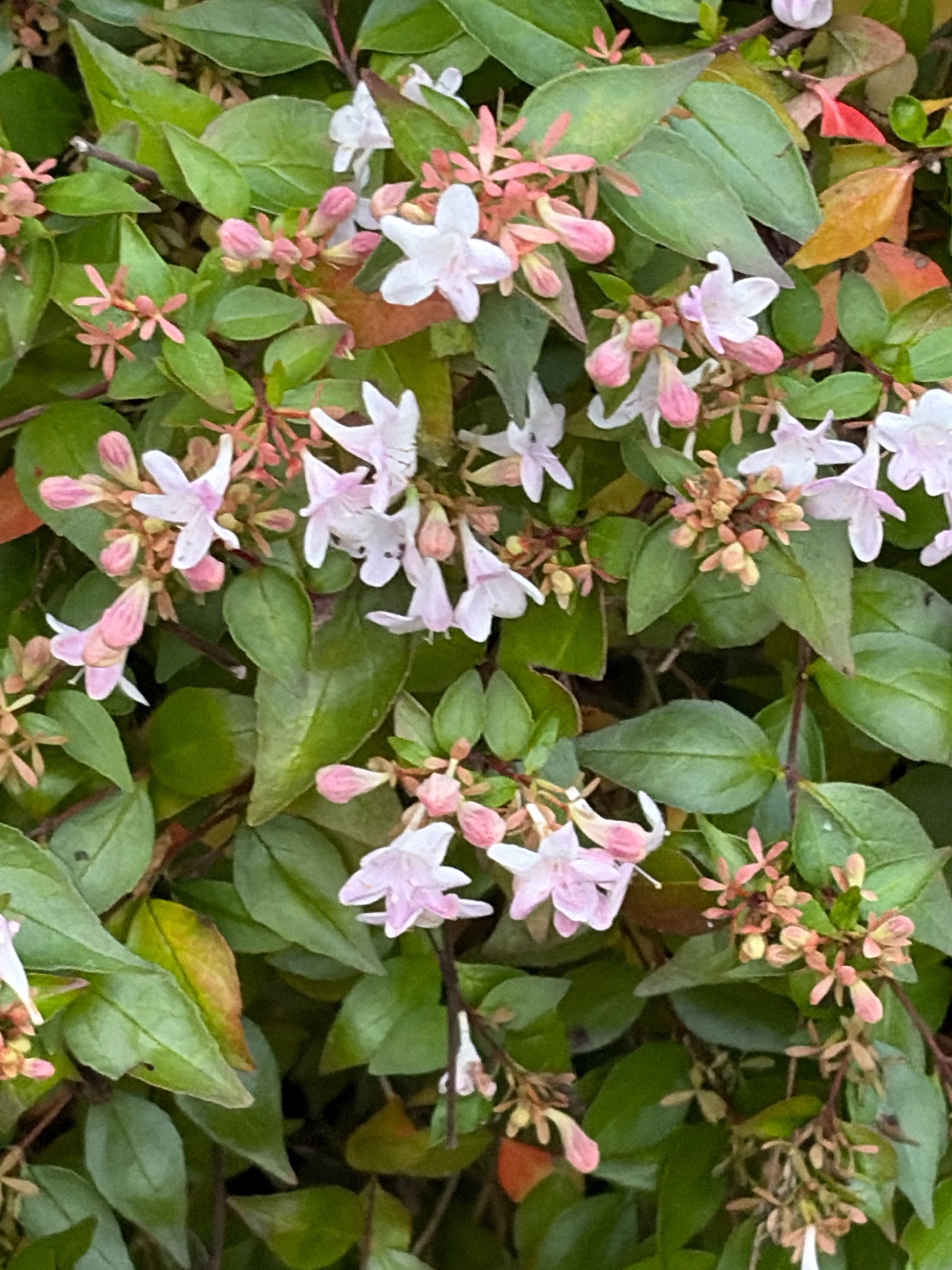
Glossy Abelia
Abelia x grandiflora
A semi-evergreen to evergreen multi-stemmed shrub featuring arching branches, glossy dark green leaves that often turn bronze in autumn, and clusters of small, tubular, white to pinkish flowers.
- Light
- Full sun to partial shade, requiring at least 6 hours of direct sunlight daily for optimal flowering.
- Water
- Moderate water needs. Water deeply when the top few inches of soil feel dry. Established plants tolerate short dry spells.
- Growth
- Perennial shrub with a rounded, arching growth habit. Reaches a mature height and spread of 3 to 6 feet with a moderate growth rate.
Care instructions
Provide full sun to partial shade in well-draining soil. Water regularly during the first growing season to establish a deep root system, then moderate drought tolerance is achieved. Prune in late winter or early spring to shape and encourage new growth.
Growing details
Sunlight
Full sun to partial shade, requiring at least 6 hours of direct sunlight daily for optimal flowering.
Watering
Moderate water needs. Water deeply when the top few inches of soil feel dry. Established plants tolerate short dry spells.
Soil
Prefers fertile, loamy, well-draining soil with a neutral to slightly acidic pH range of 6.0 to 7.0.
Hardiness zone
USDA Hardiness Zones 6 through 9.
Growth habit
Perennial shrub with a rounded, arching growth habit. Reaches a mature height and spread of 3 to 6 feet with a moderate growth rate.
Bloom season
Blooms from late spring through frost, producing small, funnel-shaped, fragrant white and pink flowers accompanied by reddish-pink sepals.
Propagation
Propagated primarily through semi-hardwood cuttings taken in summer, treated with rooting hormone, and kept in a humid environment until roots develop.
Common pests & issues
Generally resilient with few serious problems. Occasionally affected by powdery mildew or leaf spot in overly humid conditions with poor air circulation; managed by proper spacing and pruning.
Similar species
Distinguished from other abelias by its glossy foliage and persistent reddish sepals that remain long after the petals fall.