
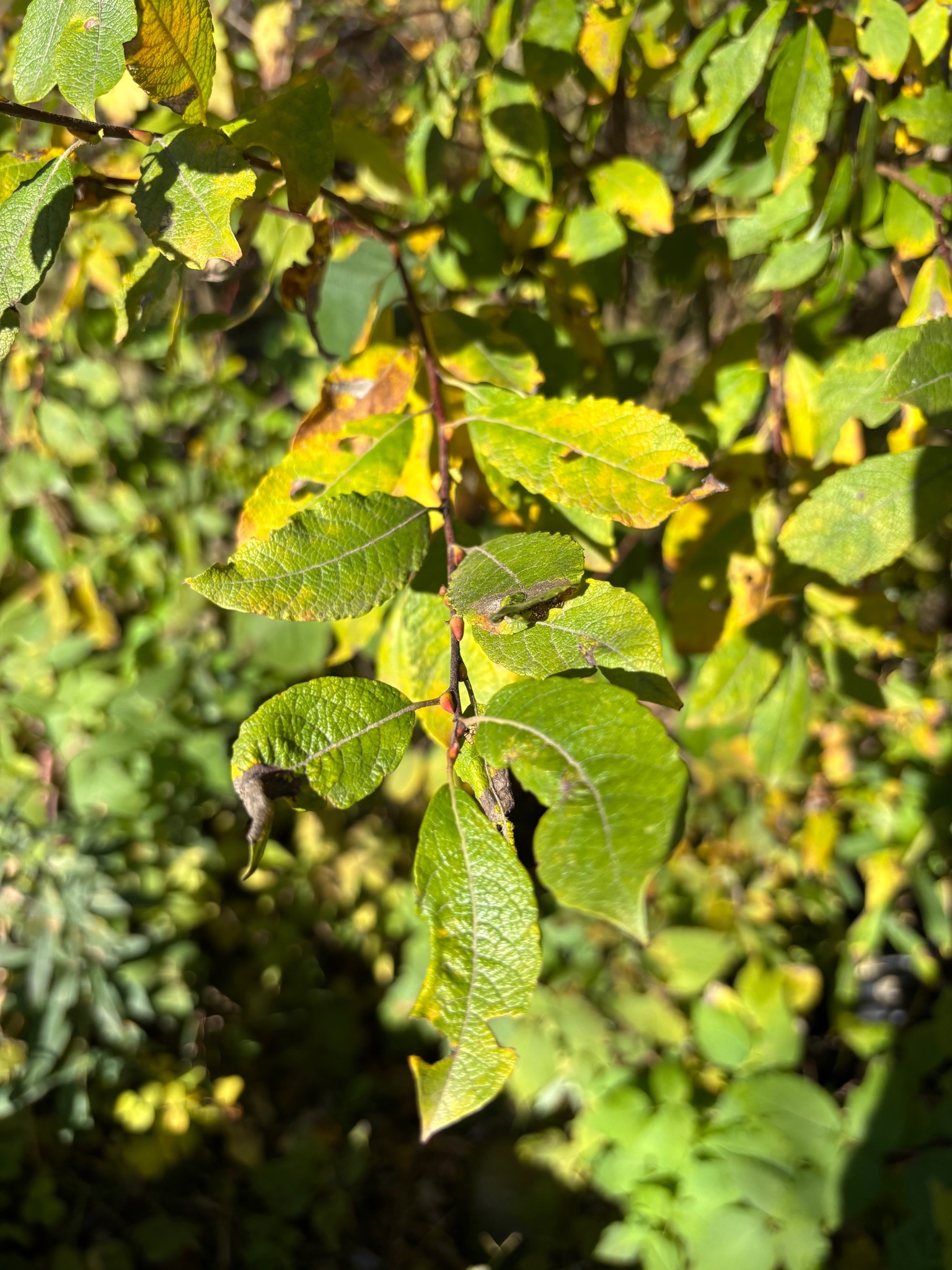
Glossy Buckthorn
Frangula alnus
A deciduous shrub or small tree featuring alternate, elliptic to oval leaves with distinct parallel veins, glossy upper surfaces, and smooth margins, transitioning to yellow in autumn.
- Light
- Full sun to partial shade, requiring at least 4 to 6 hours of direct sunlight daily for optimal foliage development.
- Water
- Prefers consistently moist soil conditions. Moderate drought tolerance once established, but prolonged dry spells can lead to premature leaf drop.
- Growth
- Perennial woody shrub or small multi-stemmed tree, growing upright with a rounded canopy, typically reaching heights of 10 to 20 feet with a similar spread.
Care instructions
Plant in full sun to partial shade in moist, well-draining soil. Water regularly during establishment to maintain consistent moisture, and apply a balanced fertilizer in spring if growth is sluggish.
Growing details
Sunlight
Full sun to partial shade, requiring at least 4 to 6 hours of direct sunlight daily for optimal foliage development.
Watering
Prefers consistently moist soil conditions. Moderate drought tolerance once established, but prolonged dry spells can lead to premature leaf drop.
Soil
Adapts to a wide range of soil types including clay, loam, and sand, provided there is adequate drainage. Prefers neutral to slightly acidic pH ranges.
Hardiness zone
USDA zones 3 through 8
Growth habit
Perennial woody shrub or small multi-stemmed tree, growing upright with a rounded canopy, typically reaching heights of 10 to 20 feet with a similar spread.
Bloom season
Blooms in late spring to mid-summer, producing small, inconspicuous greenish-white clusters of flowers nestled in the leaf axils.
Propagation
Propagated primarily through seed dispersal by wildlife or via softwood cuttings taken in late spring.
Common pests & issues
Generally resilient against major pests and diseases, though occasionally susceptible to defoliating insects or fungal leaf spots under overly damp conditions.
Similar species
Common Buckthorn (Rhamnus cathartica), which can be distinguished by its opposite or sub-opposite leaves and small thorns at the branch tips.