
Gojeberry
Lycium barbarum
A deciduous woody perennial shrub featuring slender, arching branches, small lance-shaped grayish-green leaves, and a somewhat sprawling growth habit.
- Light
- Full sun, requiring at least 6 hours of direct sunlight per day.
- Water
- Moderate watering needs. Water deeply when the top few centimeters of soil feel dry. Drought tolerant once established, but avoid waterlogged soil to prevent root rot.
- Growth
- A deciduous shrub growing up to 3 to 10 feet in height with a similar or slightly wider spread, displaying a somewhat tangled and arching growth habit with moderate to fast growth rate.
Care instructions
Provide full sun to partial shade, well-draining soil, and regular watering during dry spells. Allow the top inch of soil to dry out between watering sessions, and fertilize lightly during the active growing season.
Growing details
Sunlight
Full sun, requiring at least 6 hours of direct sunlight per day.
Watering
Moderate watering needs. Water deeply when the top few centimeters of soil feel dry. Drought tolerant once established, but avoid waterlogged soil to prevent root rot.
Soil
Thrives in well-draining loamy or sandy soils with a neutral to slightly alkaline pH range of 6.5 to 8.0.
Hardiness zone
USDA Hardiness Zones 5 through 9
Growth habit
A deciduous shrub growing up to 3 to 10 feet in height with a similar or slightly wider spread, displaying a somewhat tangled and arching growth habit with moderate to fast growth rate.
Bloom season
Blooms from early summer to early autumn with small, funnel-shaped purple to violet flowers.
Propagation
Propagated easily through semi-hardwood stem cuttings taken in summer, division of root suckers, or from seeds sown in spring.
Common pests & issues
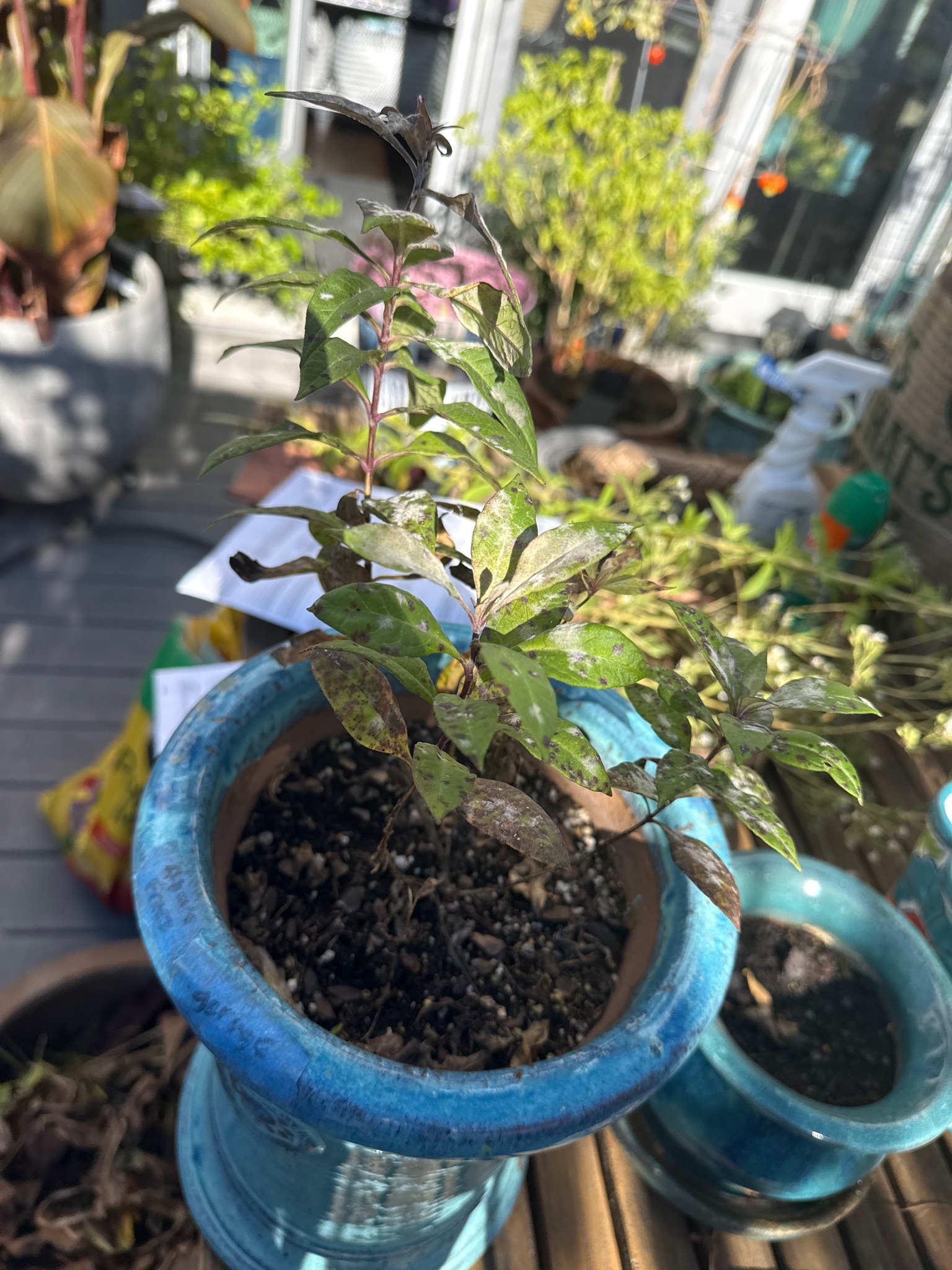
Susceptible to powdery mildew, which appears as a white dusty coating on the leaves (clearly visible in the provided image), as well as aphids and rust. Prevent by ensuring good air circulation and avoiding overhead watering.
Similar species
Lycium chinense (Chinese wolfberry), which has slightly broader leaves and more rounded fruit compared to Lycium barbarum.