
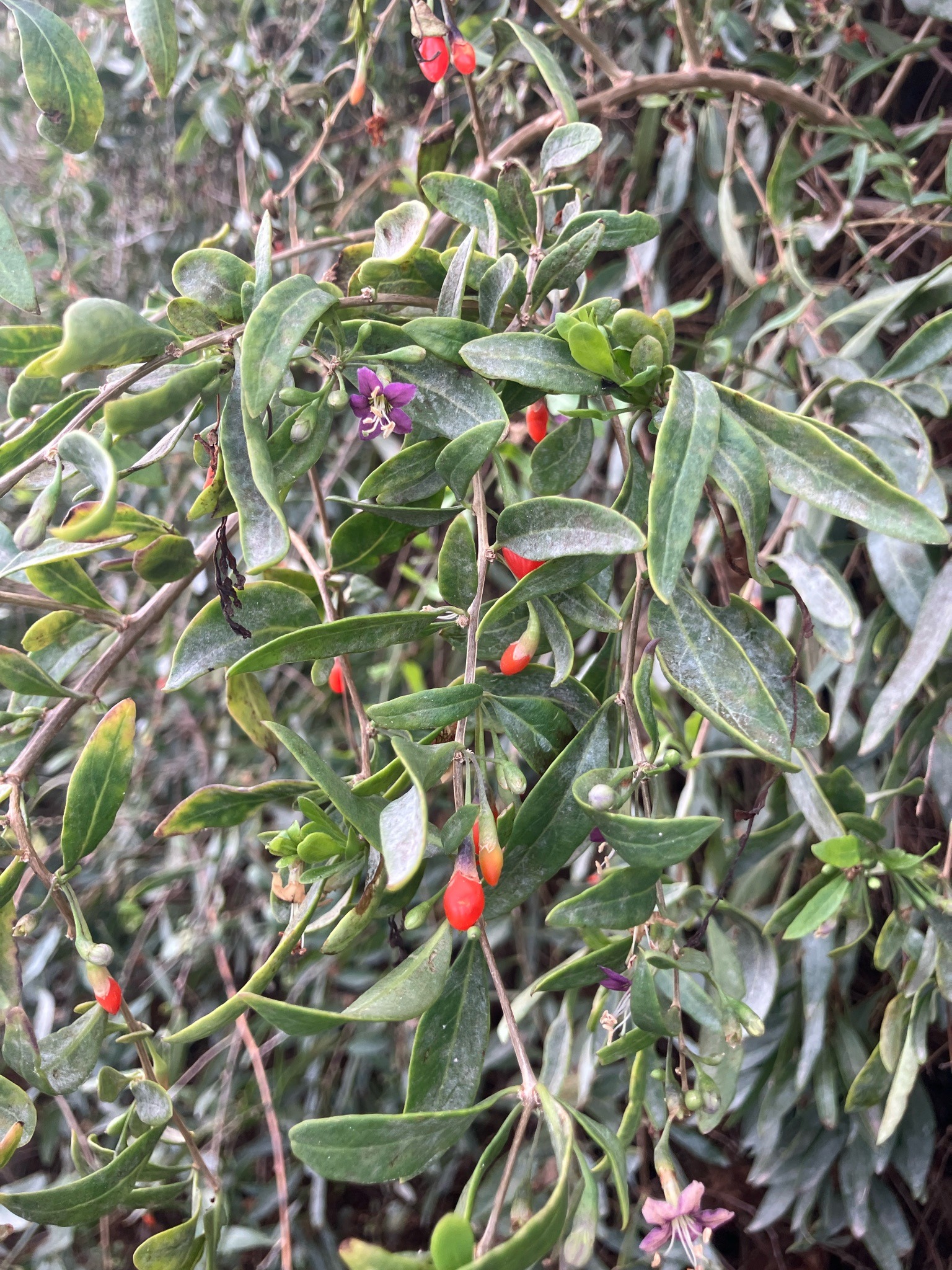
Goji berry
Lycium barbarum
A deciduous woody perennial shrub with arching branches, small lanceolate grayish-green leaves, small funnel-shaped purple or violet flowers, and oblong bright red or orange-red fruits.
- Light
- Full sun, requiring at least 6 hours of direct sunlight daily.
- Water
- Moderate water needs once established; allow the top few inches of soil to dry out between waterings. Drought tolerant once mature.
- Growth
- Deciduous shrub with a scrambling, arching growth habit, reaching mature heights and spreads of 3 to 10 feet with a moderate to fast growth rate.
Care instructions
Provide full sun and well-draining soil. Water regularly during the establishment phase, then reduce as the plant develops moderate drought tolerance. Fertilize lightly in spring with a balanced, slow-release fertilizer if growth is slow.
Growing details
Sunlight
Full sun, requiring at least 6 hours of direct sunlight daily.
Watering
Moderate water needs once established; allow the top few inches of soil to dry out between waterings. Drought tolerant once mature.
Soil
Adaptable to various well-draining soil types, including sandy, loamy, or clay soils, preferring a neutral to slightly alkaline pH range between 6.5 and 8.0.
Hardiness zone
USDA Hardiness Zones 5 through 9.
Growth habit
Deciduous shrub with a scrambling, arching growth habit, reaching mature heights and spreads of 3 to 10 feet with a moderate to fast growth rate.
Bloom season
Blooms from early summer through autumn with small, funnel-shaped flowers featuring purple to pale violet petals.
Propagation
Can be propagated via seeds, softwood or hardwood stem cuttings, or by dividing root suckers during the spring or autumn months.
Common pests & issues
Prone to powdery mildew, rust, and fungal leaf spots in humid conditions. Pests can include aphids, thrips, and spider mites, manageable with appropriate horticultural oils or insecticidal soaps.
Similar species
Lycium chinense (Chinese wolfberry), which has broader leaves and slightly different floral characteristics, and other members of the Lycium genus that share similar scrambling shrub architecture.