
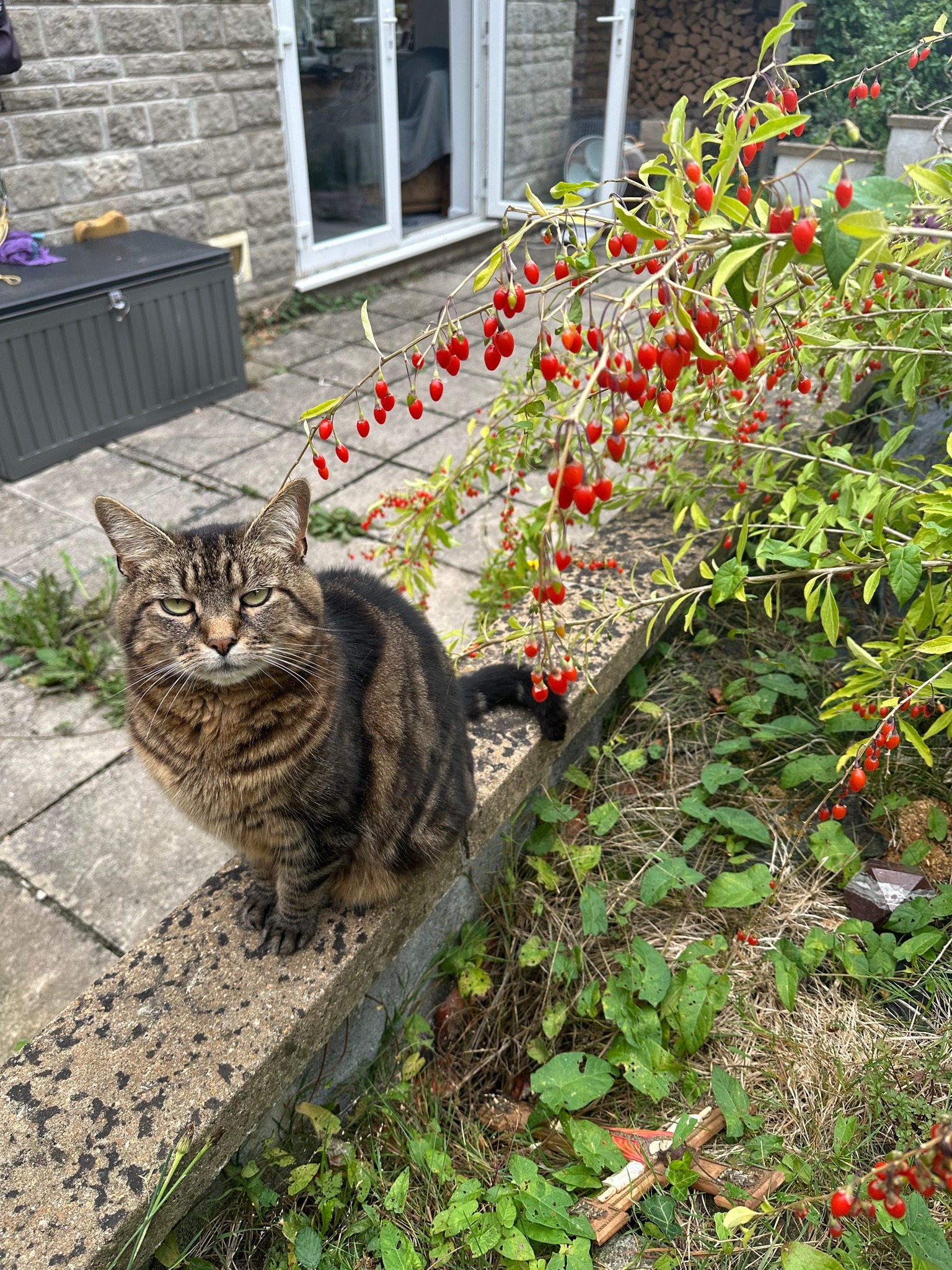
Goji Berry
Lycium barbarum
A deciduous woody perennial shrub featuring arching branches, narrow green leaves, small purplish flowers, and bright red oblong fleshy fruits.
- Light
- Full sun, requiring at least 6 hours of direct sunlight daily
- Water
- Moderate; allow the top few inches of soil to dry out between waterings. Drought tolerant once established, but avoid prolonged waterlogged conditions.
- Growth
- Deciduous shrub with a sprawling, arching growth habit, reaching mature heights of 3 to 10 feet with a similar spread. Fast-growing rate.
Care instructions
Provide full sun and well-draining soil. Water regularly when young to establish a deep root system, then reduce watering as mature plants show good drought tolerance. Apply a balanced fertilizer in spring to support growth.
Growing details
Sunlight
Full sun, requiring at least 6 hours of direct sunlight daily
Watering
Moderate; allow the top few inches of soil to dry out between waterings. Drought tolerant once established, but avoid prolonged waterlogged conditions.
Soil
Adaptable to most well-draining soil types including loam, sand, or clay, with a preferred pH range of 6.5 to 8.0.
Hardiness zone
USDA zones 5 through 9, exhibiting high cold hardiness and heat tolerance.
Growth habit
Deciduous shrub with a sprawling, arching growth habit, reaching mature heights of 3 to 10 feet with a similar spread. Fast-growing rate.
Bloom season
Flowers from early summer to late autumn, producing small, funnel-shaped purple or violet flowers, followed by prominent bright red fleshy fruits.
Propagation
Propagated easily from softwood or hardwood cuttings taken in spring or summer, through division of root suckers, or by sowing seeds in spring.
Common pests & issues
Susceptible to powdery mildew and aphids. Prevent problems by ensuring good air circulation, avoiding overhead watering, and using appropriate horticultural oils if pests appear.
Similar species
Lycium chinense (Chinese wolfberry), which has slightly broader leaves and less vibrant red fruits, though care and appearance are very similar.