
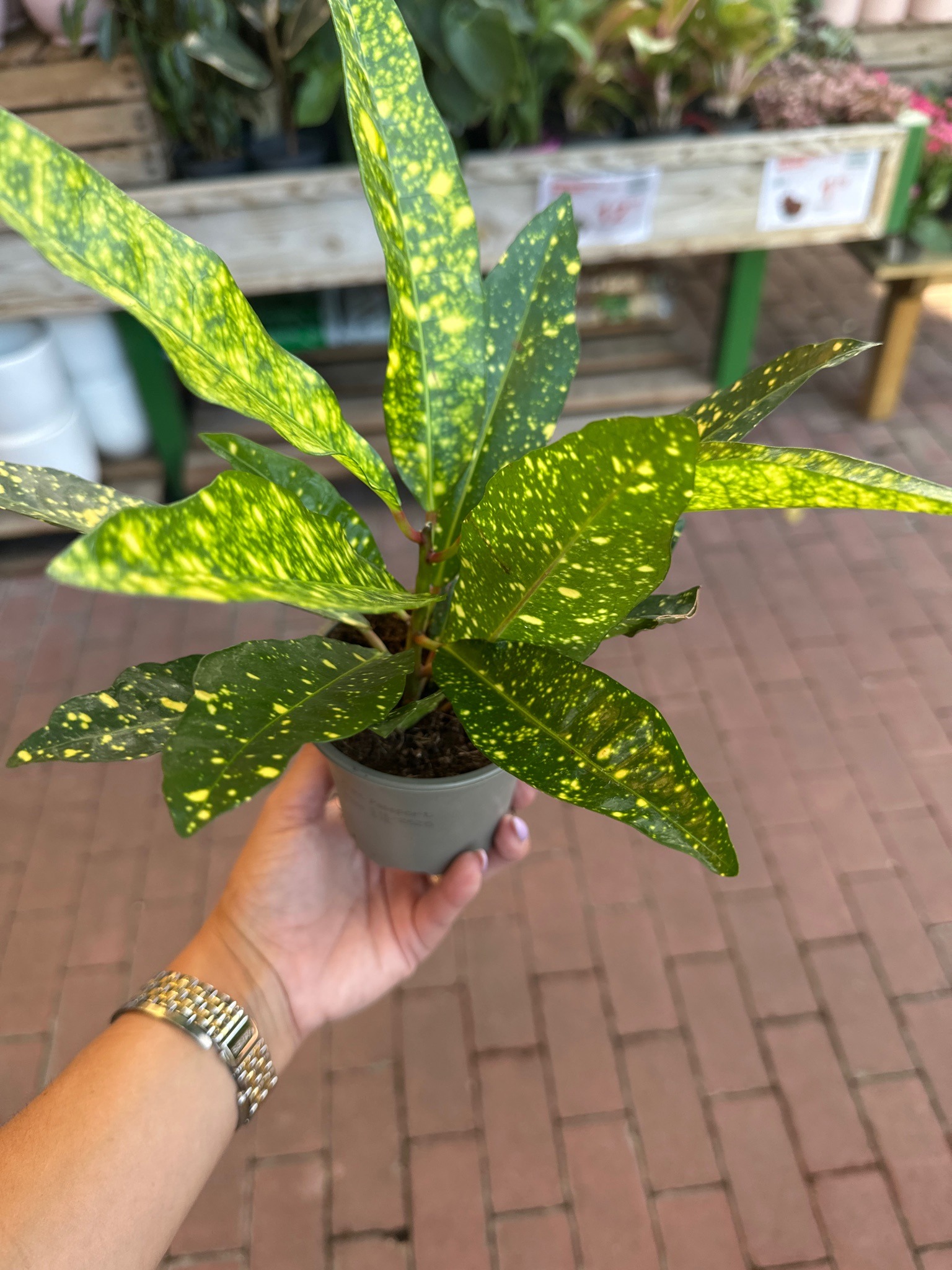
Gold Dust Croton
Codiaeum variegatum 'Gold Dust'
An evergreen tropical shrub known for its leathery, lance-shaped leaves vividly speckled with bright yellow spots resembling gold dust.
- Light
- Bright, indirect light with at least 4 to 6 hours of filtered sunlight daily.
- Water
- Water thoroughly when the top 1 to 2 inches of soil become dry. Avoid letting the soil dry out completely or remain soggy.
- Growth
- Upright, branching perennial shrub growing up to 3 to 6 feet tall indoors, with a moderate growth rate.
Care instructions
Provide bright, indirect sunlight to maintain vibrant leaf coloration, water when the top inch of soil feels dry, and use a well-draining potting medium.
Growing details
Sunlight
Bright, indirect light with at least 4 to 6 hours of filtered sunlight daily.
Watering
Water thoroughly when the top 1 to 2 inches of soil become dry. Avoid letting the soil dry out completely or remain soggy.
Soil
Rich, well-draining potting mix with an acidic to neutral pH range of 5.5 to 6.5.
Hardiness zone
USDA zones 11 to 12, grown as an indoor houseplant in cooler climates.
Growth habit
Upright, branching perennial shrub growing up to 3 to 6 feet tall indoors, with a moderate growth rate.
Bloom season
Insignificant small, whitish-yellow flowers appear on long panicles, primarily during spring and summer.
Propagation
Propagated via stem cuttings taken in spring or summer, typically rooted in moist sphagnum moss or water.
Common pests & issues
Susceptible to spider mites, mealybugs, and scale insects; leaf drop can occur if the plant experiences sudden temperature drafts or low humidity.
Similar species
Other Codiaeum variegatum cultivars like 'Petra' or 'Norma', which feature broader, multicolored leaves with red, orange, and green veins rather than fine yellow speckles.