
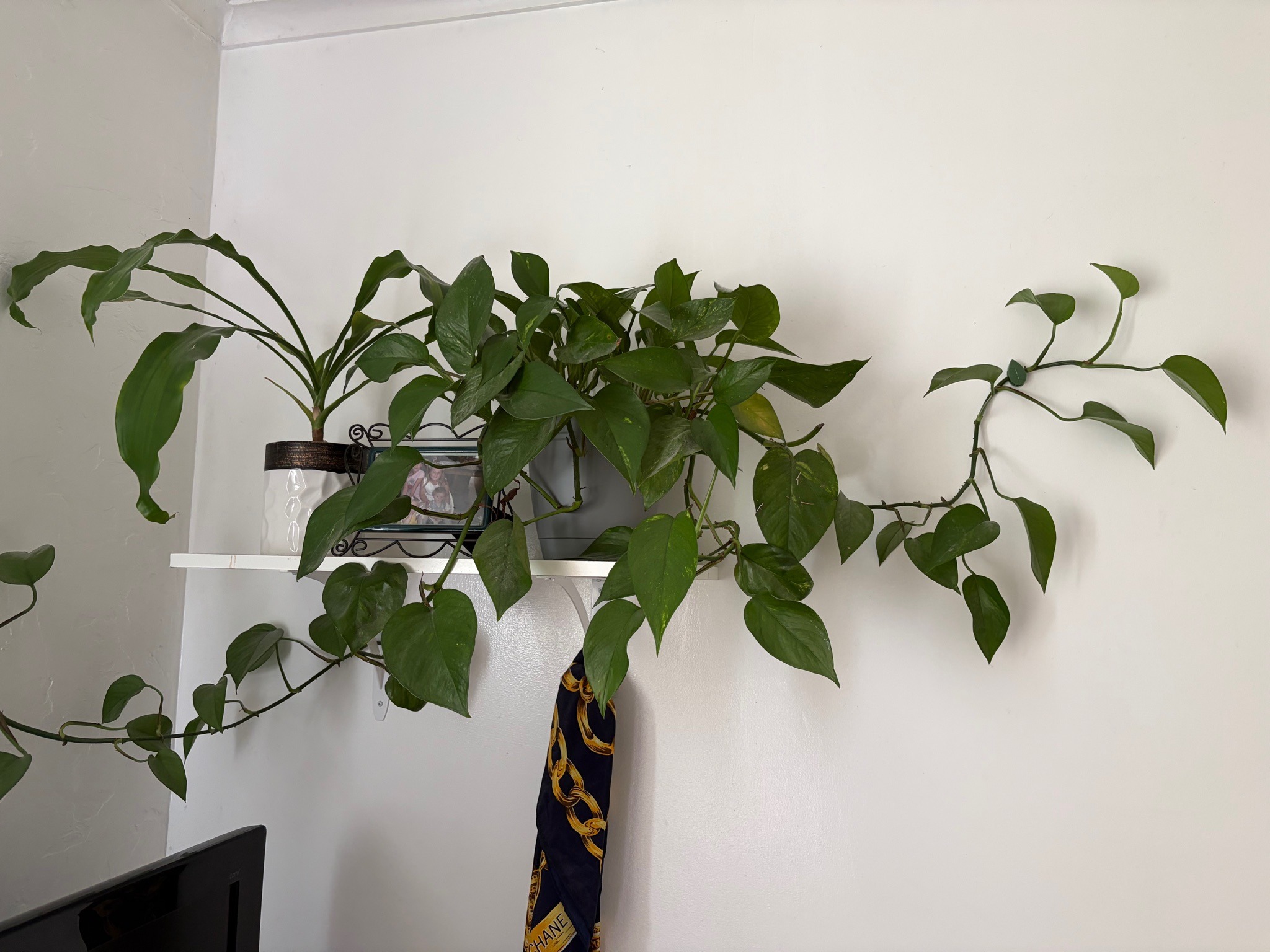
Golden Pothos
Epipremnum aureum
A popular tropical trailing vine featuring heart-shaped, glossy green leaves adorned with splashes and streaks of golden-yellow variegation.
- Light
- Thrives in bright, indirect light for 6 to 8 hours per day, but tolerates low indoor light conditions well.
- Water
- Water thoroughly only when the top two to three inches of soil feel completely dry to the touch.
- Growth
- An evergreen perennial vine with a trailing growth habit, capable of growing stems many feet long indoors and climbing extensively in tropical outdoor environments.
Care instructions
Provide bright, indirect sunlight and allow the soil to dry out completely between waterings. Use a well-draining potting mix and apply a balanced liquid fertilizer monthly during the spring and summer growing season.
Growing details
Sunlight
Thrives in bright, indirect light for 6 to 8 hours per day, but tolerates low indoor light conditions well.
Watering
Water thoroughly only when the top two to three inches of soil feel completely dry to the touch.
Soil
Requires a loose, well-draining potting mix rich in organic matter, with an optimal pH range between 6.1 and 6.5.
Hardiness zone
USDA hardiness zones 10 through 12 when grown outdoors.
Growth habit
An evergreen perennial vine with a trailing growth habit, capable of growing stems many feet long indoors and climbing extensively in tropical outdoor environments.
Bloom season
Rarely blooms when kept as an indoor container plant; mature outdoor specimens produce a spath-and-spadix inflorescence.
Propagation
Easily propagated through stem cuttings placed in water or directly into moist potting soil, ensuring each cutting includes at least one node.
Common pests & issues
Prone to root rot if overwatered or planted in poorly draining soil; occasional pests include mealybugs and scale insects.
Similar species
Often confused with Heartleaf Philodendron (Philodendron hederaceum), which can be distinguished by its petiole structure and newer leaves emerging from a protective sheath.