
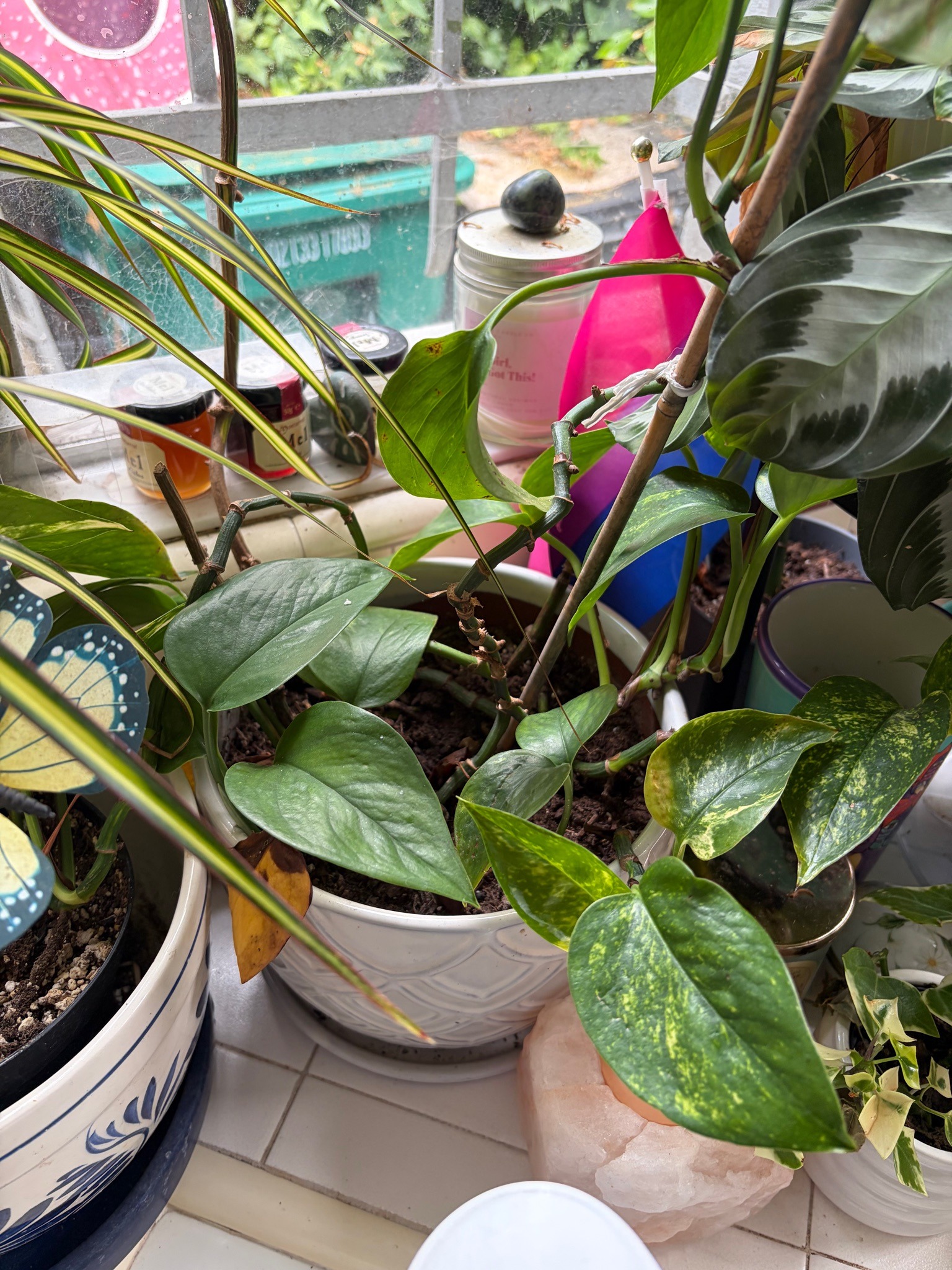
Golden Pothos
Epipremnum aureum
A popular tropical climbing or trailing vine featuring heart-shaped, leathery leaves with characteristic variegation ranging from yellow to creamy-white. The stems are green and segmented, producing aerial roots at the nodes to support climbing habit.
- Light
- Bright, indirect light for 6 to 8 hours per day. Tolerates low light conditions, though variegation may fade.
- Water
- Water thoroughly when the top 2 inches of soil are dry. Drought tolerant once established, but avoid prolonged dryness. Over-watering causes yellowing leaves and root decay.
- Growth
- Perennial evergreen vine with a trailing or climbing growth habit. Indoors, vines typically reach 6 to 10 feet in length, while outdoor specimens can climb much higher. Fast growth rate.
Care instructions
Provide bright to medium indirect sunlight, allowing the top two inches of soil to dry out completely between thorough waterings. Use a well-draining potting mix and feed monthly with a balanced liquid fertilizer during the spring and summer growing season.
Growing details
Sunlight
Bright, indirect light for 6 to 8 hours per day. Tolerates low light conditions, though variegation may fade.
Watering
Water thoroughly when the top 2 inches of soil are dry. Drought tolerant once established, but avoid prolonged dryness. Over-watering causes yellowing leaves and root decay.
Soil
Well-draining, nutrient-rich potting mix with a pH range between 6.1 and 6.5. Adding perlite or orchid bark helps improve aeration and drainage.
Hardiness zone
USDA zones 10 through 12. Grown primarily as a houseplant in cooler temperate regions.
Growth habit
Perennial evergreen vine with a trailing or climbing growth habit. Indoors, vines typically reach 6 to 10 feet in length, while outdoor specimens can climb much higher. Fast growth rate.
Bloom season
Non-flowering
Propagation
Propagated easily through stem cuttings placed in water or directly into moist potting mix, ensuring each cutting includes at least one node.
Common pests & issues
Prone to mealybugs, scale insects, and fungus gnats if overwatered. Root rot can occur from heavy, poorly draining soils.
Similar species
Heartleaf Philodendron (Philodendron hederaceum), which features softer, thinner leaves and lacks the specific aerial root scale patterns found on Epipremnum aureum stems.