
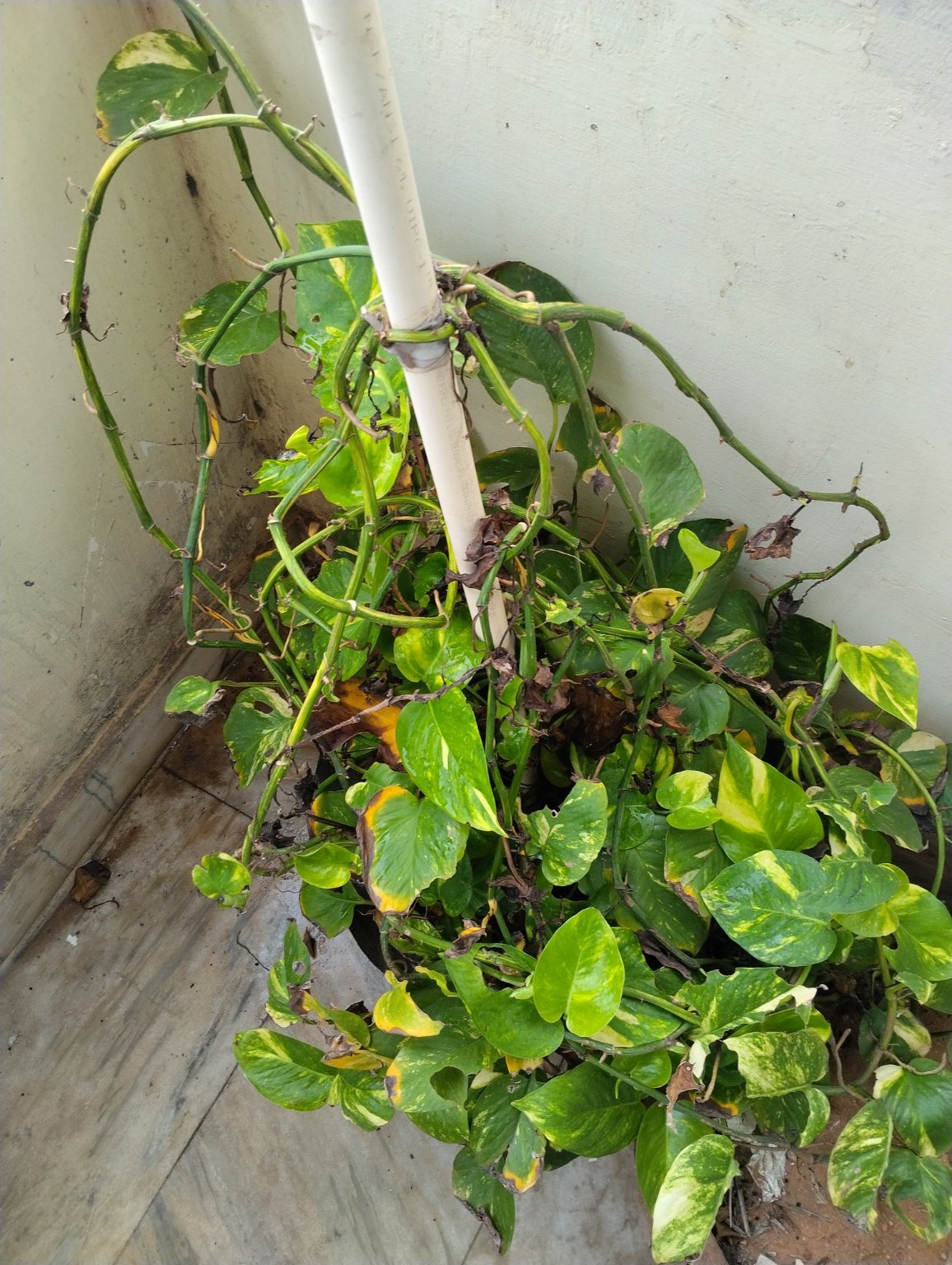
Golden Pothos
Epipremnum aureum
An evergreen climbing vine featuring heart-shaped, glossy leaves variegated with splashes and streaks of yellow and white. It produces aerial roots along the stems to climb surfaces.
- Light
- Bright, indirect light for 6 to 8 hours daily. Can tolerate medium to low indirect light, though variegation may fade.
- Water
- Water every 1 to 2 weeks when the top 2-3 inches of soil feel dry to the touch. Allow excess water to drain completely; avoid letting the roots sit in standing water to prevent root rot.
- Growth
- Trailing or climbing perennial vine with a rapid growth rate. Indoors, stems typically reach 6 to 10 feet in length, while outdoor specimens in tropical climates can climb much higher.
Care instructions
Provide bright, indirect light and water thoroughly only when the top few centimeters of soil become dry. Use a well-draining potting mix and feed with a balanced liquid fertilizer monthly during the active growing season.
Growing details
Sunlight
Bright, indirect light for 6 to 8 hours daily. Can tolerate medium to low indirect light, though variegation may fade.
Watering
Water every 1 to 2 weeks when the top 2-3 inches of soil feel dry to the touch. Allow excess water to drain completely; avoid letting the roots sit in standing water to prevent root rot.
Soil
Well-draining, loose potting mix rich in organic matter, with an ideal pH range between 6.1 and 6.5.
Hardiness zone
USDA zones 10 through 12, grown primarily as an indoor houseplant in cooler climates.
Growth habit
Trailing or climbing perennial vine with a rapid growth rate. Indoors, stems typically reach 6 to 10 feet in length, while outdoor specimens in tropical climates can climb much higher.
Bloom season
Non-flowering in typical indoor cultivation environments.
Propagation
Easily propagated via stem cuttings taken below a node and placed in water or directly into moist potting soil until roots develop.
Common pests & issues
Prone to root rot from overwatering. Pests such as mealybugs, scale, and spider mites can occasionally affect the foliage, treatable with horticultural oils or insecticidal soaps.
Similar species
Heartleaf Philodendron (Philodendron hederaceum), which can be distinguished by its thinner leaf texture and lack of aerial root clusters at every node.