
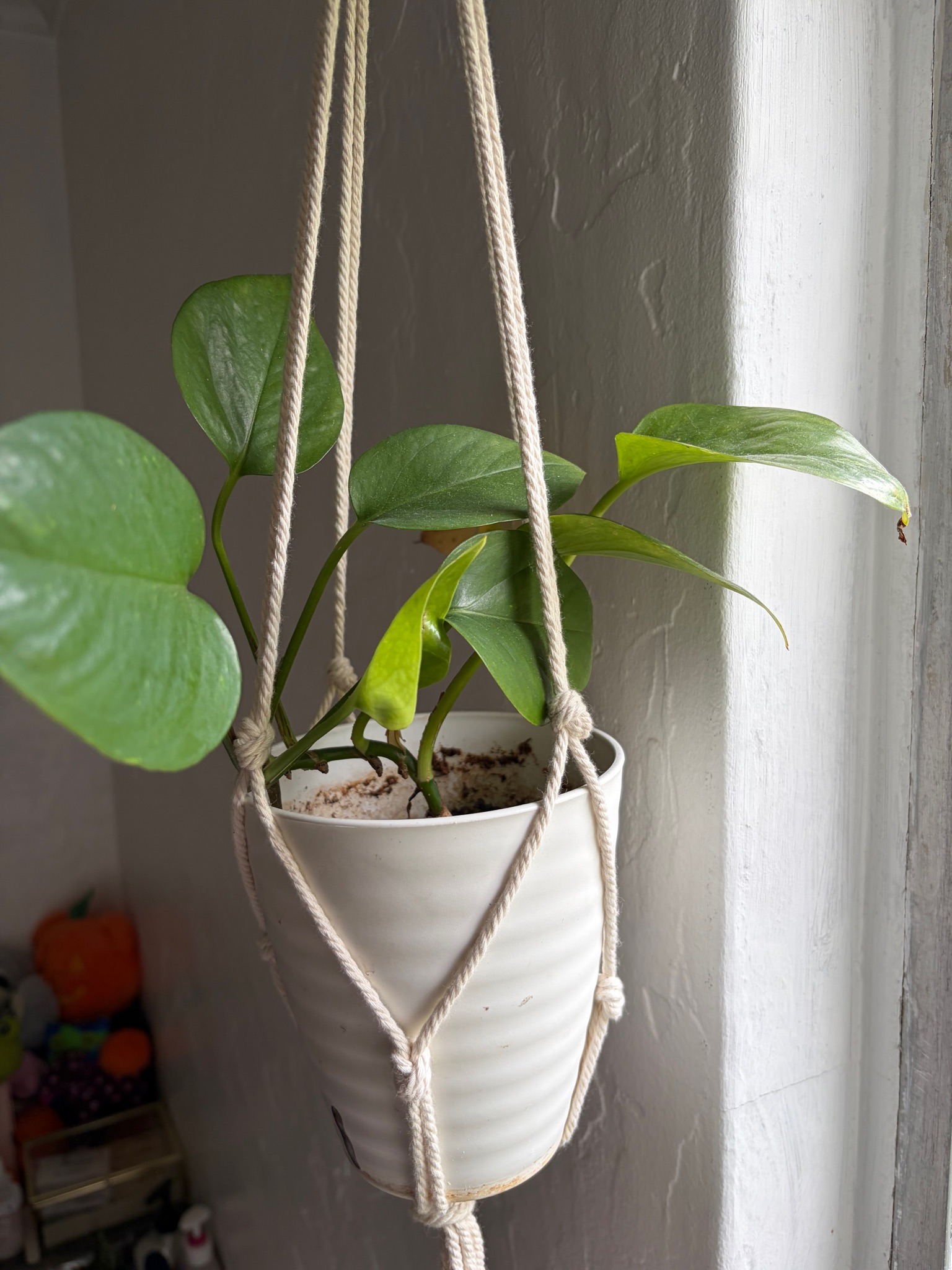
Golden Pothos
Epipremnum aureum
A popular tropical evergreen vine with heart-shaped, glossy leaves that often feature splashes or variegation of yellow and white.
- Light
- Thrives in bright, indirect light for about 6 to 8 hours daily, but adapts well to lower light conditions.
- Water
- Water thoroughly when the top 2 to 3 inches of soil feel dry. Avoid letting the pot sit in standing water to prevent root rot.
- Growth
- Trailing evergreen perennial vine that can reach lengths of 20 to 40 feet in its natural habitat, growing at a moderate to fast pace.
Care instructions
Provide bright, indirect sunlight and allow the soil to dry out completely between waterings. Use a well-draining potting mix and apply a balanced liquid fertilizer monthly during the active growing season.
Growing details
Sunlight
Thrives in bright, indirect light for about 6 to 8 hours daily, but adapts well to lower light conditions.
Watering
Water thoroughly when the top 2 to 3 inches of soil feel dry. Avoid letting the pot sit in standing water to prevent root rot.
Soil
Rich, loose, well-draining potting mix with a slightly acidic to neutral pH range of 6.1 to 6.5.
Hardiness zone
USDA zones 10 through 12; grown indoors in cooler regions.
Growth habit
Trailing evergreen perennial vine that can reach lengths of 20 to 40 feet in its natural habitat, growing at a moderate to fast pace.
Bloom season
Rarely blooms when grown indoors; mature plants in the wild produce spatial inflorescences known as spandices.
Propagation
Easily propagated through stem cuttings taken just below a node and rooted either in water or directly in moist potting soil.
Common pests & issues
Susceptible to root rot from overwatering. Pests such as mealybugs and spider mites may occasionally appear and can be treated with insecticidal soap.
Similar species
Heartleaf Philodendron (Philodendron hederaceum), which can be distinguished by its heart-shaped leaves that attach differently to the stems and lack the specific sheath scars seen on pothos.