
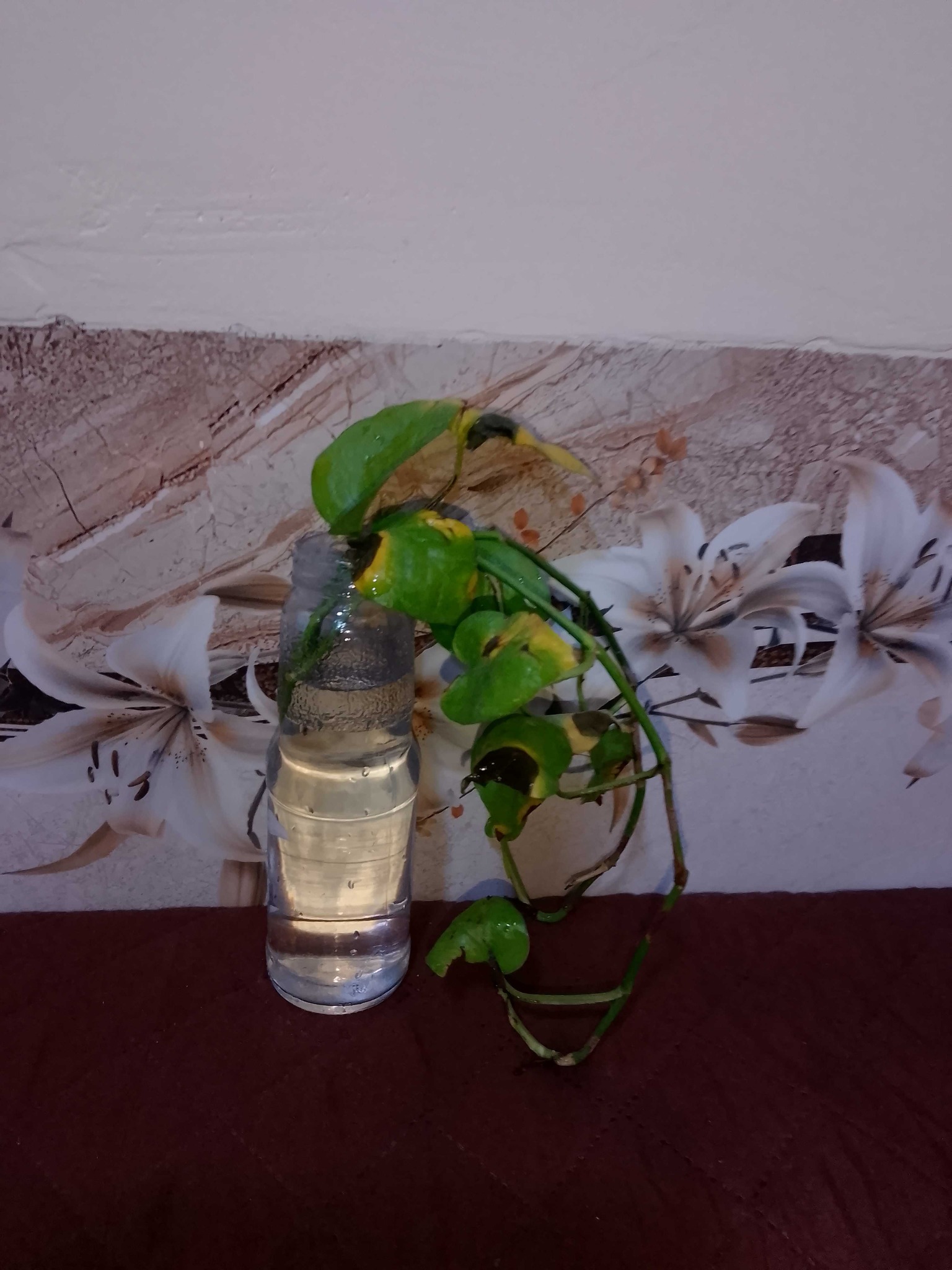
Golden Pothos
Epipremnum aureum
An evergreen climbing vine featuring heart-shaped, glossy leaves variegated with splashes of yellow and white. Currently depicted as a stem cutting propagating in a water-filled glass bottle.
- Light
- Bright, indirect light for 6 to 8 hours daily. Avoid direct harsh sunlight which can scorch the leaves.
- Water
- When growing in water, refresh the water every 1 to 2 weeks to maintain clarity and oxygen levels. When potted in soil, allow the top few inches to dry completely between waterings.
- Growth
- Trailing or climbing perennial vine capable of reaching lengths of 20 to 40 feet outdoors, remaining much smaller indoors with moderate growth rate.
Care instructions
Provide bright, indirect sunlight and maintain water levels in the propagation container until strong roots develop. Afterward, plant in well-draining potting mix, water when the top two inches of soil become dry, and feed lightly during the growing season with a balanced liquid fertilizer.
Growing details
Sunlight
Bright, indirect light for 6 to 8 hours daily. Avoid direct harsh sunlight which can scorch the leaves.
Watering
When growing in water, refresh the water every 1 to 2 weeks to maintain clarity and oxygen levels. When potted in soil, allow the top few inches to dry completely between waterings.
Soil
Well-draining, peat-based potting soil with a slightly acidic to neutral pH range of 6.1 to 6.5.
Hardiness zone
USDA zones 10 through 12. Grown primarily as an indoor houseplant in cooler climates.
Growth habit
Trailing or climbing perennial vine capable of reaching lengths of 20 to 40 feet outdoors, remaining much smaller indoors with moderate growth rate.
Bloom season
Non-flowering in typical indoor settings; mature plants in tropical habitats produce rare, greenish-white spathe inflorescences.
Propagation
Easily propagated through stem cuttings placed in water or directly into moist potting mix, ensuring at least one node is submerged or covered.
Common pests & issues
Prone to root rot if water is stagnant or soil remains overly saturated. Yellowing leaves can indicate overwatering, while brown tips often signify low humidity or underwatering. Monitor for common sap-sucking pests like mealybugs and spider mites.
Similar species
Heartleaf Philodendron (Philodendron hederaceum), which can be distinguished by its thinner leaf texture and absence of the distinct variegation patterns typical of golden pothos.