
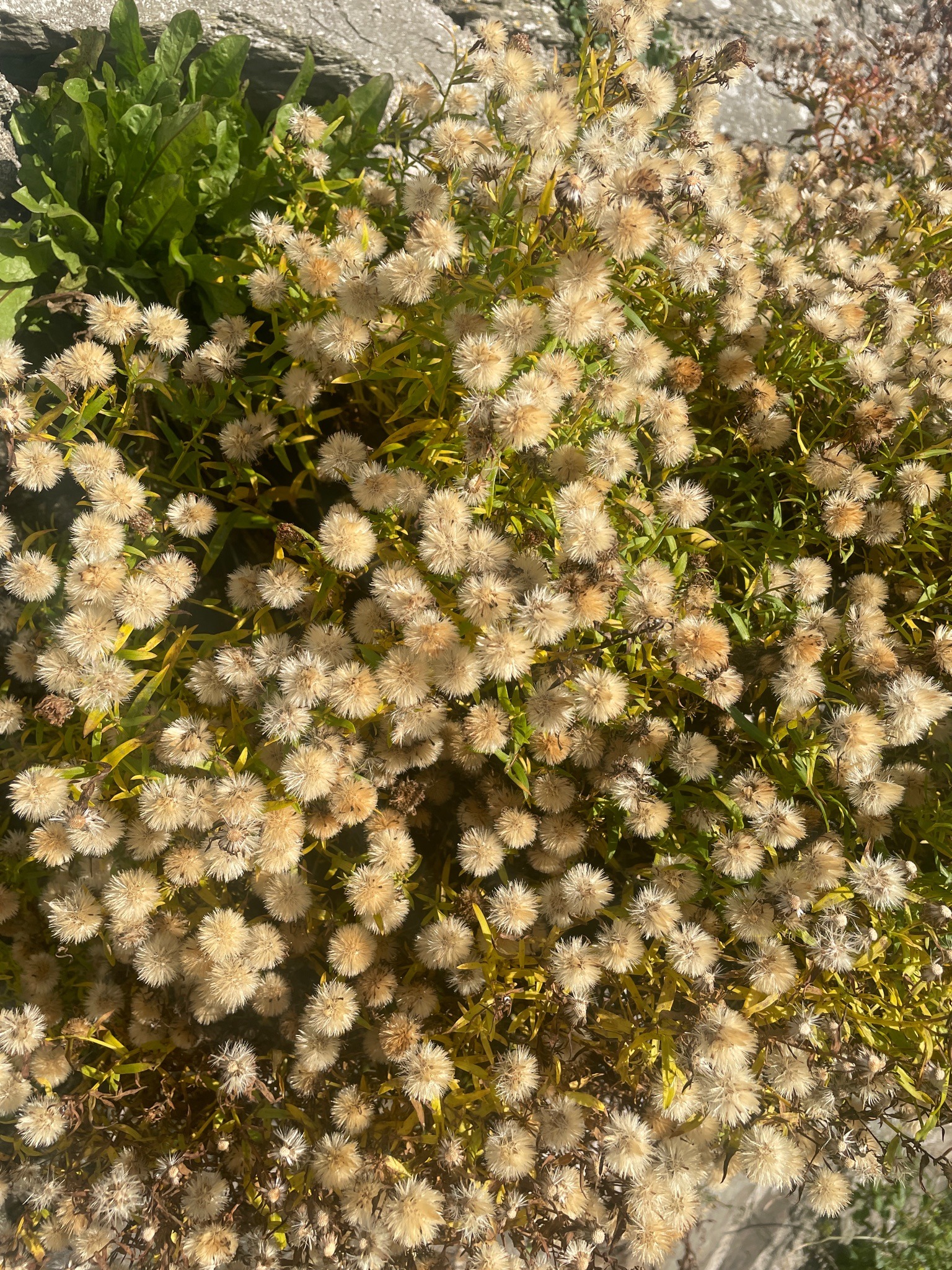
Goldilocks Aster
Galatella linosyris
A perennial herb featuring narrow, linear green leaves and producing numerous small, bright yellow disc florets that later mature into fluffy, pale tan seed heads resembling tiny globes.
- Light
- Full sun, requiring at least six hours of direct sunlight per day.
- Water
- Low water needs. Allow the soil to dry out completely between waterings. Highly drought-tolerant once established.
- Growth
- Herbaceous perennial forming dense, bushy clumps with a mature height of 1 to 2 feet and a similar spread, growing at a moderate pace.
Care instructions
Provide full sun and well-draining soil. Water sparingly once established as the plant exhibits good drought tolerance. Prune back old stems in early spring before new growth begins.
Growing details
Sunlight
Full sun, requiring at least six hours of direct sunlight per day.
Watering
Low water needs. Allow the soil to dry out completely between waterings. Highly drought-tolerant once established.
Soil
Well-draining, sandy or loamy soils with a neutral to slightly alkaline pH range between 6.5 and 7.5.
Hardiness zone
USDA hardiness zones 4 through 8, demonstrating strong cold tolerance in winter.
Growth habit
Herbaceous perennial forming dense, bushy clumps with a mature height of 1 to 2 feet and a similar spread, growing at a moderate pace.
Bloom season
Late summer to mid-autumn, displaying clusters of bright yellow button-like flowers without ray petals, transitioning into fluffy seed heads.
Propagation
Propagated primarily through seed sown in spring or by division of established clumps in early spring or autumn.
Common pests & issues
Generally robust and problem-free. May occasionally suffer from root rot if planted in poorly draining, waterlogged soils.
Similar species
Goldilocks Aster can be distinguished from other golden-flowered asters by its narrow, linear leaves and the complete absence of ray florets, giving the flower heads a distinctive button-like appearance.