
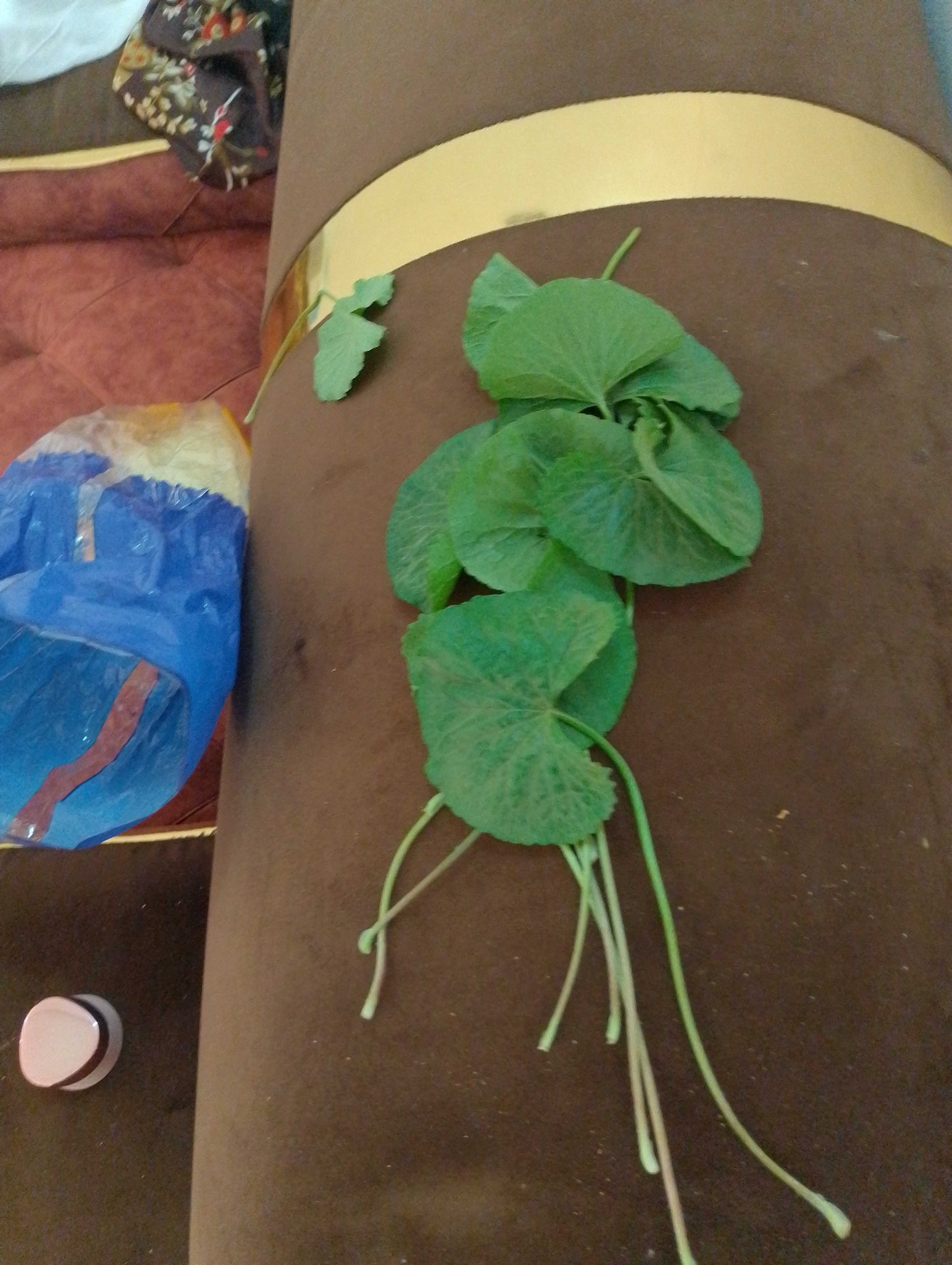
Gotu Kola
Centella asiatica
A small herbaceous creeping perennial plant with distinctive fan-shaped to kidney-shaped leaves featuring scalloped margins, long slender petioles, and small umbels of inconspicuous flowers.
- Light
- Prefers partial shade to bright indirect light, around 4 to 6 hours of filtered sunlight per day.
- Water
- Requires frequent watering to keep the soil consistently damp. It thrives in very moist environments and poorly tolerates drought. Signs of underwatering include wilting and crisping leaf margins.
- Growth
- A low-growing creeping perennial that spreads via stolons, forming a dense ground cover. Reaches a height of 2 to 6 inches with an indefinite spread.
Care instructions
Provide bright indirect light or partial shade, keeping the soil consistently moist to wet. Plant in rich, organic-rich soil with good moisture retention and a slightly acidic to neutral pH. Feed lightly during the active growing season with a balanced, water-soluble fertilizer.
Growing details
Sunlight
Prefers partial shade to bright indirect light, around 4 to 6 hours of filtered sunlight per day.
Watering
Requires frequent watering to keep the soil consistently damp. It thrives in very moist environments and poorly tolerates drought. Signs of underwatering include wilting and crisping leaf margins.
Soil
Thrives in fertile, loamy to clay soils that retain moisture well. Ideal pH ranges from 6.0 to 6.8.
Hardiness zone
USDA zones 9 through 11, grown as an annual or potted indoor plant in colder climates.
Growth habit
A low-growing creeping perennial that spreads via stolons, forming a dense ground cover. Reaches a height of 2 to 6 inches with an indefinite spread.
Bloom season
Blooms intermittently throughout the warm months, producing tiny, reddish to pinkish flowers clustered in small umbels near the ground.
Propagation
Easily propagated through division of established clumps or by rooting individual stolon runners in moist soil.
Common pests & issues
Generally resilient, but susceptible to root rot if soils become stagnant and waterlogged without adequate drainage. Aphids and spider mites may occasionally appear in indoor settings.
Similar species
Hydrocotyle species (pennyworts), which share a similar rounded, peltate leaf shape, but can be distinguished by floral structures and venation details.