
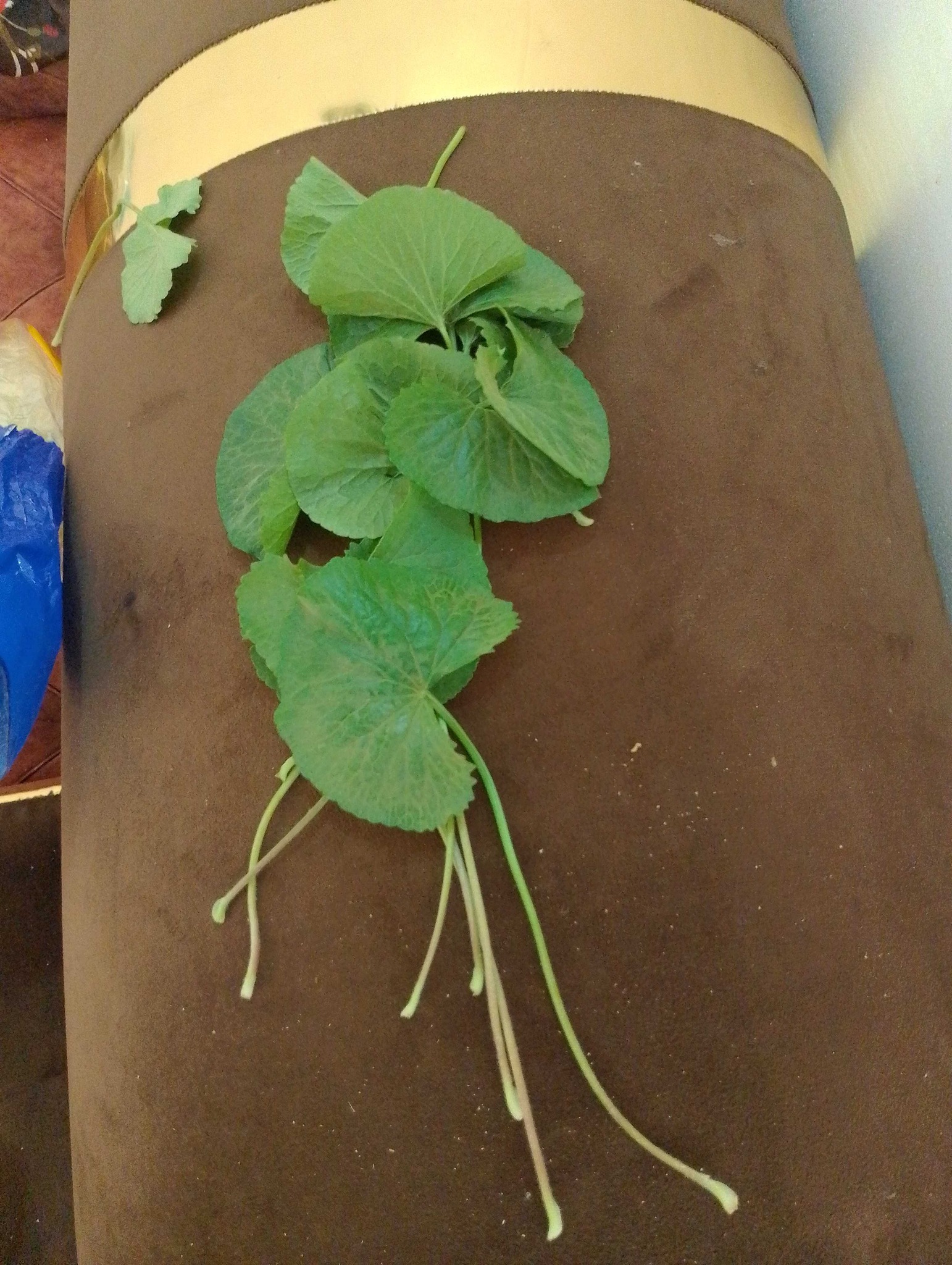
Gotu Kola
Centella asiatica
A low-growing herbaceous plant featuring fan-shaped, rounded leaves with slightly crenate margins attached to long, slender petioles.
- Light
- Partial shade to full sun, averaging 4 to 6 hours of light per day, with protection from harsh afternoon heat.
- Water
- Requires frequent watering to maintain high soil moisture. The soil should never be allowed to dry out completely. Tolerates very wet soil and shallow standing water.
- Growth
- A low-growing, creeping perennial ground cover that spreads rapidly via runners (stolons), reaching a height of 2 to 6 inches with an indefinite spread.
Care instructions
Provide bright, indirect sunlight or partial shade. Keep the soil consistently moist to wet, mimicking its natural wetland habitat, and use a rich, organic potting medium with a balanced fertilizer applied sparingly during the growing season.
Growing details
Sunlight
Partial shade to full sun, averaging 4 to 6 hours of light per day, with protection from harsh afternoon heat.
Watering
Requires frequent watering to maintain high soil moisture. The soil should never be allowed to dry out completely. Tolerates very wet soil and shallow standing water.
Soil
Prefers rich, loamy, or sandy soils with high organic matter and a neutral to slightly acidic pH range between 5.5 and 6.5.
Hardiness zone
USDA zones 9 through 11, sensitive to frost and freezing temperatures.
Growth habit
A low-growing, creeping perennial ground cover that spreads rapidly via runners (stolons), reaching a height of 2 to 6 inches with an indefinite spread.
Bloom season
Flowers in spring and summer, producing small, inconspicuous, pinkish to reddish or white flowers clustered in umbels close to the ground.
Propagation
Easily propagated through division of established clumps or by rooting the running stolons at the nodes in moist soil.
Common pests & issues
Generally robust, but can occasionally be affected by fungal leaf spots or root rot if drainage is poor or air circulation is extremely low.
Similar species
Hydrocotyle species (marsh pennies), which can be distinguished by petioles attached directly to the center of peltate leaves, whereas Centella asiatica leaves attach at the margin.