
Greater Burdock
Arctium lappa
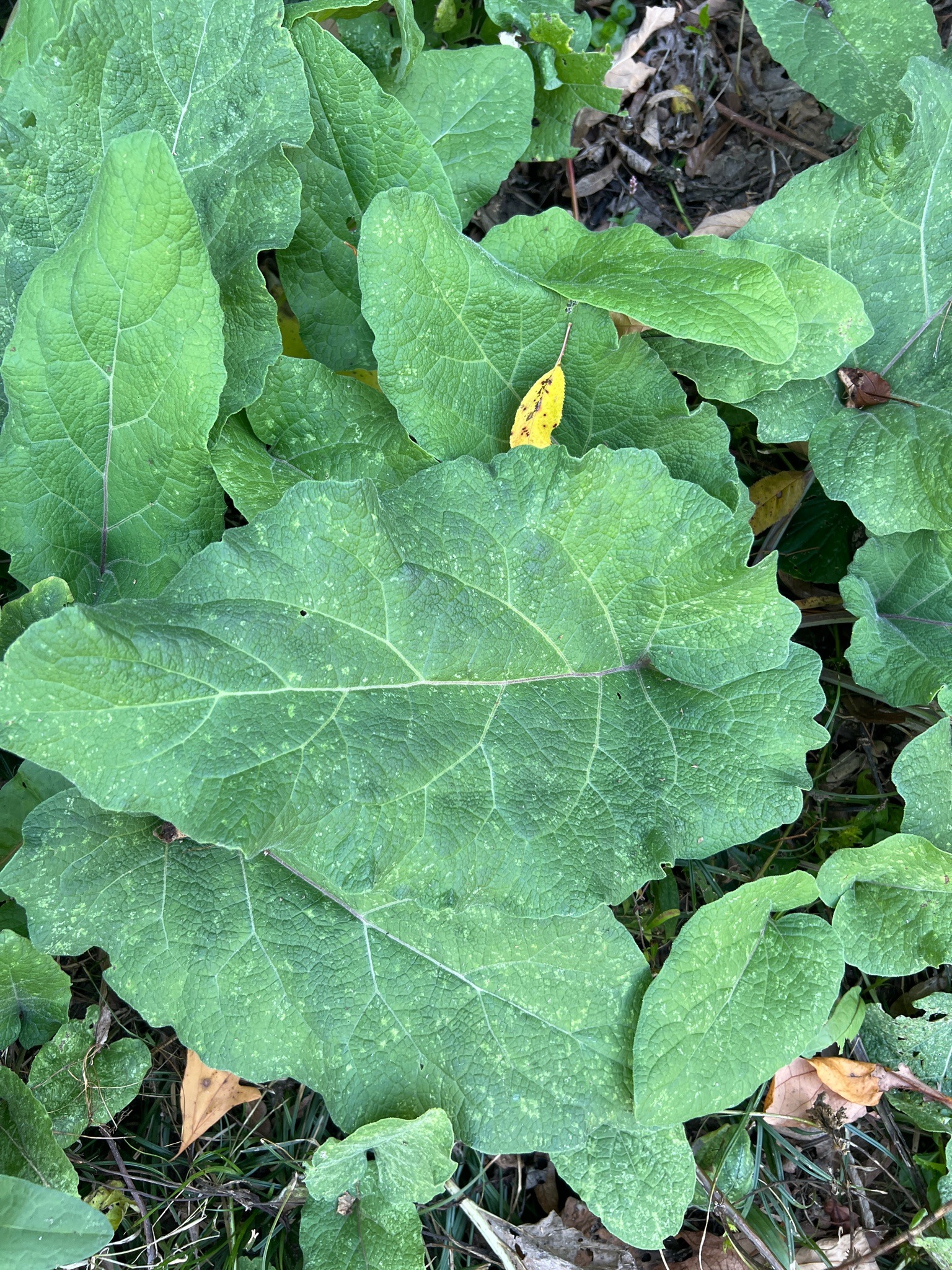
Produces a large rosette of broad, ovate-to-heart-shaped green leaves with wavy margins, prominent whitish or purplish midribs, and a woolly texture underneath during its initial growth phase.
- Light
- Full sun to partial shade, requiring at least 6 hours of direct sunlight daily for optimal foliage development.
- Water
- Moderate water needs. Allow the top few inches of soil to dry out between waterings. Drought tolerant once established.
- Growth
- Biennial herbaceous plant forming a large basal rosette in the first year and a flowering stalk reaching 4 to 9 feet tall in the second year.
Care instructions
Prefers full sun to partial shade in well-drained, nutrient-rich soils. Water moderately during establishment, tolerating dry spells once mature.
Growing details
Sunlight
Full sun to partial shade, requiring at least 6 hours of direct sunlight daily for optimal foliage development.
Watering
Moderate water needs. Allow the top few inches of soil to dry out between waterings. Drought tolerant once established.
Soil
Adaptable to various soil types but thrives in deep, loamy, well-draining soils with a neutral pH between 6.0 and 7.0.
Hardiness zone
USDA zones 3 through 9.
Growth habit
Biennial herbaceous plant forming a large basal rosette in the first year and a flowering stalk reaching 4 to 9 feet tall in the second year.
Bloom season
Mid to late summer, producing purple, thistle-like flower heads enclosed in hooked bracts.
Propagation
Propagated strictly by seeds, which disperse easily when mature via hooked burrs attaching to passing objects.
Common pests & issues
Susceptible to powdery mildew and fungal leaf spots in humid conditions, alongside occasional aphid infestations.
Similar species
Can be confused with common mullein (Verbascum thapsus) or rhubarb (Rheum rhabarbarum); distinguished by burdock's heart-shaped leaves, wavy margins, and purplish ribbed underside.