
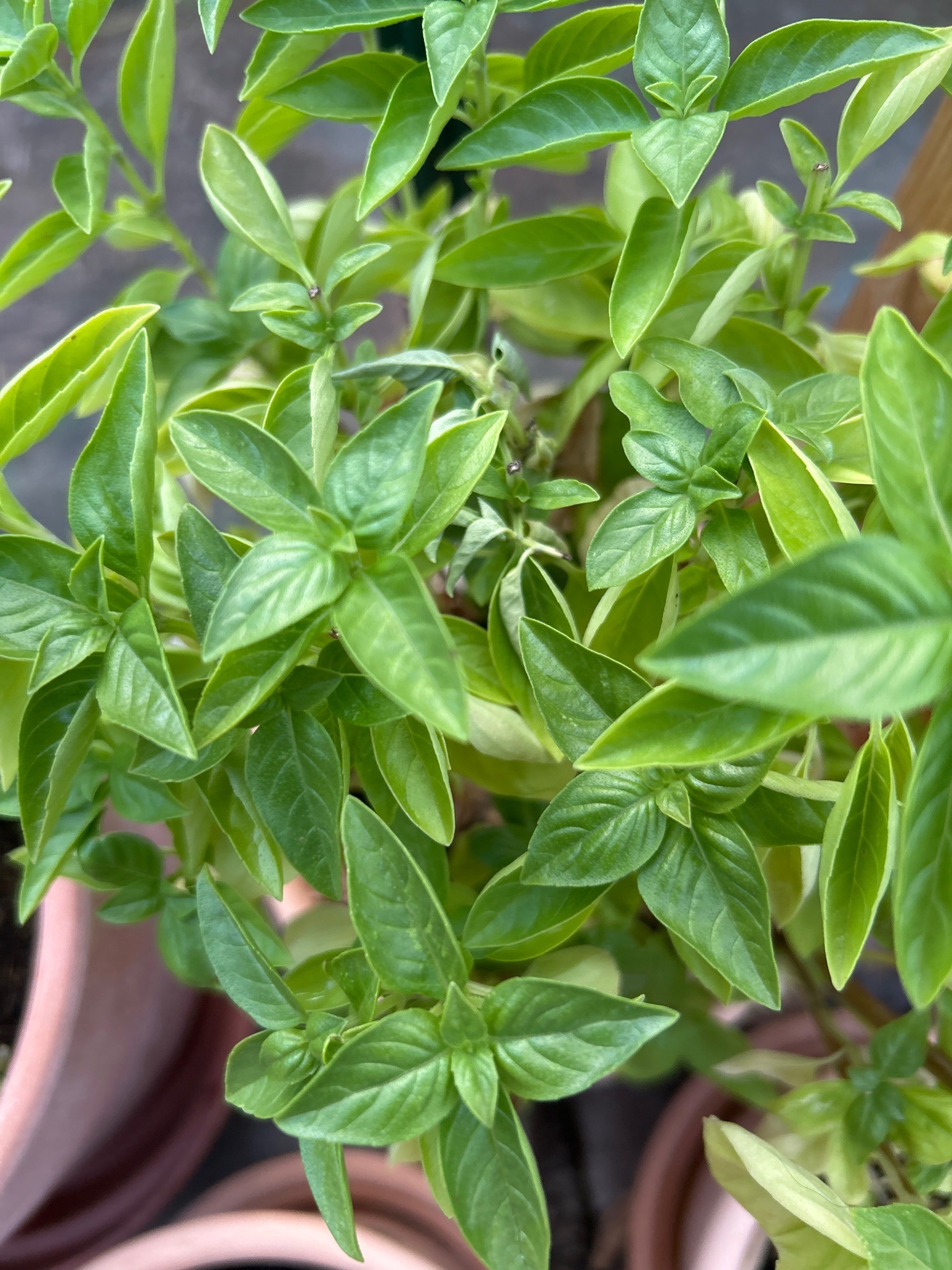
Greek Basil
Ocimum basilicum var. minimum
Greek Basil is a compact, bushy herbaceous annual or short-lived perennial forming dense, rounded spheres of very small, bright green leaves arranged oppositely along square stems.
- Light
- Full sun, requiring 6 to 8 hours of direct sunlight per day.
- Water
- Water deeply when the top 1 to 2 inches of soil feel dry to the touch. Drought tolerance is low; sensitive to both prolonged dryness and waterlogged soil which leads to root rot.
- Growth
- Upright, compact, and extremely dense mounding growth habit. Typically reaches a mature height and spread of 8 to 12 inches with a moderate to fast growth rate.
Care instructions
Provide full sun with at least 6 to 8 hours of direct light daily. Water thoroughly when the top inch of soil becomes dry, avoiding overhead watering to prevent moisture-related fungal issues. Plant in well-draining potting mix and feed sparingly with a balanced liquid fertilizer during the active growing season.
Growing details
Sunlight
Full sun, requiring 6 to 8 hours of direct sunlight per day.
Watering
Water deeply when the top 1 to 2 inches of soil feel dry to the touch. Drought tolerance is low; sensitive to both prolonged dryness and waterlogged soil which leads to root rot.
Soil
Rich, well-draining loamy or sandy soil with a slightly acidic to neutral pH range of 6.0 to 7.0.
Hardiness zone
USDA zones 10 to 11 when grown as a perennial; widely grown as an annual in zones 2 through 9.
Growth habit
Upright, compact, and extremely dense mounding growth habit. Typically reaches a mature height and spread of 8 to 12 inches with a moderate to fast growth rate.
Bloom season
Blooms in mid to late summer, producing tiny tubular white or pale purple flowers arranged in vertical terminal spikes.
Propagation
Easily propagated from stem cuttings placed in water or moist potting mix, as well as by sowing seeds directly in warm soil after the final spring frost.
Common pests & issues
Susceptible to fungal wilts, powdery mildew, and root rot if overwatered or grown in poorly draining soil. Common insect pests include aphids, whiteflies, and Japanese beetles.
Similar species
Similar to Genovese Basil, but distinguished by its much smaller, highly aromatic leaves, intensely compact dome-like growth form, and tighter branching structure.