
Greek Oregano
Origanum heracleoticum
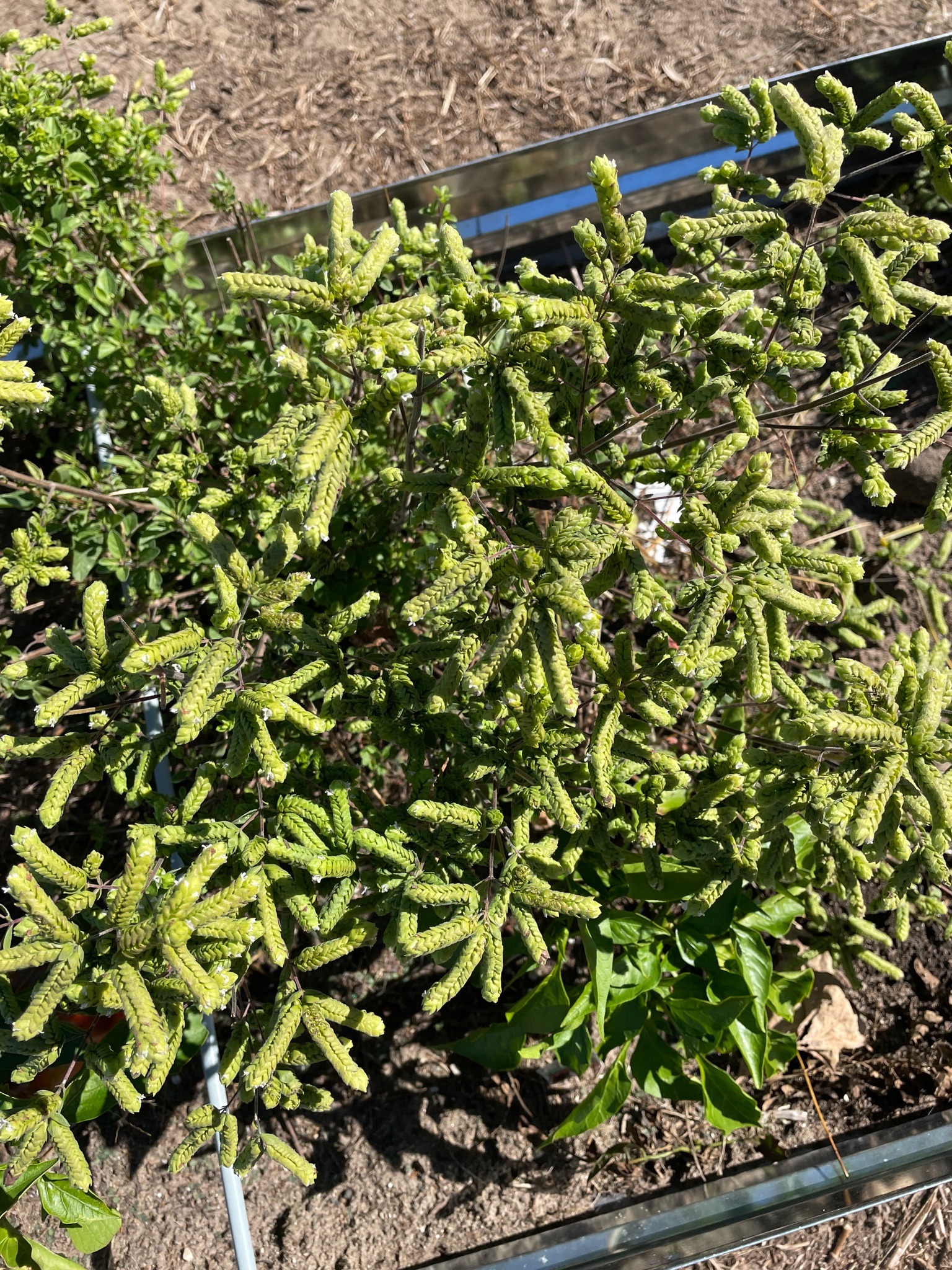
A perennial subshrub characterized by branching stems covered in small, oval, gray-green leaves and dense, four-sided spike-like clusters of bracts holding small white or pale pink flowers.
- Light
- Full sun, requiring at least 6 to 8 hours of direct sunlight daily
- Water
- Low to moderate water needs. Allow the soil to dry completely between watering sessions. Highly drought tolerant once established. Prevent root rot by avoiding overwatering.
- Growth
- Perennial subshrub with a mounding and spreading habit. Reaches a mature height of 1 to 2 feet and a spread of 1 to 1.5 feet. Moderate to fast growth rate.
Care instructions
Grow in full sun with well-draining soil. Water moderately, allowing the soil to dry out between waterings. Fertilize sparingly in spring.
Growing details
Sunlight
Full sun, requiring at least 6 to 8 hours of direct sunlight daily
Watering
Low to moderate water needs. Allow the soil to dry completely between watering sessions. Highly drought tolerant once established. Prevent root rot by avoiding overwatering.
Soil
Prefers light, sandy, or loamy, well-draining soils with a neutral to slightly alkaline pH between 6.5 and 7.5.
Hardiness zone
USDA Hardiness Zones 5 through 9
Growth habit
Perennial subshrub with a mounding and spreading habit. Reaches a mature height of 1 to 2 feet and a spread of 1 to 1.5 feet. Moderate to fast growth rate.
Bloom season
Blooms from mid-summer to early autumn, producing tiny white or pale pink flowers nestled within tight, green or purplish bracts.
Propagation
Propagated easily through seed, stem cuttings taken in spring or summer, or by dividing established clumps in early spring.
Common pests & issues
Generally trouble-free, but susceptible to root rot in poorly draining soils. Spider mites and aphids can occasionally appear.
Similar species
Common Oregano (Origanum vulgare), which generally has broader, smoother leaves and a milder flavor profile compared to the intense, pungent foliage of Greek Oregano.