
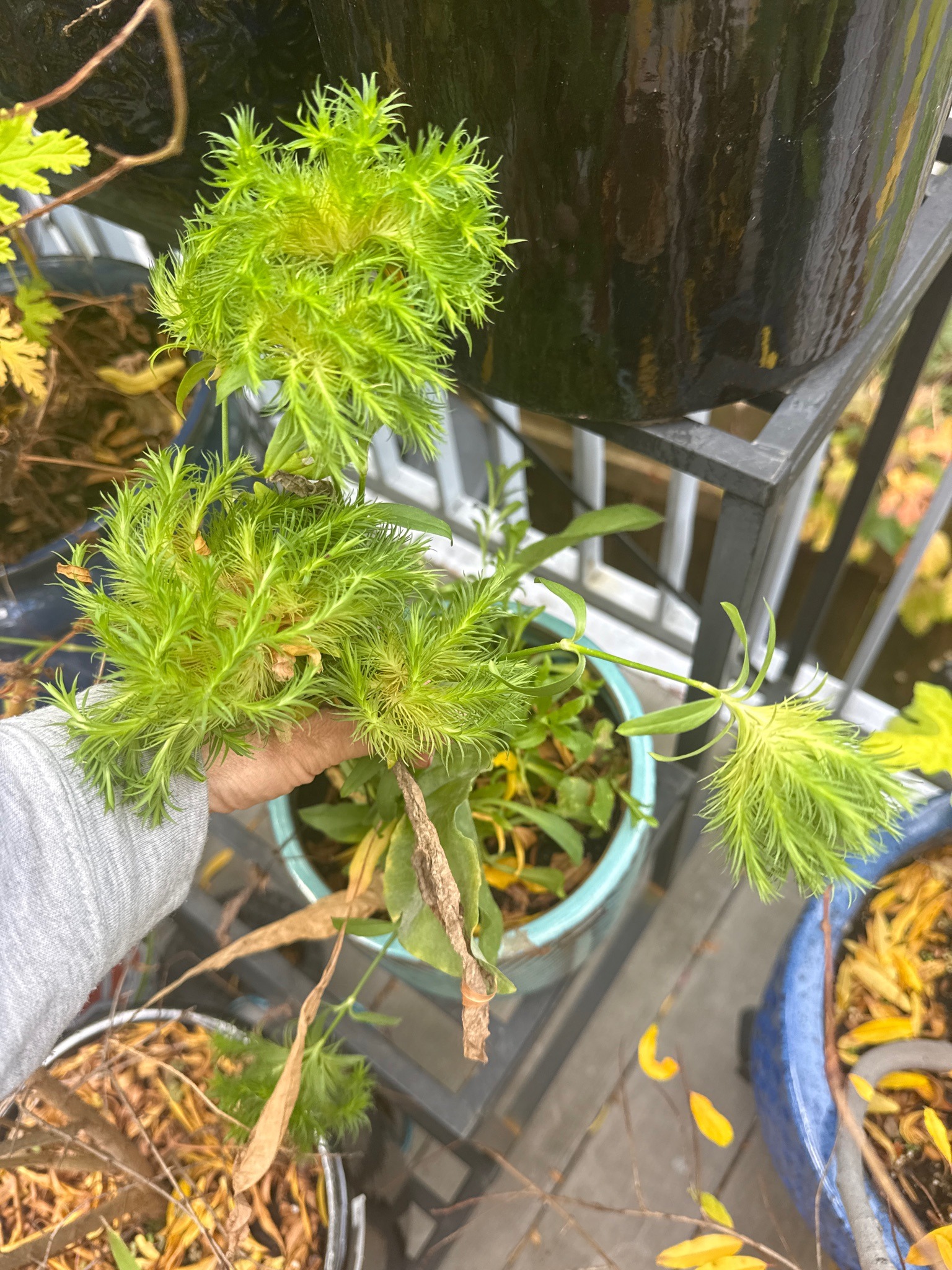
Green Ball Sweet William
Dianthus barbatus 'Green Ball'
A unique cultivar of Sweet William characterized by dense, fluffy, vibrant green pom-pom flower heads composed entirely of modified, filamentous bracts or petals rather than standard flat-faced flowers.
- Light
- Full sun to partial shade, requiring at least 6 hours of direct sunlight daily.
- Water
- Moderate watering needs. Allow the topsoil to dry slightly between watering sessions; avoid waterlogged soil.
- Growth
- Typically grown as a short-lived perennial or biennial, forming upright clumps reaching 12 to 24 inches in height with a similar spread, exhibiting a moderate growth rate.
Care instructions
Grow in full sun to partial shade with well-draining soil. Water regularly when the top inch of soil becomes dry, avoiding overhead watering to prevent moisture-related fungal issues. Feed lightly with a balanced, slow-release fertilizer in spring.
Growing details
Sunlight
Full sun to partial shade, requiring at least 6 hours of direct sunlight daily.
Watering
Moderate watering needs. Allow the topsoil to dry slightly between watering sessions; avoid waterlogged soil.
Soil
Prefers rich, loamy, well-draining soil with a neutral to slightly alkaline pH ranging from 6.0 to 7.5.
Hardiness zone
USDA Hardiness Zones 3 through 9.
Growth habit
Typically grown as a short-lived perennial or biennial, forming upright clumps reaching 12 to 24 inches in height with a similar spread, exhibiting a moderate growth rate.
Bloom season
Late spring through mid-summer, featuring distinctive spherical, bright green flower clusters that lack traditional petals.
Propagation
Can be propagated through stem cuttings taken in late spring or summer, or by division of established clumps after the flowering season.
Common pests & issues
Susceptible to crown rot, rust, and powdery mildew if air circulation is poor or soil retains too much moisture. Aphids and spider mites may occasionally appear.
Similar species
Standard Dianthus barbatus cultivars, which can be distinguished by their flat-topped clusters of multi-colored, single or double flowers.