
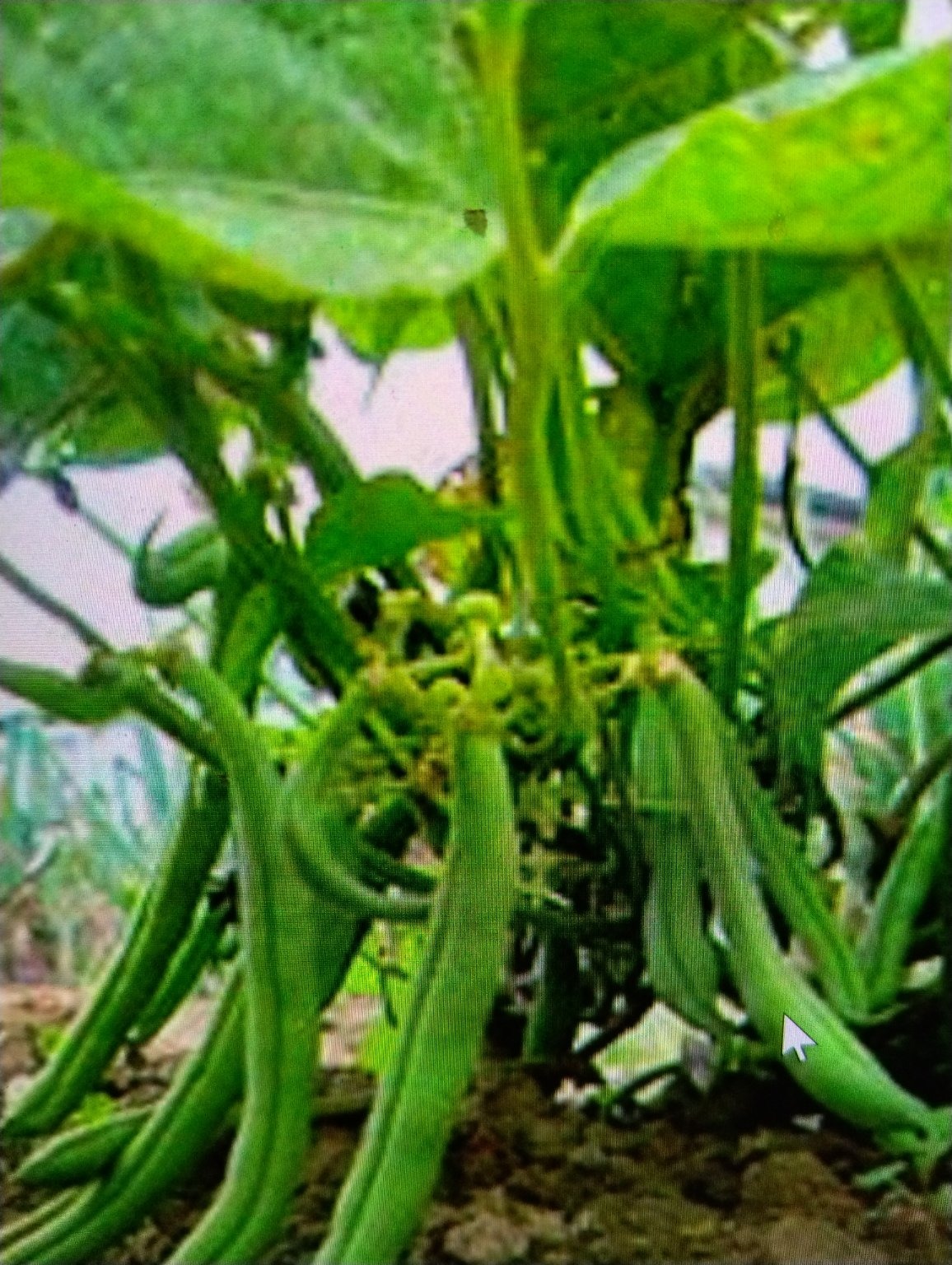
Green bean
Phaseolus vulgaris
An herbaceous annual plant featuring trifoliate green leaves, delicate white or purple flowers, and elongated, slender green pods hanging in clusters.
- Light
- Full sun, requiring 6 to 8 hours of direct sunlight per day.
- Water
- Water consistently to keep the soil evenly moist, providing about 1 inch of water per week. Allow the top inch of soil to dry slightly between waterings. Avoid overhead watering to prevent moisture-borne fungal issues.
- Growth
- Herbaceous annual available in bush forms (growing 1 to 2 feet tall) and pole forms (climbing up to 6 to 10 feet with support), characterized by a fast growth rate.
Care instructions
Provide full sun with at least 6 to 8 hours of direct light daily. Maintain consistently moist, well-draining soil rich in organic matter. Apply a balanced, low-nitrogen fertilizer sparingly during the growing season.
Growing details
Sunlight
Full sun, requiring 6 to 8 hours of direct sunlight per day.
Watering
Water consistently to keep the soil evenly moist, providing about 1 inch of water per week. Allow the top inch of soil to dry slightly between waterings. Avoid overhead watering to prevent moisture-borne fungal issues.
Soil
Prefers loose, well-draining loam or sandy loam enriched with organic compost, with an optimal pH range of 6.0 to 6.8.
Hardiness zone
Typically grown as an annual in USDA hardiness zones 2 through 11.
Growth habit
Herbaceous annual available in bush forms (growing 1 to 2 feet tall) and pole forms (climbing up to 6 to 10 feet with support), characterized by a fast growth rate.
Bloom season
Blooms from late spring through summer, producing small, papilionaceous flowers in shades of white, pink, or light purple.
Propagation
Propagated exclusively from seeds sown directly into warm soil after the last frost date, spaced approximately 1 to 2 inches apart for bush varieties and 3 to 4 inches apart for pole varieties.
Common pests & issues
Susceptible to fungal pathogens such as powdery mildew and rust, as well as insect pests like aphids and bean beetles. Prevent issues by ensuring adequate air circulation, practicing crop rotation, and avoiding excess nitrogen fertilization.
Similar species
Look-alike species include Vigna unguiculata (cowpea) and Pisum sativum (pea), which can be distinguished by differences in stipules, leaf structure, and floral morphology.