
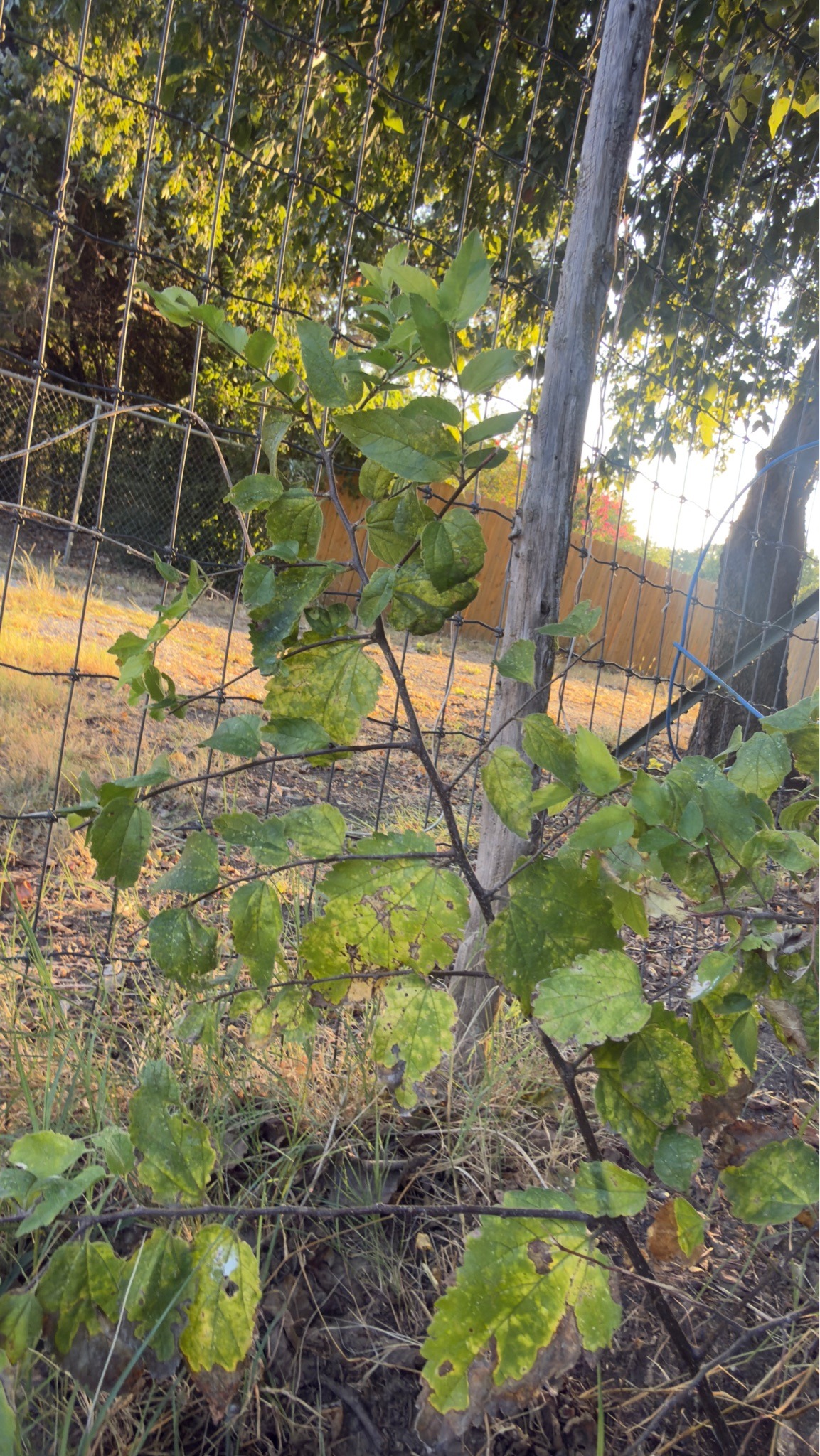
Hackberry
Celtis occidentalis
A deciduous tree or large shrub featuring alternate, coarsely serrated leaves that are strongly asymmetric at the base, and smooth to rough textured bark.
- Light
- Full sun to partial shade, requiring at least 6 hours of direct sunlight daily.
- Water
- Water deeply when newly planted to establish roots. Established plants have good drought tolerance and only need watering during extended dry periods.
- Growth
- Perennial woody plant growing as a tree or large shrub, reaching heights of 30 to 50 feet with an equivalent spread under optimal conditions, growing at a medium to fast rate.
Care instructions
Provide full sun to partial shade, well-draining soil, and consistent moisture during the establishment phase. Once mature, it has good drought tolerance and requires minimal feeding.
Growing details
Sunlight
Full sun to partial shade, requiring at least 6 hours of direct sunlight daily.
Watering
Water deeply when newly planted to establish roots. Established plants have good drought tolerance and only need watering during extended dry periods.
Soil
Adaptable to a wide range of well-draining soils including loam, clay, and sandy types, with a preferred pH range between 6.0 and 8.0.
Hardiness zone
USDA zones 3 through 9.
Growth habit
Perennial woody plant growing as a tree or large shrub, reaching heights of 30 to 50 feet with an equivalent spread under optimal conditions, growing at a medium to fast rate.
Bloom season
Spring, featuring inconspicuous small green flowers that appear alongside new foliage.
Propagation
Propagated primarily through stratified seeds sown in autumn or via hardwood and softwood cuttings taken during the growing season.
Common pests & issues
Susceptible to hackberry psyllids which cause galls on leaves, powdery mildew, and leaf spot fungal issues, which are generally managed by maintaining proper air circulation.
Similar species
Elms (Ulmus species), which can be distinguished by different branching patterns and samara-type fruits, whereas hackberries produce small drupes.