
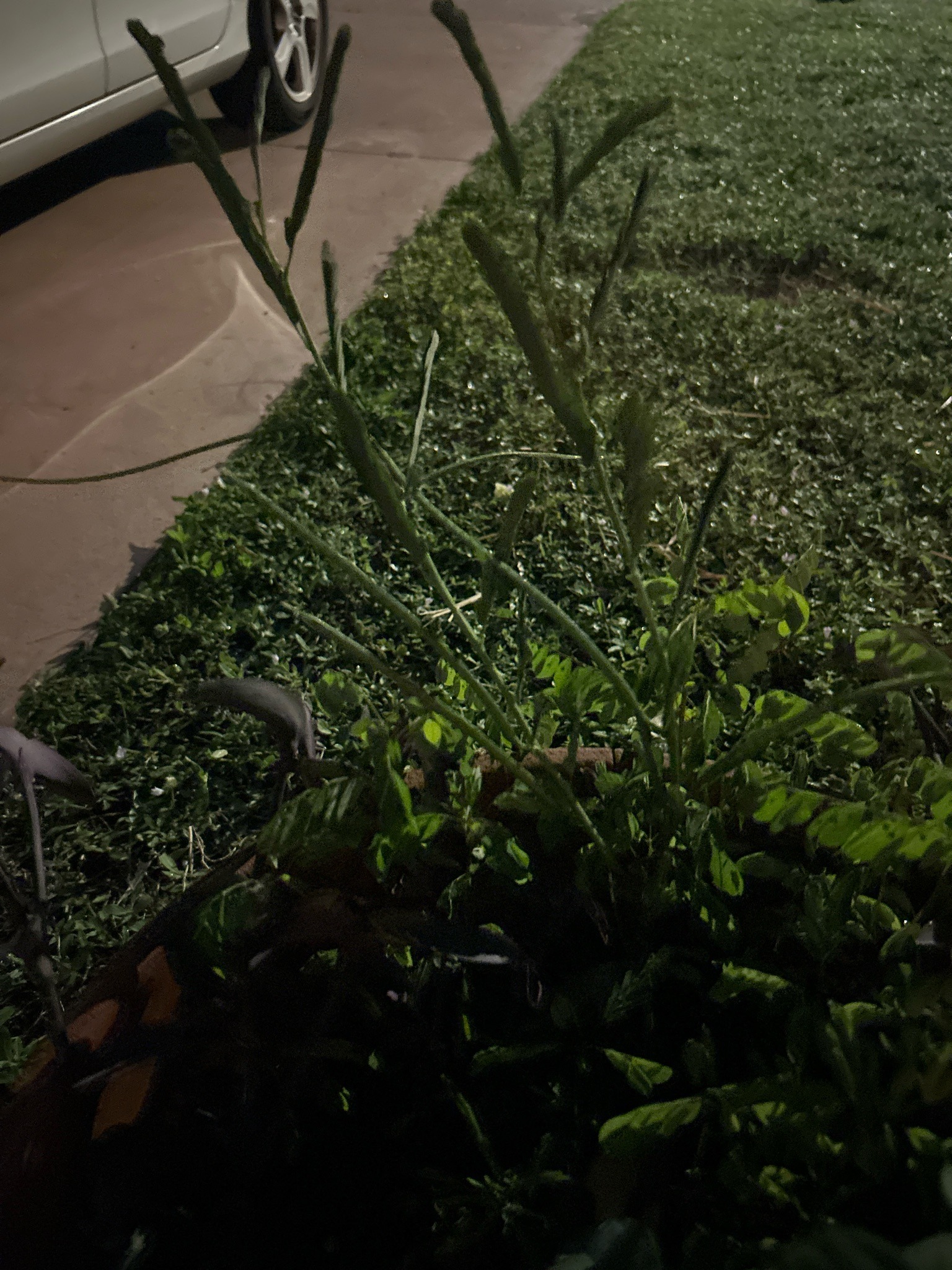
Hairy vetch
Vicia villosa
A herbaceous climbing or trailing plant featuring slender, branching stems, pinnately compound leaves with numerous leaflets, and tendrils used for climbing. It produces elongated clusters of purplish-blue to violet flowers followed by smooth pods.
- Light
- Full sun to partial shade, requiring at least six hours of direct sunlight daily for optimal growth.
- Water
- Requires moderate moisture during early growth phases. Highly drought-tolerant once established. Avoid overly saturated soils to prevent root rot.
- Growth
- An annual or biennial climbing vine with weak stems that grow up to 3 to 5 feet long, often sprawling across the ground or climbing surrounding vegetation rapidly.
Care instructions
Provide full sun to partial shade and well-draining soil. Water moderately to establish root systems, though established plants show good drought tolerance. Apply a balanced low-nitrogen fertilizer only if soil nutrients are severely lacking, as the plant fixes its own nitrogen.
Growing details
Sunlight
Full sun to partial shade, requiring at least six hours of direct sunlight daily for optimal growth.
Watering
Requires moderate moisture during early growth phases. Highly drought-tolerant once established. Avoid overly saturated soils to prevent root rot.
Soil
Adaptable to a wide range of soil types including sandy, loam, and clay soils, provided they have good drainage. Prefers a neutral to slightly acidic pH range between 6.0 and 7.0.
Hardiness zone
USDA hardiness zones 4 through 9, demonstrating strong winter cold tolerance.
Growth habit
An annual or biennial climbing vine with weak stems that grow up to 3 to 5 feet long, often sprawling across the ground or climbing surrounding vegetation rapidly.
Bloom season
Blooms from late spring through mid-summer, displaying one-sided racemes of blue, purple, or sometimes white zygomorphic flowers.
Propagation
Propagated primarily by seeds sown directly in spring or autumn. Seeds benefit from scarification to improve germination rates.
Common pests & issues
Susceptible to powdery mildew and rust in humid conditions. Pests such as aphids and thrips can occasionally affect foliage, manageable with targeted horticultural sprays.
Similar species
Common vetch (Vicia sativa), which can be distinguished by its broader leaflets, fewer flowers per cluster, and larger seed pods.