
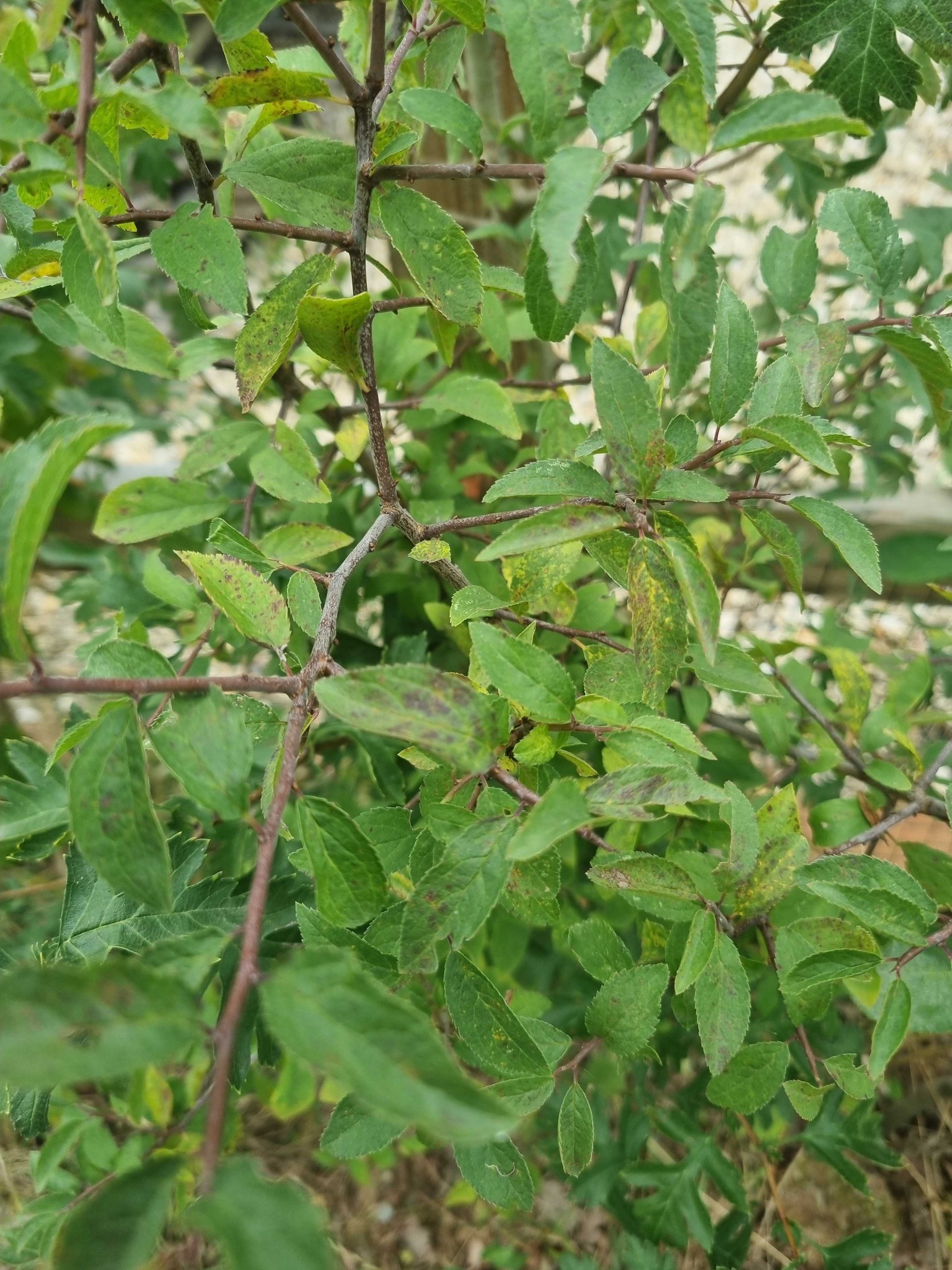
Hawthorn
Crataegus monogyna
A deciduous shrub or small tree featuring dense branches, alternate lobed or serrated dark green leaves, and brownish-grey bark often with thorns.
- Light
- Full sun to partial shade, requiring at least 6 hours of direct sunlight daily
- Water
- Moderate watering when young; allow soil to dry out between waterings once established. Highly drought tolerant.
- Growth
- Perennial shrub or small tree with a dense, rounded crown, typically growing 15 to 30 feet tall and wide with a moderate growth rate.
Care instructions
Provide full sun to partial shade in well-draining soil. Water regularly during establishment, becoming drought-tolerant thereafter. Apply balanced fertilizer in early spring.
Growing details
Sunlight
Full sun to partial shade, requiring at least 6 hours of direct sunlight daily
Watering
Moderate watering when young; allow soil to dry out between waterings once established. Highly drought tolerant.
Soil
Adaptable to a wide range of soil types including clay, loam, and sand, provided they are well-draining, with a neutral to slightly acidic pH.
Hardiness zone
USDA Hardiness Zones 4 through 8
Growth habit
Perennial shrub or small tree with a dense, rounded crown, typically growing 15 to 30 feet tall and wide with a moderate growth rate.
Bloom season
Spring; produces clusters of small, white or pinkish saucer-shaped flowers with five petals.
Propagation
Propagated through seeds, which often require stratification, or by hardwood cuttings and grafting.
Common pests & issues
Susceptible to fungal diseases such as leaf spot, rust, and powdery mildew, as well as pests like aphids and scale insects.
Similar species
Crataegus laevigata (Midland hawthorn), which features leaves that are less deeply lobed and flowers with two or three styles rather than one.