
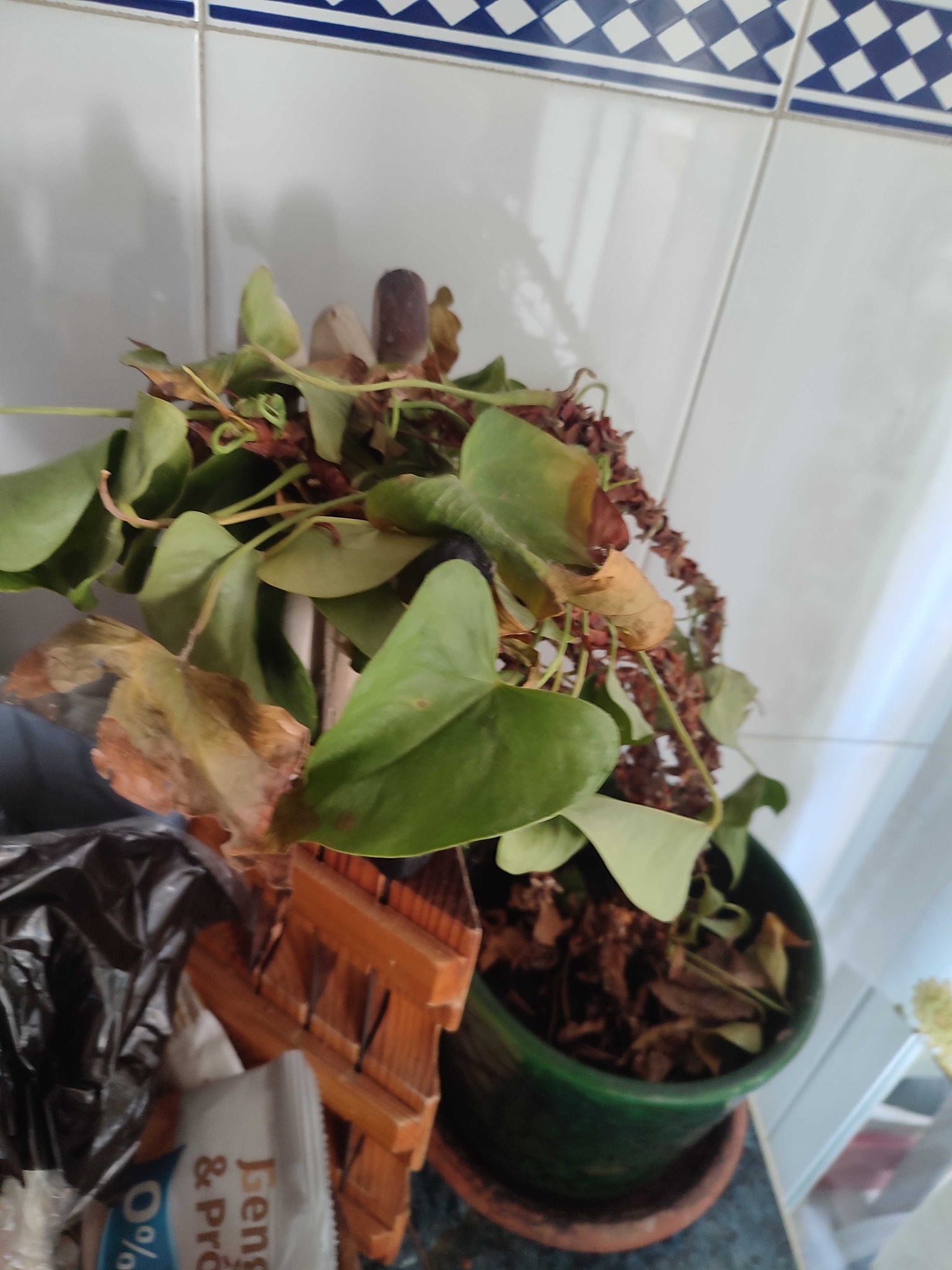
Heartleaf Philodendron
Philodendron hederaceum
A trailing tropical vine featuring glossy, dark green heart-shaped leaves that emerge on slender stems, often grown in hanging baskets or trained upward along supports.
- Light
- Bright, indirect light for 6 to 8 hours daily; tolerates lower light conditions but growth may slow significantly.
- Water
- Water thoroughly when the top 1 to 2 inches of soil feel dry to the touch. Reduce watering frequency during the winter months.
- Growth
- A perennial, trailing epiphyte with vines that can reach lengths of 3 to 6 feet or more indoors, exhibiting a fast growth rate under optimal conditions.
Care instructions
Provide bright, indirect sunlight and allow the top few inches of soil to dry out completely between watering sessions. Maintain moderate indoor temperatures and high ambient humidity, feeding with a balanced liquid fertilizer monthly during the spring and summer months.
Growing details
Sunlight
Bright, indirect light for 6 to 8 hours daily; tolerates lower light conditions but growth may slow significantly.
Watering
Water thoroughly when the top 1 to 2 inches of soil feel dry to the touch. Reduce watering frequency during the winter months.
Soil
Well-draining, nutrient-rich potting mix containing peat moss, perlite, and bark, with an ideal pH range between 6.0 and 6.5.
Hardiness zone
USDA hardiness zones 10 through 11; grown primarily as an indoor houseplant in cooler temperate climates.
Growth habit
A perennial, trailing epiphyte with vines that can reach lengths of 3 to 6 feet or more indoors, exhibiting a fast growth rate under optimal conditions.
Bloom season
Rarely flowers when grown indoors as a potted houseplant; produces infrequent greenish-white spathe structures in its native tropical habitat.
Propagation
Propagated easily through stem cuttings placed in water or directly into moist potting mix, ideally during the active spring growing season.
Common pests & issues
Prone to root rot if overwatered or planted in heavy, poorly draining soil. May occasionally attract pests such as mealybugs, spider mites, or fungus gnats.
Similar species
Epipremnum aureum (Golden Pothos), which can be distinguished by its variegated leaves and characteristic runner roots along the stems.