
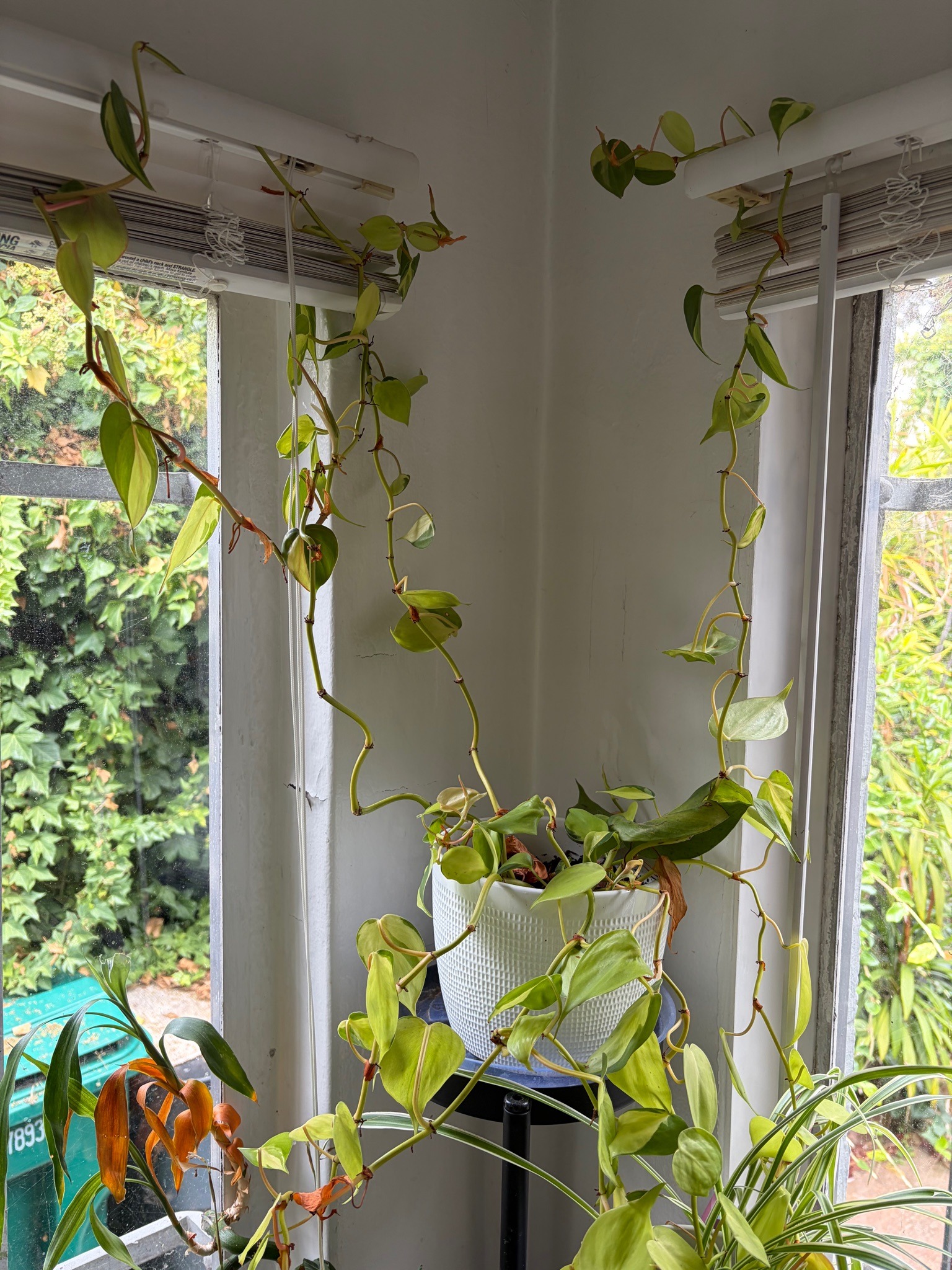
Heartleaf Philodendron
Philodendron hederaceum
A popular trailing houseplant featuring glossy, heart-shaped leaves that can display variegated patterns of green and chartreuse or lime yellow, with long vining stems.
- Light
- Bright, indirect sunlight for 6 to 8 hours daily; tolerates lower light conditions but growth may slow and variegation can fade.
- Water
- Water thoroughly when the top 1 to 2 inches of soil feel dry to the touch. Allow excess water to drain completely. Reduce watering frequency during cooler winter months.
- Growth
- Trailing perennial vine that can grow several feet in length indoors, featuring a moderate growth rate.
Care instructions
Provide bright indirect light, water when the top two inches of soil are dry, plant in well-draining potting mix, and feed monthly with a balanced liquid houseplant fertilizer during the growing season.
Growing details
Sunlight
Bright, indirect sunlight for 6 to 8 hours daily; tolerates lower light conditions but growth may slow and variegation can fade.
Watering
Water thoroughly when the top 1 to 2 inches of soil feel dry to the touch. Allow excess water to drain completely. Reduce watering frequency during cooler winter months.
Soil
Well-draining, loose potting mix rich in organic matter, with an ideal pH range between 6.0 and 6.5.
Hardiness zone
USDA hardiness zones 10 through 11 when grown outdoors; primarily cultivated as an indoor houseplant in cooler regions.
Growth habit
Trailing perennial vine that can grow several feet in length indoors, featuring a moderate growth rate.
Bloom season
Non-flowering when grown indoors under typical domestic conditions.
Propagation
Easily propagated through stem cuttings placed in water or directly into moist potting soil, ideally taking cuttings just below a node.
Common pests & issues
Susceptible to mealybugs, scale, and fungus gnats. Over-watering can lead to root rot, while underwatering causes leaf curling or dry brown tips.
Similar species
Often confused with Epipremnum aureum (Golden Pothos), which can be distinguished by its ridged petioles and the presence of grooved stems, whereas Philodendron hederaceum has smooth petioles and stems.