
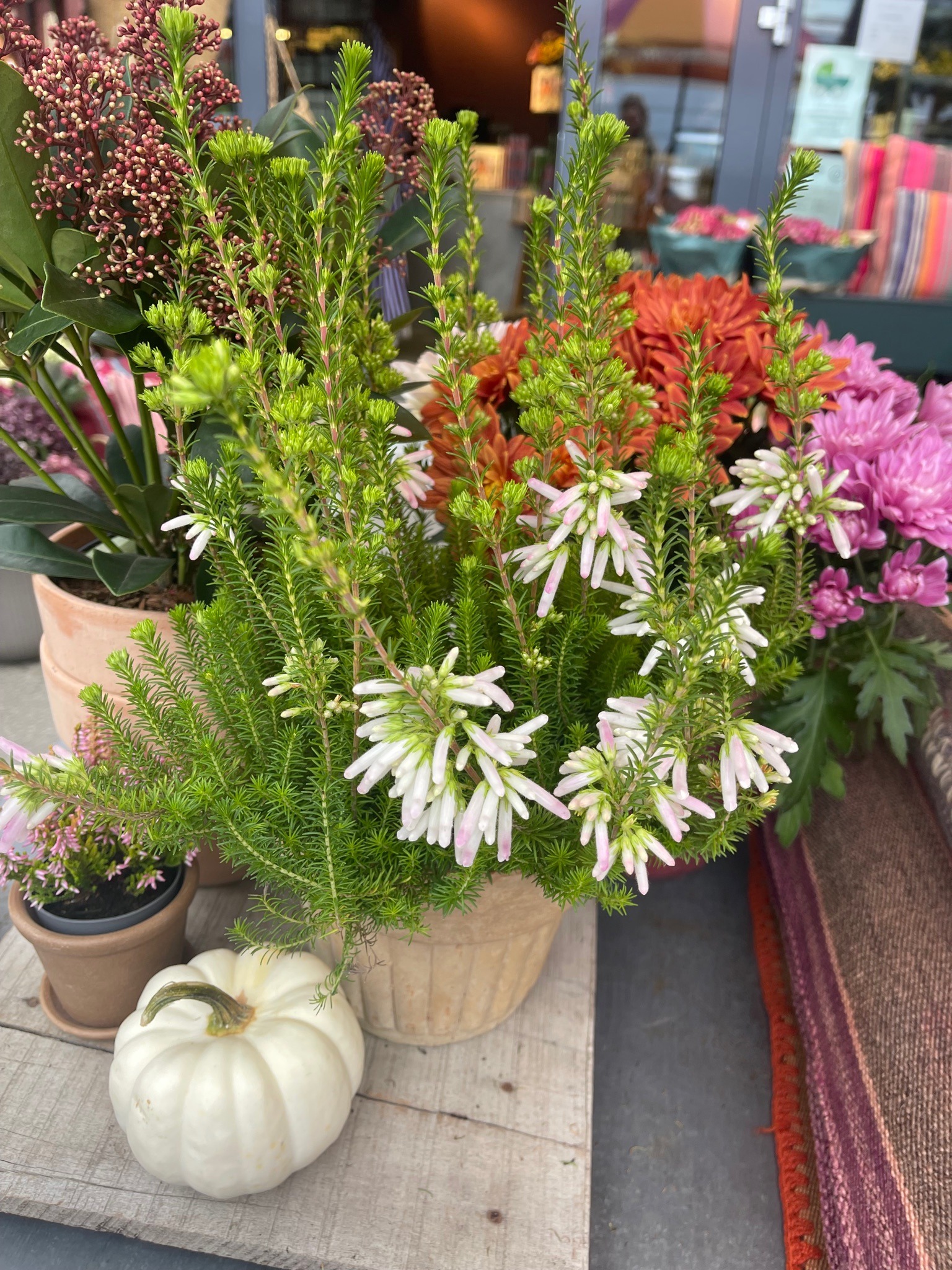
Heather
Erica gracilis
An evergreen shrub featuring bright green, needle-like foliage and an abundance of small, bell-shaped flowers in shades of pink, white, or purple.
- Light
- Full sun to partial shade, requiring at least 6 hours of direct sunlight daily.
- Water
- Water regularly to maintain even moisture in the soil. Avoid letting the root system dry out completely, and prevent waterlogging.
- Growth
- A compact, bushy perennial evergreen shrub growing to a mature height and spread of 1 to 2 feet with a slow to moderate growth rate.
Care instructions
Plant in full sun to partial shade with acidic, well-draining soil. Keep the soil consistently moist without allowing it to sit in standing water. Feed with a low-nitrogen, acid-forming fertilizer during the active growing season.
Growing details
Sunlight
Full sun to partial shade, requiring at least 6 hours of direct sunlight daily.
Watering
Water regularly to maintain even moisture in the soil. Avoid letting the root system dry out completely, and prevent waterlogging.
Soil
Requires acidic, well-draining soils with an optimal pH range between 4.5 and 5.5.
Hardiness zone
USDA zones 5 through 8, preferring temperate climates with moderate winter lows.
Growth habit
A compact, bushy perennial evergreen shrub growing to a mature height and spread of 1 to 2 feet with a slow to moderate growth rate.
Bloom season
Flowers from late summer through autumn, producing clusters of bell-shaped, tubular pink or white flowers.
Propagation
Propagated primarily through semi-hardwood stem cuttings taken in late summer or by division of established root clumps.
Common pests & issues
Prone to root rot if drainage is poor. Fungal diseases such as powdery mildew can occur in humid environments with poor air circulation.
Similar species
Calluna vulgaris (Scotch heather), which can be distinguished by its flatter, scale-like overlapping leaves rather than needle-like leaves.