
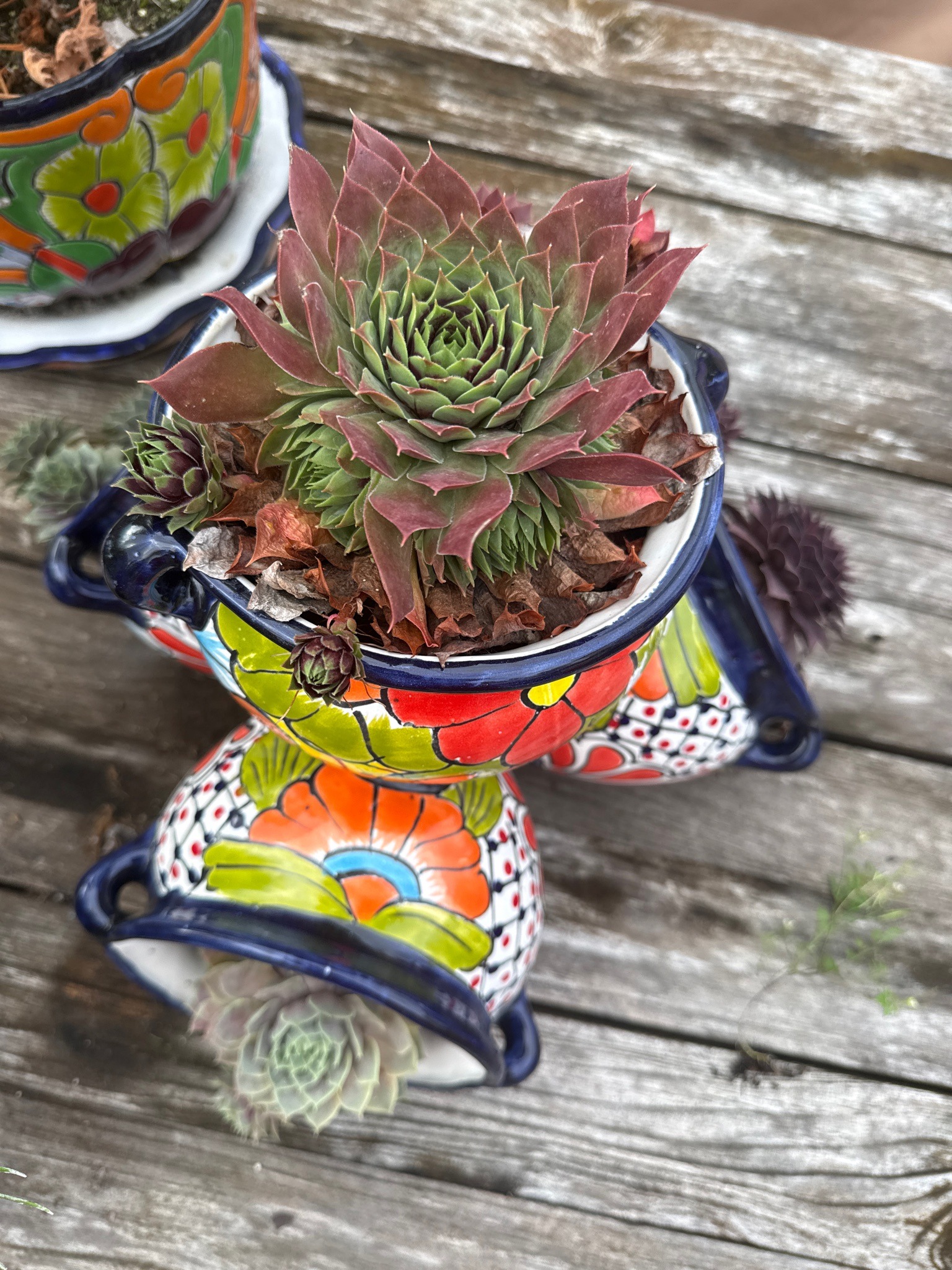
Hens and Chicks
Sempervivum tectorum
A low-growing, mat-forming succulent perennial featuring tight rosettes of fleshy, pointed leaves that are green tipped with deep maroon or red. It produces smaller offset rosettes, known as chicks, clustered around the central mother plant, known as the hen.
- Light
- Full sun, requiring at least six hours of direct sunlight daily to maintain vibrant foliage coloration and compact growth form.
- Water
- Low water requirements. Allow the soil to dry completely between watering sessions. Highly drought-tolerant once established. Prevent water from sitting in the center of the rosettes to avoid moisture damage.
- Growth
- Evergreen perennial succulent forming dense clumps of rosettes. Individual rosettes typically reach 2 to 4 inches in height and spread indefinitely through the production of offsets.
Care instructions
Provide full sun exposure and plant in very well-draining soil. Water thoroughly only when the soil has completely dried out, reducing moisture during winter months. Fertilize sparingly in spring with a balanced, diluted succulent fertilizer.
Growing details
Sunlight
Full sun, requiring at least six hours of direct sunlight daily to maintain vibrant foliage coloration and compact growth form.
Watering
Low water requirements. Allow the soil to dry completely between watering sessions. Highly drought-tolerant once established. Prevent water from sitting in the center of the rosettes to avoid moisture damage.
Soil
Gritty, sandy, or rocky soil with exceptionally sharp drainage and a neutral to slightly alkaline pH range between 6.0 and 7.5.
Hardiness zone
USDA Hardiness Zones 3 through 8, demonstrating high cold tolerance and surviving freezing winter temperatures.
Growth habit
Evergreen perennial succulent forming dense clumps of rosettes. Individual rosettes typically reach 2 to 4 inches in height and spread indefinitely through the production of offsets.
Bloom season
Summer. Produces upright, fleshy flower stalks topped with star-shaped pink or reddish flowers from mature rosettes, which then die back after flowering while numerous offsets continue growing.
Propagation
Easily propagated by separating the small offsets or chicks from the parent plant during the active growing season and planting them directly into well-draining soil.
Common pests & issues
Susceptible to root rot if grown in poorly draining soil or overwatered. Fungal leaf spots may occur in humid conditions with poor air circulation. Pests are rare but can occasionally include aphids or mealybugs.
Similar species
Echeveria species, which generally prefer milder winters and feature less rigid, more tender leaves compared to the cold-hardy Sempervivum.