
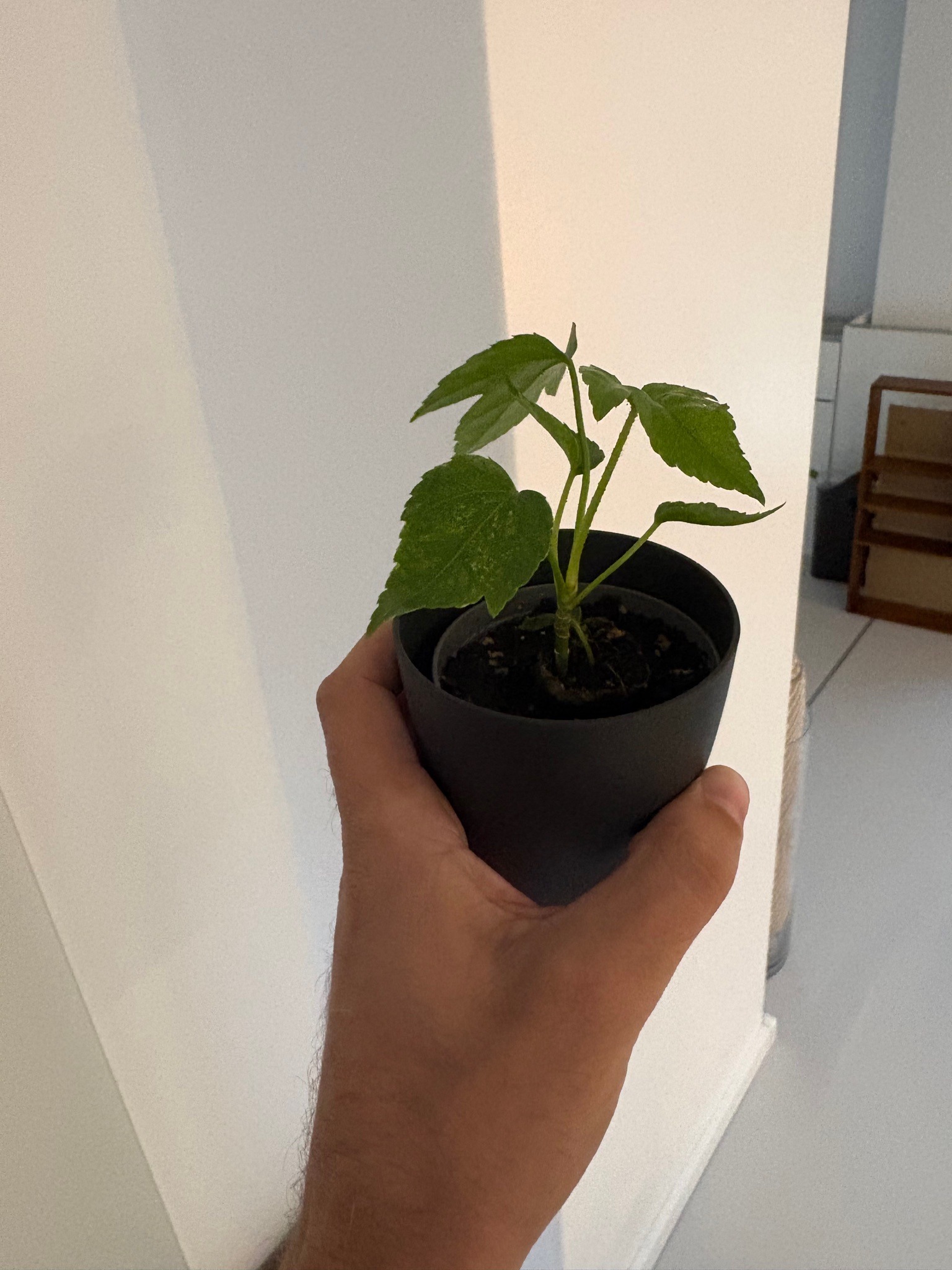
Hibiscus
Hibiscus rosa-sinensis
A young shrub with alternate, glossy green leaves having serrated margins and distinctive prominent veins, currently developing a woody central stem in a small container.
- Light
- Full sun to partial shade, requiring at least 6 hours of bright light daily
- Water
- Moderate watering frequency; allow the topsoil to dry slightly between waterings. Avoid letting the potting medium dry out completely or stay continuously waterlogged.
- Growth
- Perennial evergreen shrub with an upright, branching growth habit, reaching mature heights of 4 to 15 feet outdoors depending on the cultivar
Care instructions
Provide bright indirect to direct sunlight for several hours daily. Water thoroughly when the top inch of soil feels dry, ensuring proper drainage to prevent water retention. Use a balanced liquid fertilizer during the active growing season.
Growing details
Sunlight
Full sun to partial shade, requiring at least 6 hours of bright light daily
Watering
Moderate watering frequency; allow the topsoil to dry slightly between waterings. Avoid letting the potting medium dry out completely or stay continuously waterlogged.
Soil
Well-draining, nutrient-rich loamy soil with a slightly acidic to neutral pH range of 6.0 to 6.5
Hardiness zone
USDA zones 9 through 11; grown as an annual or indoor container plant in cooler climates
Growth habit
Perennial evergreen shrub with an upright, branching growth habit, reaching mature heights of 4 to 15 feet outdoors depending on the cultivar
Bloom season
Spring through autumn; produces large, trumpet-shaped flowers in shades of red, pink, orange, yellow, or white
Propagation
Propagated successfully through stem cuttings taken during the active growing season, utilizing rooting hormone to encourage development
Common pests & issues
Susceptible to aphids, spider mites, and whiteflies, particularly in indoor environments. Can drop buds or leaves due to sudden environmental changes or improper watering.
Similar species
Abutilon species (flowering maple), which share similar leaf shapes and growth forms but feature distinct bell-shaped flowers.