
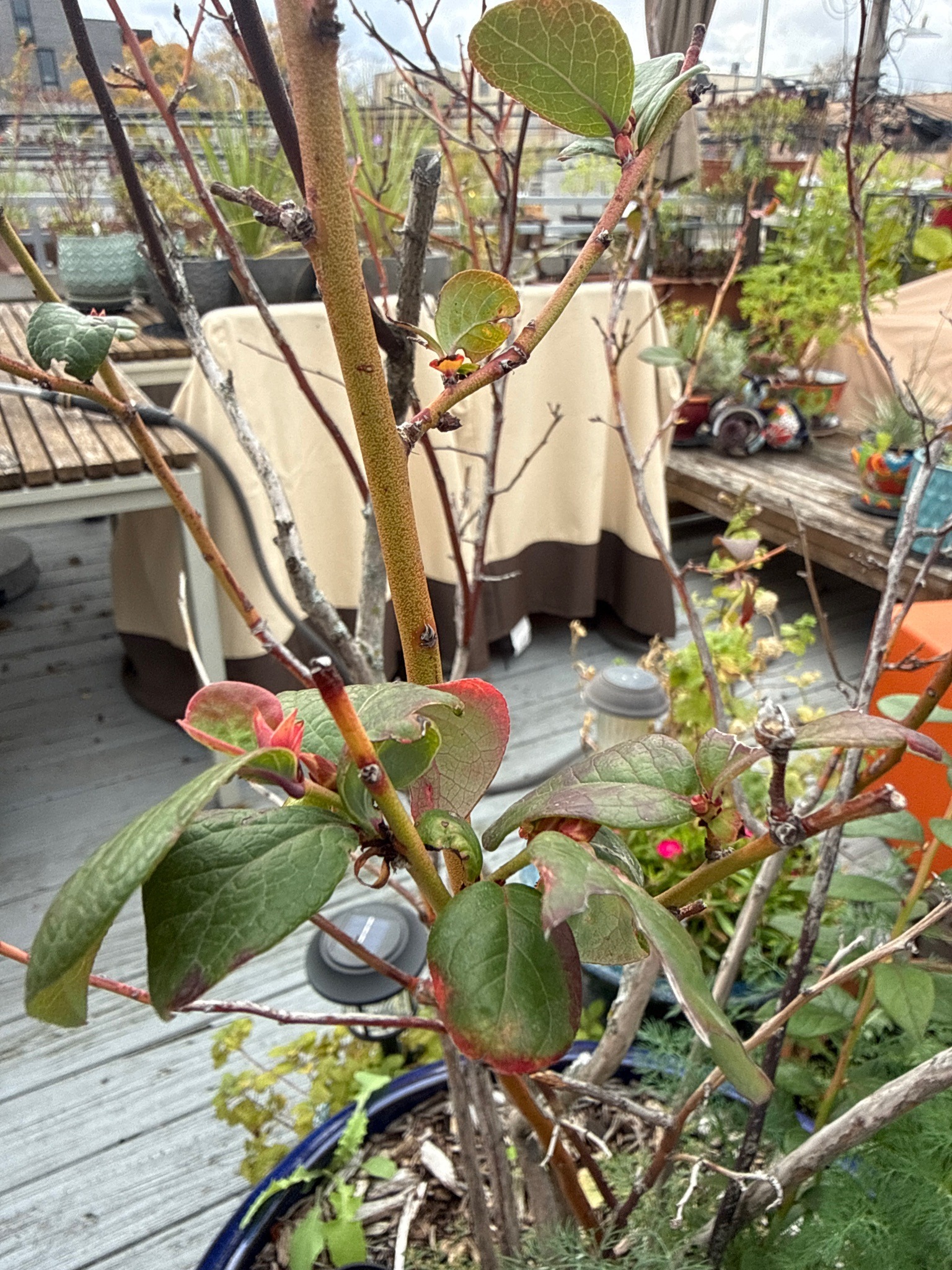
Highbush Blueberry
Vaccinium corymbosum
A deciduous shrub featuring woody stems, alternate simple leaves with smooth or finely serrated margins, and distinctive urn-shaped flowers followed by clustered fruits.
- Light
- Full sun to partial shade, requiring at least 6 hours of direct sunlight daily for optimal vigor and flower production.
- Water
- Requires regular, even moisture, particularly during the growing season. Prefers soil that stays consistently damp but not waterlogged; sensitive to prolonged drought.
- Growth
- A multi-stemmed deciduous shrub with an upright, branching growth form, typically reaching mature heights of 6 to 12 feet with a similar spread, exhibiting a moderate growth rate.
Care instructions
Provide full sun to partial shade with consistently moist, acidic soil rich in organic matter. Apply a layer of mulch to retain moisture and use an acid-balancing fertilizer in early spring.
Growing details
Sunlight
Full sun to partial shade, requiring at least 6 hours of direct sunlight daily for optimal vigor and flower production.
Watering
Requires regular, even moisture, particularly during the growing season. Prefers soil that stays consistently damp but not waterlogged; sensitive to prolonged drought.
Soil
Requires acidic soil with a pH ranging from 4.5 to 5.5, rich in organic matter, and with excellent drainage.
Hardiness zone
USDA hardiness zones 3 through 8, demonstrating strong cold tolerance in northern ranges.
Growth habit
A multi-stemmed deciduous shrub with an upright, branching growth form, typically reaching mature heights of 6 to 12 feet with a similar spread, exhibiting a moderate growth rate.
Bloom season
Spring, producing clusters of small, white to pale pink, urn-shaped flowers.
Propagation
Propagated successfully through softwood or hardwood stem cuttings, as well as by layering or seed germination.
Common pests & issues
Vulnerable to root rot in poorly drained soils, as well as fungal leaf spots and infestations by aphids, scale, or stem borers. Prevent issues by ensuring proper soil drainage and adequate air circulation.
Similar species
Lowbush blueberry (Vaccinium angustifolium), which is lower-statured and forms dense ground mats, and the rabbiteye blueberry (Vaccinium virgatum), which features larger stature and greater heat tolerance.