
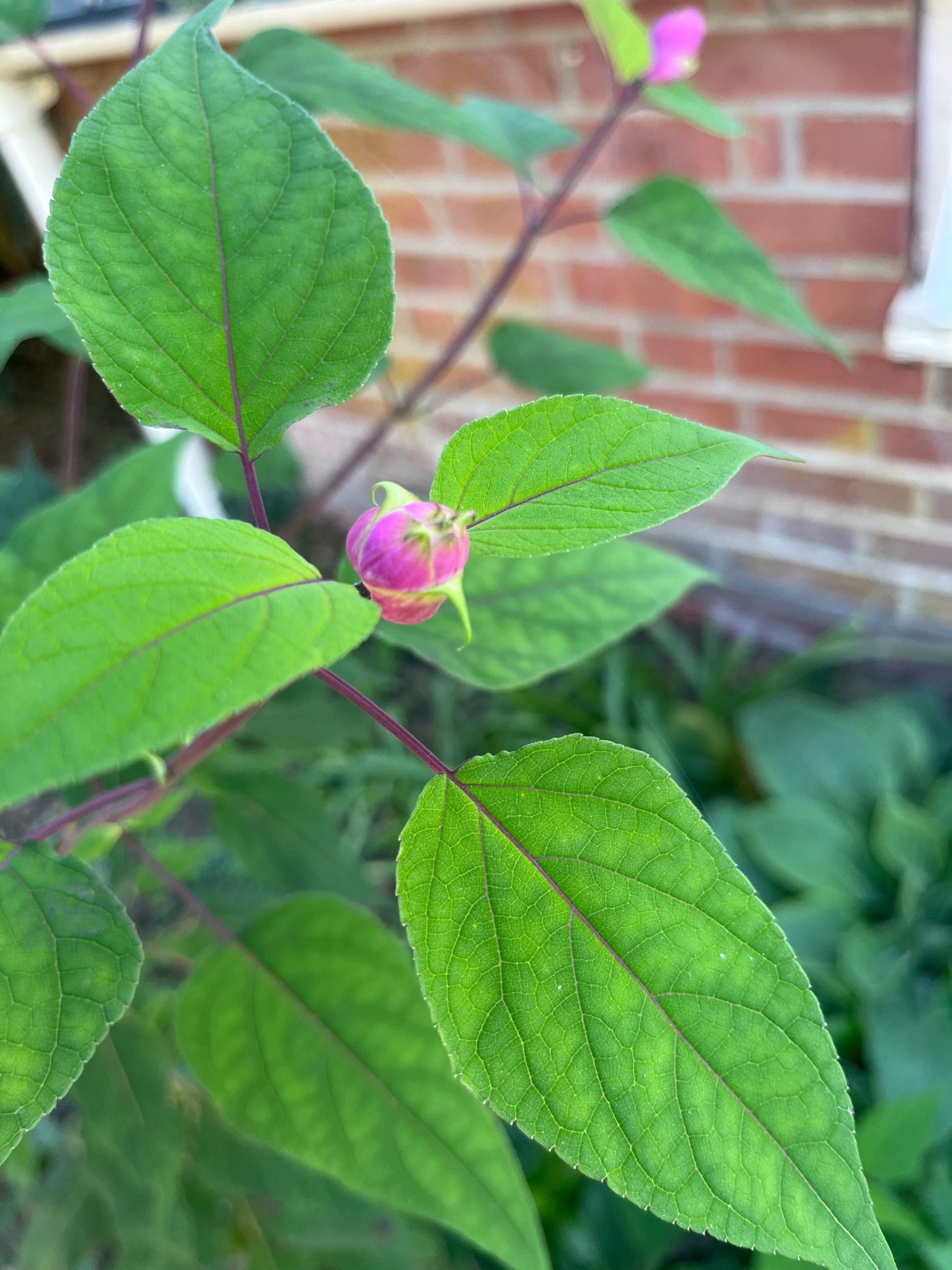
Himalayan Honeysuckle
Leycesteria formosa
A deciduous shrub featuring hollow green stems, opposite ovate leaves with prominent veins, and drooping clusters of flowers accompanied by showy purple or reddish bracts.
- Light
- Full sun to partial shade, ideally 6 or more hours of direct sunlight daily for optimal flower development.
- Water
- Requires regular watering to keep the soil evenly moist, especially during establishment and dry summer periods. Avoid letting the soil dry out completely, but ensure proper drainage to prevent waterlogging.
- Growth
- A fast-growing multi-stemmed deciduous shrub reaching mature heights and spreads of 4 to 6 feet.
Care instructions
Provide full sun to partial shade and consistently moist, well-draining soil rich in organic material. Water regularly during dry spells and apply a balanced fertilizer in spring to encourage vigorous growth.
Growing details
Sunlight
Full sun to partial shade, ideally 6 or more hours of direct sunlight daily for optimal flower development.
Watering
Requires regular watering to keep the soil evenly moist, especially during establishment and dry summer periods. Avoid letting the soil dry out completely, but ensure proper drainage to prevent waterlogging.
Soil
Thrives in fertile, humus-rich, well-draining loamy or sandy soils with a neutral to slightly acidic pH range of 6.0 to 7.0.
Hardiness zone
USDA Hardiness Zones 7 through 9, demonstrating moderate cold tolerance.
Growth habit
A fast-growing multi-stemmed deciduous shrub reaching mature heights and spreads of 4 to 6 feet.
Bloom season
Blooms from mid-summer through early autumn, producing tubular white or pinkish flowers enclosed by conspicuous dark purple or reddish bracts.
Propagation
Propagated easily through softwood cuttings taken in late spring or semi-hardwood cuttings in summer, as well as by sowing seeds in spring.
Common pests & issues
Generally robust with few serious pests or diseases, though occasionally susceptible to aphids or leaf spot in overly damp conditions.
Similar species
Can be distinguished from other shrubby honeysuckles by its distinctive hollow green stems and large, pendulous bract-wrapped flower clusters.