
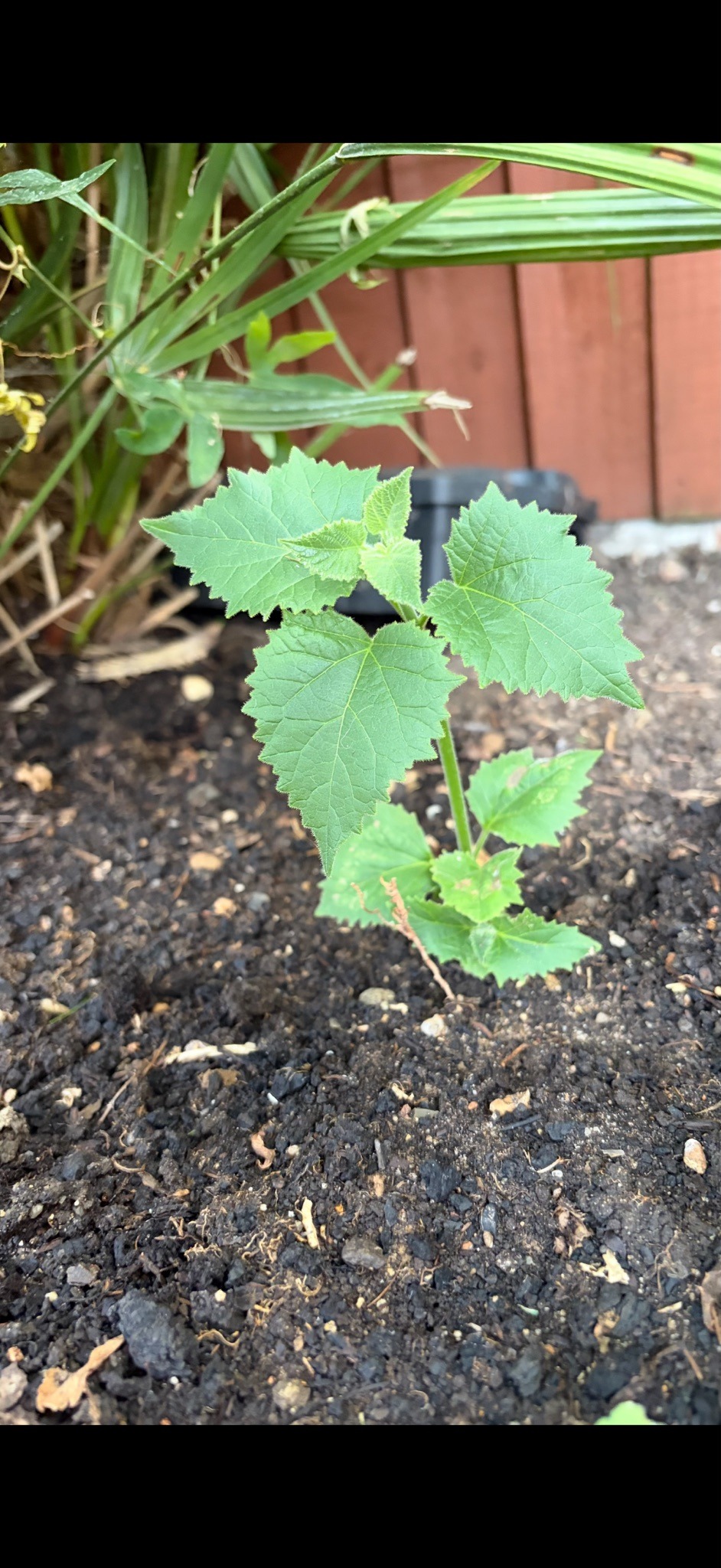
Hollyhock
Alcea rosea
A young herbaceous plant featuring distinctive lobed, coarsely toothed green leaves with a rough texture arranged alternately along a central upright stem.
- Light
- Full sun, requiring at least 6 hours of direct sunlight per day.
- Water
- Moderate water needs. Allow the top inch of soil to dry out between waterings. Drought tolerant once established.
- Growth
- Short-lived perennial or biennial forming an upright, tall flowering spike reaching mature heights of 5 to 8 feet with a spread of 2 to 3 feet.
Care instructions
Provide full sun exposure and well-draining soil. Water consistently at the base to keep soil moderately moist without becoming waterlogged. Apply a balanced fertilizer monthly during the growing season.
Growing details
Sunlight
Full sun, requiring at least 6 hours of direct sunlight per day.
Watering
Moderate water needs. Allow the top inch of soil to dry out between waterings. Drought tolerant once established.
Soil
Rich, well-draining loam or sandy soil with a neutral to slightly alkaline pH range between 6.0 and 7.5.
Hardiness zone
USDA Hardiness Zones 3 through 9.
Growth habit
Short-lived perennial or biennial forming an upright, tall flowering spike reaching mature heights of 5 to 8 feet with a spread of 2 to 3 feet.
Bloom season
Blooms from mid to late summer, producing large, showy, saucer-shaped flowers in shades of pink, red, yellow, white, and purple.
Propagation
Propagated easily from seeds sown directly in spring or summer, or via basal cuttings taken in early spring.
Common pests & issues
Susceptible to fungal leaf spots and rust in humid environments. Prevent by ensuring good air circulation and watering at the base.
Similar species
Malva moschata (musk mallow) and Althaea officinalis (marsh-mallow), which can be distinguished by specific leaf lobe depths and flower cluster structures.