
Hollyhock
Alcea rosea
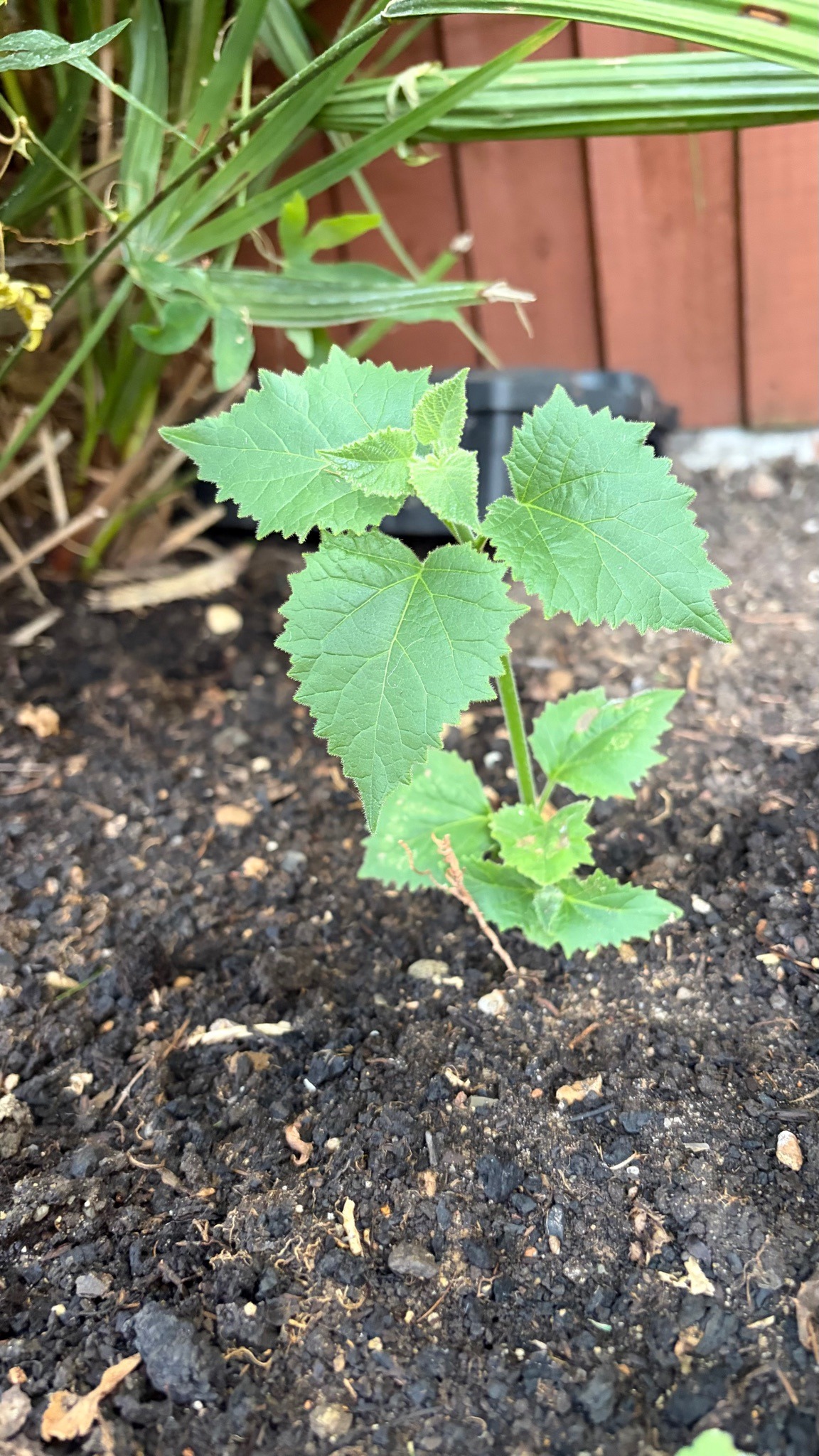
A young herbaceous plant featuring distinctive alternate, rough-textured, coarsely lobed to toothed heart-shaped green leaves with prominent veins and fine hairs along the margins.
- Light
- Full sun, requiring at least six to eight hours of direct sunlight daily
- Water
- Moderate watering needs, allowing the soil to dry slightly between watering sessions; drought tolerant once fully established
- Growth
- Biennial or short-lived perennial forming an upright, vertical flowering stalk that reaches mature heights of 5 to 8 feet with a spread of 2 to 3 feet
Care instructions
Provide full sun exposure and well-draining soil. Water deeply at the base when the top layer of soil dries out, and apply a balanced fertilizer in spring to support vigorous growth.
Growing details
Sunlight
Full sun, requiring at least six to eight hours of direct sunlight daily
Watering
Moderate watering needs, allowing the soil to dry slightly between watering sessions; drought tolerant once fully established
Soil
Well-draining loamy or sandy soil with a neutral to slightly alkaline pH range between 6.0 and 7.5
Hardiness zone
USDA hardiness zones 3 through 9
Growth habit
Biennial or short-lived perennial forming an upright, vertical flowering stalk that reaches mature heights of 5 to 8 feet with a spread of 2 to 3 feet
Bloom season
Summer, producing large, showy, cup-shaped flowers in shades of pink, red, yellow, white, and purple
Propagation
Propagated primarily through seeds sown in spring or late summer, or via basal cuttings in spring
Common pests & issues
Prudent monitoring is necessary for rust fungal diseases and insect pests like Japanese beetles; maintain good air circulation and avoid overhead watering to prevent fungal issues
Similar species
Mallow species, which share similar lobed leaves but typically have smaller growth habits and distinct floral structures