
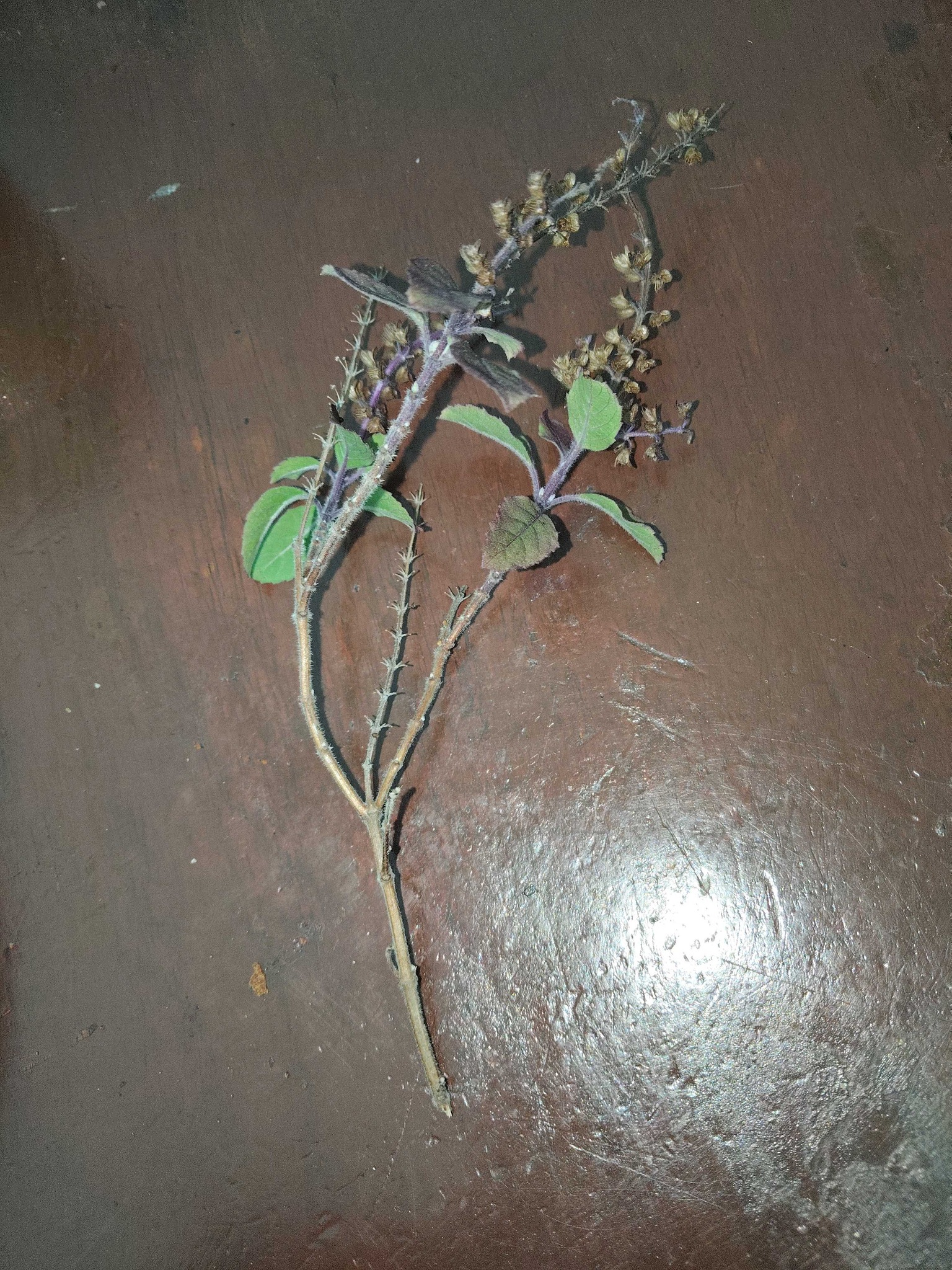
Holy Basil
Ocimum tenuiflorum
An aromatic herbaceous plant with square stems, simple opposite leaves that can be green or purple, and slender racemes of small purplish or white flowers.
- Light
- Full sun, requiring at least six hours of direct sunlight per day.
- Water
- Moderate watering needs. Allow the soil to dry slightly between watering sessions; avoid waterlogging.
- Growth
- An erect, branching subshrub typically growing 30 to 60 cm tall with a moderate growth rate.
Care instructions
Provide full sun, well-draining soil rich in organic matter, and regular watering when the top inch of soil becomes dry. Protect from frost.
Growing details
Sunlight
Full sun, requiring at least six hours of direct sunlight per day.
Watering
Moderate watering needs. Allow the soil to dry slightly between watering sessions; avoid waterlogging.
Soil
Well-draining, fertile loamy or sandy soil with a neutral pH range of 6.0 to 7.5.
Hardiness zone
USDA Hardiness Zones 10 through 11, grown as an annual in cooler climates.
Growth habit
An erect, branching subshrub typically growing 30 to 60 cm tall with a moderate growth rate.
Bloom season
Blooms continuously from summer into autumn with small purplish-white flowers arranged in verticillasters along terminal racemes.
Propagation
Propagated easily from seeds sown in warm soil or through stem cuttings placed in water or moist potting mix.
Common pests & issues
Susceptible to root rot in poorly draining soils, aphids, and spider mites during dry indoor conditions.
Similar species
Similar to Sweet Basil (Ocimum basilicum), but distinguished by its hairy stems, smaller leaves, and purple-tinged foliage.