
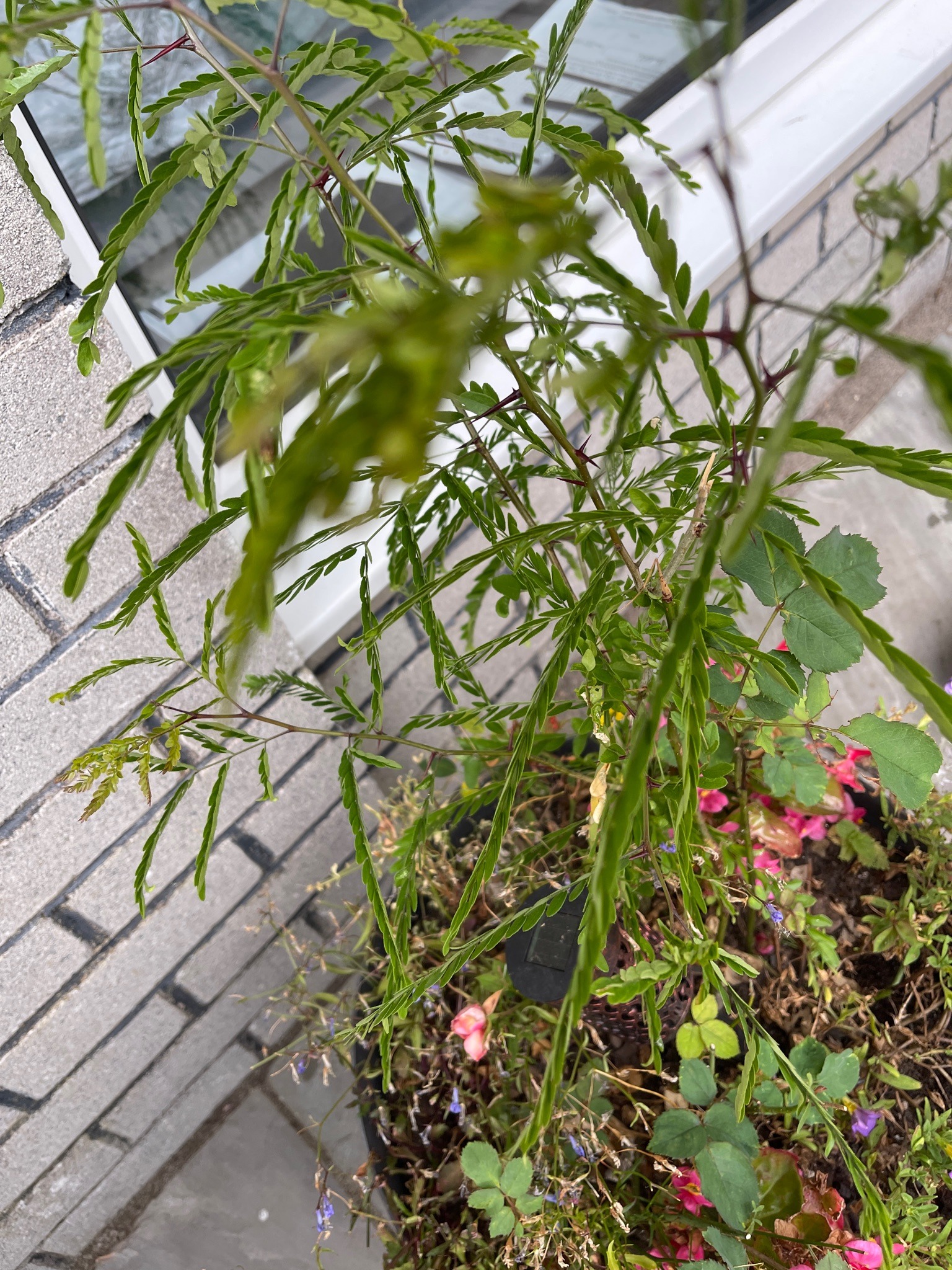
Honey Locust
Gleditsia triacanthos
A deciduous tree featuring alternate, bipinnately compound leaves with numerous small leaflets and characteristic sharp, branched thorns on the trunk and branches.
- Light
- Full sun, requiring at least 6 to 8 hours of direct sunlight daily
- Water
- Moderate to low water needs. Allow the soil to dry out between waterings once mature. Highly drought tolerant.
- Growth
- Deciduous tree with a rapid growth rate, reaching mature heights of 60 to 80 feet with an open, spreading crown.
Care instructions
Provide full sun and well-draining soil. Water deeply when newly planted to establish deep roots, then reduce frequency as it demonstrates high drought tolerance once established. Apply a balanced fertilizer in early spring if growth is sluggish.
Growing details
Sunlight
Full sun, requiring at least 6 to 8 hours of direct sunlight daily
Watering
Moderate to low water needs. Allow the soil to dry out between waterings once mature. Highly drought tolerant.
Soil
Adaptable to a wide range of soil types including clay, loam, and sand, provided they are well-draining. Prefers neutral to slightly alkaline pH levels but tolerates acidic conditions.
Hardiness zone
USDA zones 3 through 9
Growth habit
Deciduous tree with a rapid growth rate, reaching mature heights of 60 to 80 feet with an open, spreading crown.
Bloom season
Spring, producing small, inconspicuous greenish-yellow flowers grouped in racemes with a mild fragrance.
Propagation
Propagated primarily from seeds, which require scarification to break dormancy before planting, or through hardwood cuttings.
Common pests & issues
Susceptible to cankers, leaf spots, and webworms. Maintaining good air circulation and clearing away fallen debris helps prevent fungal issues.
Similar species
Black Locust (Robinia pseudoacacia), which can be distinguished by its rounded leaflets and white, highly fragrant flower clusters.