
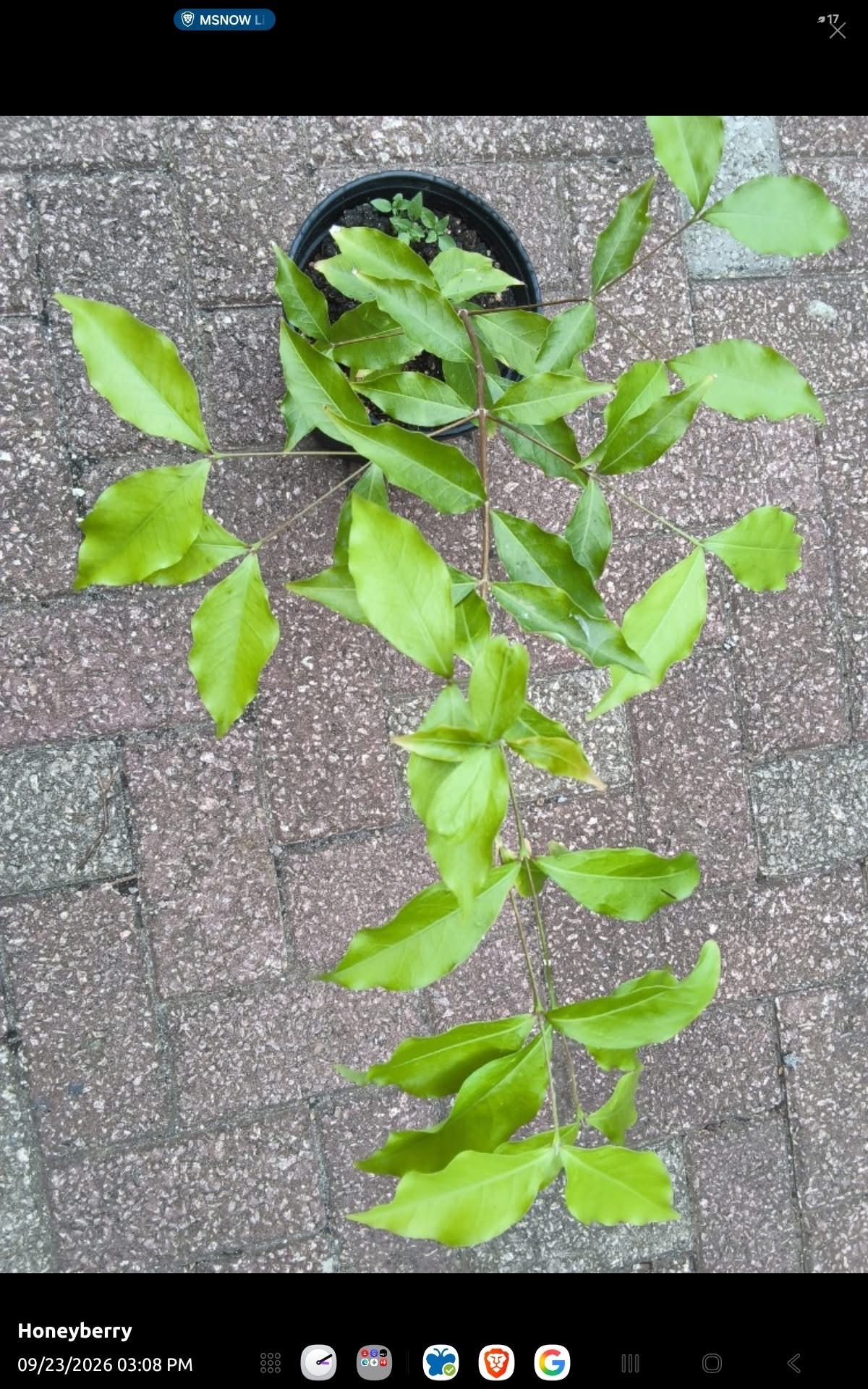
Honeyberry
Lonicera caerulea
A deciduous shrub featuring opposite, simple, oval green leaves and slender stems, typically growing in a somewhat rounded habit.
- Light
- Full sun to partial shade, requiring at least 6 hours of direct sunlight daily for optimal growth.
- Water
- Requires regular moisture, especially during the establishment phase and warm summer months. Prefers consistently damp soil but avoids standing water.
- Growth
- A perennial deciduous shrub with a multi-stemmed, rounded growth form, reaching a mature height and spread of 3 to 6 feet with a moderate growth rate.
Care instructions
Provide full sun to partial shade with consistently moist, well-draining soil. Apply balanced fertilizer in early spring and maintain regular watering during dry spells to support healthy vegetative growth.
Growing details
Sunlight
Full sun to partial shade, requiring at least 6 hours of direct sunlight daily for optimal growth.
Watering
Requires regular moisture, especially during the establishment phase and warm summer months. Prefers consistently damp soil but avoids standing water.
Soil
Thrives in rich, loamy, well-draining soils with a slightly acidic to neutral pH range of 6.0 to 7.0.
Hardiness zone
USDA zones 3 through 8, demonstrating strong tolerance to cold winter temperatures.
Growth habit
A perennial deciduous shrub with a multi-stemmed, rounded growth form, reaching a mature height and spread of 3 to 6 feet with a moderate growth rate.
Bloom season
Flowers in early spring with small, tubular, yellowish-white blossoms.
Propagation
Propagated successfully through softwood or hardwood stem cuttings taken during active growing seasons or dormancy, as well as by seed.
Common pests & issues
Generally resilient, but can occasionally be affected by aphids or powdery mildew in overly humid, poorly ventilated conditions. Prevent by ensuring proper spacing and air circulation.
Similar species
Other shrubby Lonicera species, distinguished primarily by specific leaf venation, flower color, and growth structure.