
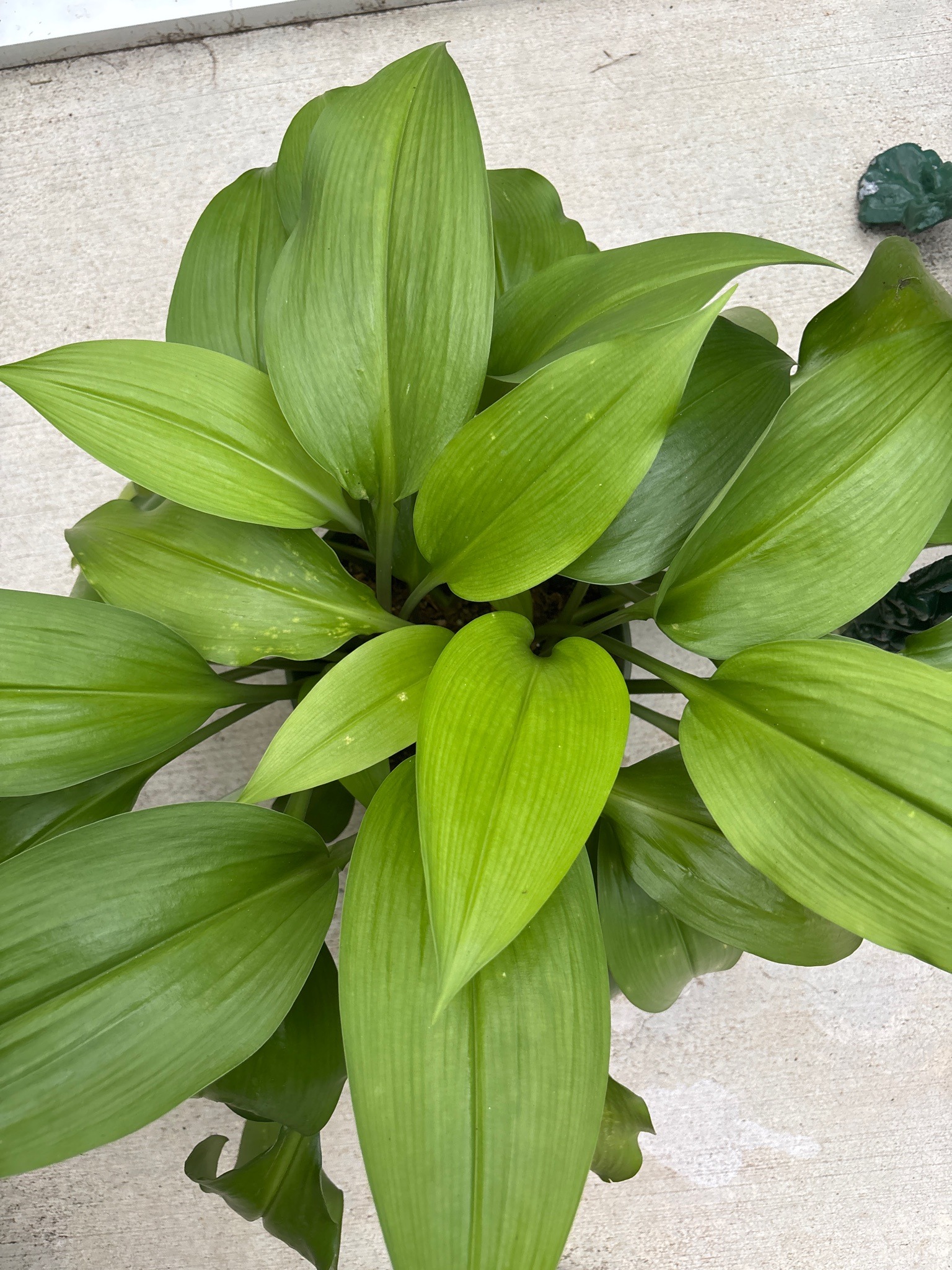
Hosta
Hosta spp.
Hostas are popular shade-loving herbaceous perennials known primarily for their lush, mounding foliage. The leaves vary widely by cultivar in size, shape (from narrow lanceolate to broad cordate), color (ranging from blue-green to chartreuse, gold, and variegated combinations), and texture (smooth, puckered, or corrugated).
- Light
- Partial shade to full shade, generally requiring 3 to 6 hours of indirect light or dappled sunlight per day.
- Water
- Requires regular watering to keep the soil evenly moist. Water deeply about once a week, increasing frequency during extended dry spells. Avoid overhead watering if possible to keep foliage dry and prevent fungal issues.
- Growth
- Herbaceous perennial forming a dense, mounding clump. Mature height typically ranges from 6 inches to 4 feet, with a spread of 1 to 5 feet depending on the specific cultivar. Moderate growth rate.
Care instructions
Grow in partial to full shade depending on leaf color (gold and variegated types tolerate more sun than blue types). Provide consistently moist, well-draining soil rich in organic matter. Water deeply during dry periods and apply a balanced, slow-release fertilizer in spring as new growth emerges.
Growing details
Sunlight
Partial shade to full shade, generally requiring 3 to 6 hours of indirect light or dappled sunlight per day.
Watering
Requires regular watering to keep the soil evenly moist. Water deeply about once a week, increasing frequency during extended dry spells. Avoid overhead watering if possible to keep foliage dry and prevent fungal issues.
Soil
Prefers rich, moist, well-draining loam or organic-rich clay soils with a slightly acidic to neutral pH range of 6.0 to 7.0.
Hardiness zone
USDA Hardiness Zones 3 through 9
Growth habit
Herbaceous perennial forming a dense, mounding clump. Mature height typically ranges from 6 inches to 4 feet, with a spread of 1 to 5 feet depending on the specific cultivar. Moderate growth rate.
Bloom season
Blooms in summer (typically June to August), producing tall scapes bearing bell-shaped or funnel-shaped flowers in shades of purple, lavender, or white, which are often lightly fragrant.
Propagation
Easily propagated by division of established clumps in early spring as shoots emerge or in late summer. Can also be grown from seed, though cultivars do not reliably come true from seed.
Common pests & issues
Prurient to slugs and snails which chew holes in the leaves. Foliar nematodes can cause brown streaking between leaf veins. Fungal leaf spots can occur in overly humid conditions with poor air circulation.
Similar species
Daylilies (Hemerocallis spp.) share somewhat similar clump-forming foliage, but can be distinguished by their longer, grass-like, folded leaves and distinct root systems.