
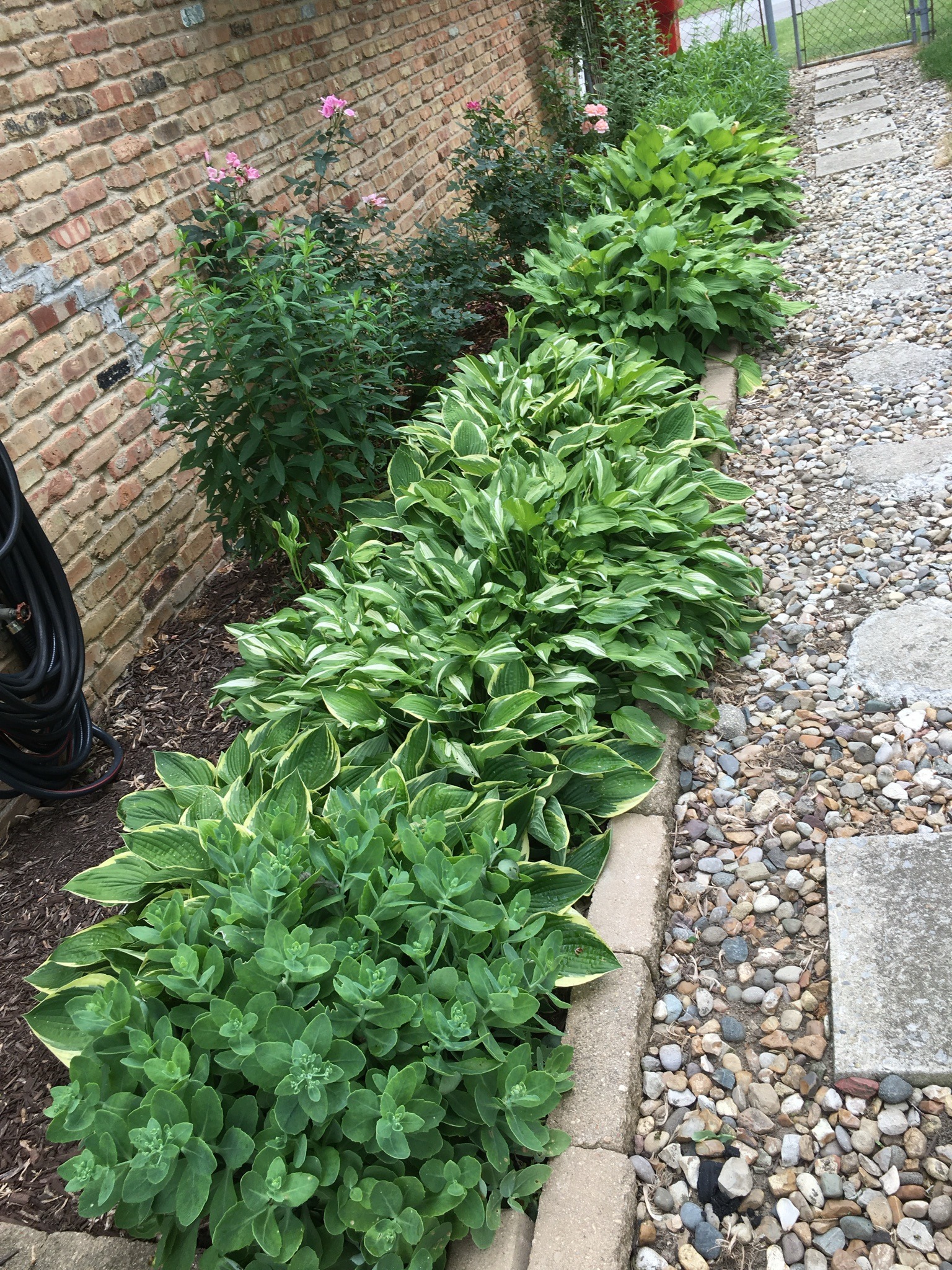
Hostas
Hosta spp.
Hostas are popular herbaceous perennial foliage plants grown primarily for their lush, mounding clusters of broad, patterned leaves ranging from solid green to blue-gray and variegated yellow-and-green combinations.
- Light
- Partial shade to full shade, tolerating 3 to 6 hours of indirect light or dappled sunlight per day.
- Water
- Water deeply and regularly, providing about 1 inch of water per week. They prefer evenly moist soil and show signs of drooping or leaf scorching if subjected to prolonged drought.
- Growth
- Herbaceous perennial forming a dense, mounding clump. Mature height typically ranges from 1 to 3 feet with a spread of 2 to 4 feet, featuring a moderate growth rate.
Care instructions
Grow in partial to full shade with rich, moist, well-draining soil. Water regularly during dry spells to maintain consistent moisture, and apply a balanced slow-release fertilizer in early spring as new shoots emerge.
Growing details
Sunlight
Partial shade to full shade, tolerating 3 to 6 hours of indirect light or dappled sunlight per day.
Watering
Water deeply and regularly, providing about 1 inch of water per week. They prefer evenly moist soil and show signs of drooping or leaf scorching if subjected to prolonged drought.
Soil
Rich, humus-rich loam with excellent drainage and a slightly acidic to neutral pH range of 6.0 to 7.0.
Hardiness zone
USDA Hardiness Zones 3 through 9, demonstrating strong cold tolerance during winter dormancy.
Growth habit
Herbaceous perennial forming a dense, mounding clump. Mature height typically ranges from 1 to 3 feet with a spread of 2 to 4 feet, featuring a moderate growth rate.
Bloom season
Mid to late summer, producing tall scapes bearing bell-shaped or funnel-shaped flowers in shades of white, lavender, or purple, which are occasionally fragrant.
Propagation
Propagated primarily through division of established root clumps in early spring or early autumn, separating crown sections with healthy roots and shoots.
Common pests & issues
Susceptible to foliar damage from slugs and snails, as well as foliar nematodes and fungal leaf spot in overly humid conditions. Prevention involves maintaining good air circulation and clearing garden debris.
Similar species
Daylilies (Hemerocallis spp.), which share a similar clumping perennial habit but feature linear, grass-like leaves rather than broad, rounded foliage blades.