
Hydrangea
Hydrangea macrophylla
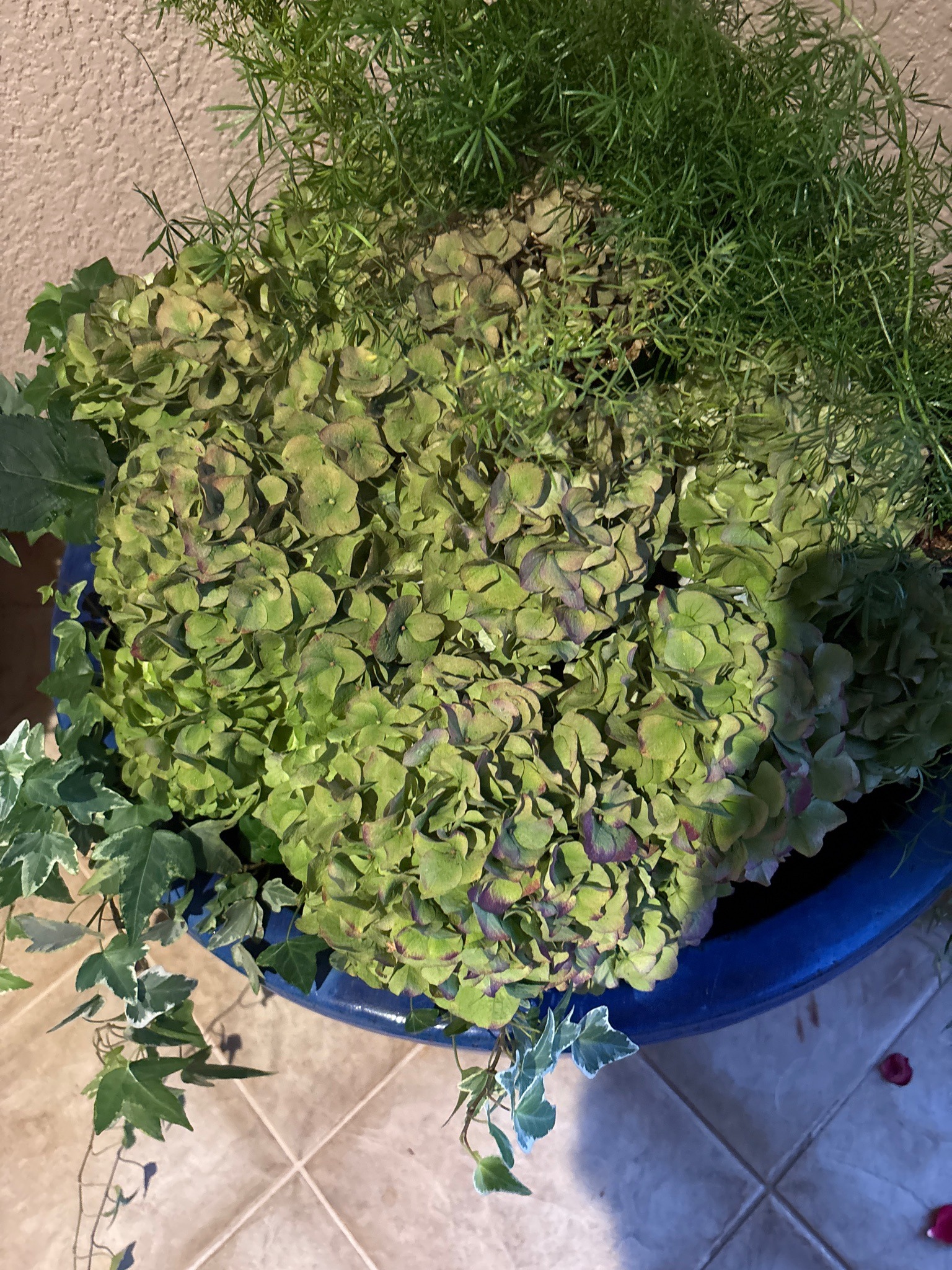
A mixed container planting featuring a central hydrangea with mophead blooms aging to green, complemented by fine-textured asparagus fern and trailing variegated ivy.
- Light
- Partial shade, preferring 3 to 6 hours of direct morning sunlight per day
- Water
- Water deeply and regularly, ensuring the soil remains evenly moist. Increase watering frequency during hot summer periods to prevent wilting.
- Growth
- Perennial deciduous shrub with a rounded, bushy growth habit, typically reaching 3 to 6 feet in height and spread
Care instructions
Provide morning sun and afternoon shade. Keep the soil consistently moist but well-draining. Apply a balanced, slow-release fertilizer in early spring.
Growing details
Sunlight
Partial shade, preferring 3 to 6 hours of direct morning sunlight per day
Watering
Water deeply and regularly, ensuring the soil remains evenly moist. Increase watering frequency during hot summer periods to prevent wilting.
Soil
Rich, organic-rich, loamy soil with excellent drainage and a slightly acidic to neutral pH range of 5.5 to 6.5
Hardiness zone
USDA Hardiness Zones 6 through 9
Growth habit
Perennial deciduous shrub with a rounded, bushy growth habit, typically reaching 3 to 6 feet in height and spread
Bloom season
Blooms from late spring through summer, featuring large, rounded mophead flower clusters that transition from colorful shades to antiqued green tones as they age
Propagation
Propagated primarily through softwood stem cuttings taken in late spring or early summer
Common pests & issues
Susceptible to powdery mildew, botrytis blight, and root rot if overwatered. Pests such as aphids and spider mites can occasionally affect the foliage.
Similar species
Similar to other Hydrangea species such as Hydrangea arborescens, which can be distinguished by its smooth foliage and lacecap or smaller rounded bloom clusters