
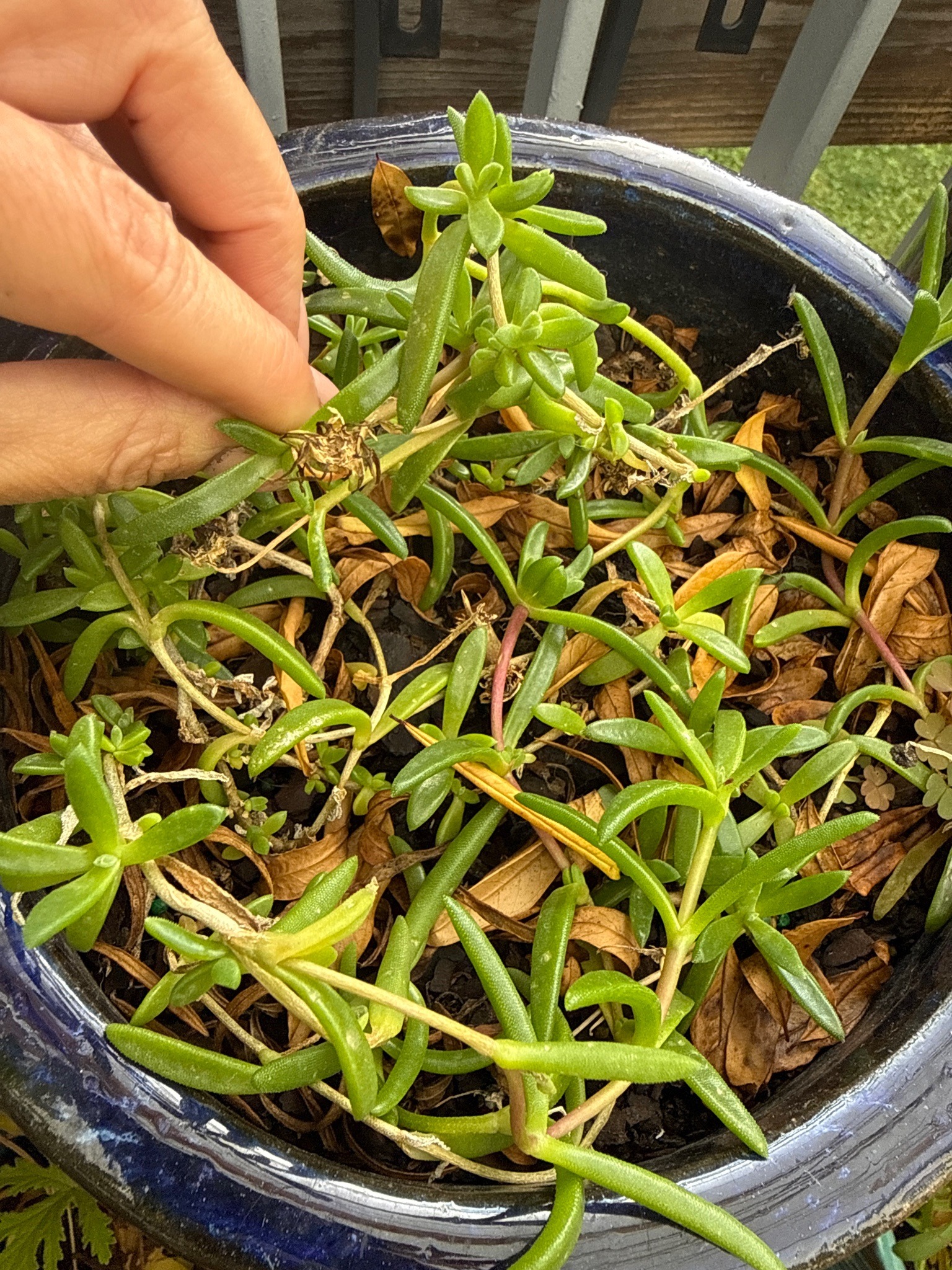
Ice Plant
Lampranthus hemisphaericus
A low-growing succulent perennial featuring fleshy, narrow, cylindrical leaves arranged in whorls or opposites along trailing stems, often with reddish stems and vibrant daisylike flowers.
- Light
- Full sun, requiring at least 6 hours of direct sunlight daily for optimal growth and flowering.
- Water
- Low water needs. Allow the soil to dry out completely before watering again. Drought tolerant once established; highly susceptible to root rot if overwatered.
- Growth
- Mat-forming or trailing succulent perennial growing to a height of 3 to 6 inches with a spread of 1 to 2 feet, exhibiting a moderate to fast growth rate.
Care instructions
Provide bright, direct sunlight for most of the day, water deeply but infrequently allowing the soil to dry completely between waterings, and plant in sandy, highly porous soil with exceptional drainage.
Growing details
Sunlight
Full sun, requiring at least 6 hours of direct sunlight daily for optimal growth and flowering.
Watering
Low water needs. Allow the soil to dry out completely before watering again. Drought tolerant once established; highly susceptible to root rot if overwatered.
Soil
Sandy, gravely, or cactus-mix soils with excellent drainage and a neutral to slightly alkaline pH range of 6.0 to 7.5.
Hardiness zone
USDA Hardiness Zones 9 through 11, sensitive to heavy frost and freezing temperatures.
Growth habit
Mat-forming or trailing succulent perennial growing to a height of 3 to 6 inches with a spread of 1 to 2 feet, exhibiting a moderate to fast growth rate.
Bloom season
Spring to early summer, producing daisy-like flowers in brilliant shades of pink, purple, orange, or yellow.
Propagation
Easily propagated through stem cuttings taken in spring or summer, or by starting from seeds sown in well-draining soil mixes.
Common pests & issues
Prone to root rot and fungal stem rots in overly wet or poorly draining soils. Aphids and mealybugs can occasionally affect indoor or greenhouse specimens.
Similar species
Carpobrotus edulis (Hottentot fig), which features significantly larger, chunkier leaves and larger flowers compared to the finer, more delicate foliage of Lampranthus species.