
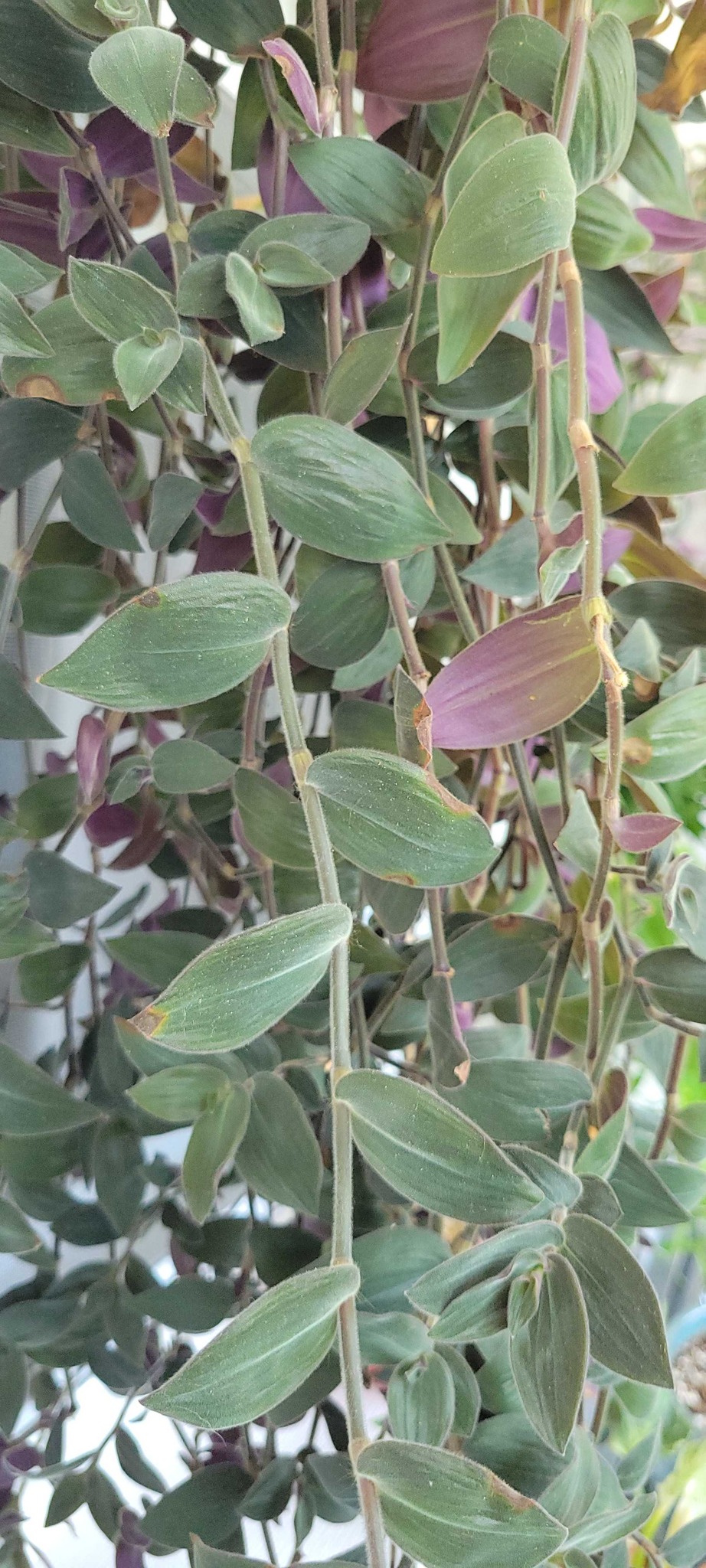
Inch Plant (Baby Bunny Bellies)
Tradescantia chrysophylla
A low-growing, trailing succulent perennial with velvety, oval-shaped leaves that are olive green on the surface and deep purple underneath. The stems and leaves are covered in fine, soft hairs.
- Light
- Bright, indirect light for 4-6 hours per day; can tolerate partial shade but may lose intense purple coloration.
- Water
- Water regularly to keep soil moist but not soggy; allow the top 25% of soil to dry out between waterings. Drought tolerant once established but prefers consistent moisture.
- Growth
- Evergreen perennial with a trailing or creeping habit, growing 4-6 inches tall and spreading several feet via stem nodes.
Care instructions
Provide bright, indirect light and water when the top inch of soil feels dry. Maintain high humidity and use a well-draining potting mix. Fertilize lightly during the growing season and pinch back stems to encourage bushier growth.
Growing details
Sunlight
Bright, indirect light for 4-6 hours per day; can tolerate partial shade but may lose intense purple coloration.
Watering
Water regularly to keep soil moist but not soggy; allow the top 25% of soil to dry out between waterings. Drought tolerant once established but prefers consistent moisture.
Soil
Rich, well-draining commercial potting mix with a pH between 5.5 and 7.5.
Hardiness zone
USDA zones 9-11; typically grown as a houseplant in cooler climates.
Growth habit
Evergreen perennial with a trailing or creeping habit, growing 4-6 inches tall and spreading several feet via stem nodes.
Bloom season
Small, three-petaled white or pale lavender flowers may appear sporadically throughout the year in ideal conditions.
Propagation
Easily propagated by stem cuttings placed in water or directly into moist soil, usually rooting within one to two weeks.
Common pests & issues
Susceptible to spider mites, aphids, and mealybugs. Overwatering can lead to root rot, while low humidity may cause brown leaf tips.
Similar species
Tradescantia zebrina, which has silver-striped leaves, and Tradescantia pallida, which has elongated, solid purple leaves.