
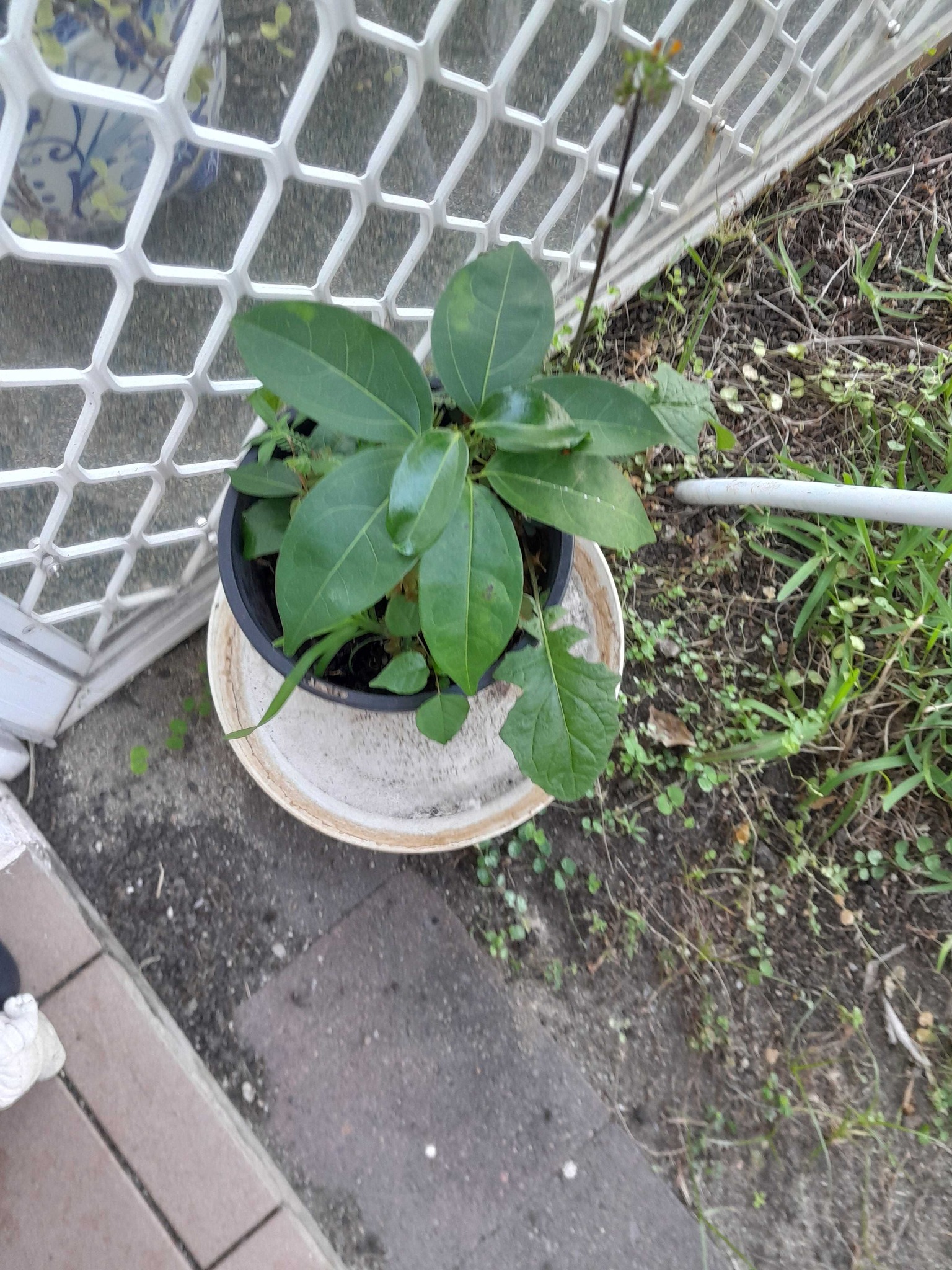
Indian Almond
Terminalia catappa
A tropical tree characterized by wide, glossy, obovate leaves arranged in tiers, featuring prominent veins and turning reddish before dropping.
- Light
- Full sun, at least 6 hours of direct sunlight per day.
- Water
- Water deeply when the top inch of soil feels dry. Maintain consistent moisture during active growth phases.
- Growth
- Perennial tree with an upright, tiered branching habit, reaching heights of 15 to 25 meters in natural habitats, but can be maintained smaller in containers.
Care instructions
Provide full sun to partial shade, water regularly to keep soil moderately moist without waterlogging, and use well-draining organic soil.
Growing details
Sunlight
Full sun, at least 6 hours of direct sunlight per day.
Watering
Water deeply when the top inch of soil feels dry. Maintain consistent moisture during active growth phases.
Soil
Well-draining sandy, loamy, or clay soils with a slightly acidic to neutral pH range of 5.5 to 7.0.
Hardiness zone
USDA Hardiness Zones 10 through 11, sensitive to frost.
Growth habit
Perennial tree with an upright, tiered branching habit, reaching heights of 15 to 25 meters in natural habitats, but can be maintained smaller in containers.
Bloom season
Spring to summer, producing small, inconspicuous white or greenish flowers arranged in spikes.
Propagation
Propagated primarily through seeds sown in warm, moist, well-draining soil media.
Common pests & issues
Susceptible to occasional leaf-spot fungi and sucking insects like aphids during humid periods; treat with appropriate horticultural oils or fungicides.
Similar species
Terminalia mantaly, which can be distinguished by smaller leaflets and a distinctly layered, umbrella-like canopy architecture.