
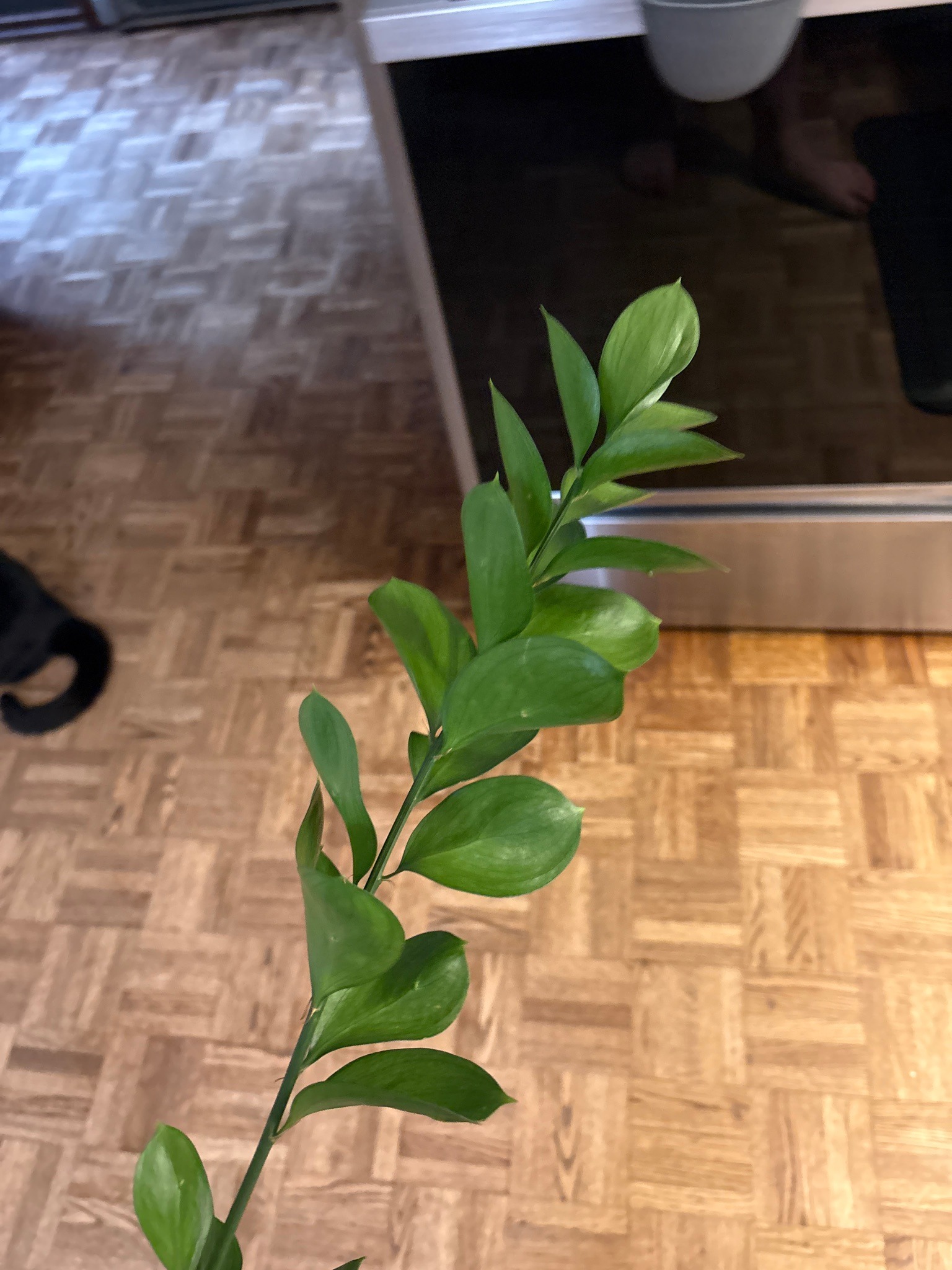
Israeli Ruscus
Ruscus hypoglossum
An evergreen subshrub featuring bright green, flattened leaf-like stems called cladodes. True leaves are tiny scales located in the center of these cladodes, where small flowers can emerge.
- Light
- Partial shade to deep shade, or indirect light (3 to 6 hours of filtered light daily).
- Water
- Water moderately, allowing the top inch of soil to dry out between waterings. Highly drought tolerant once established, but sensitive to waterlogging.
- Growth
- Rhizomatous, slow-growing perennial subshrub reaching 1 to 2 feet in height with a spread of 2 to 3 feet.
Care instructions
Thrives in indirect or low light conditions. Keep soil lightly moist but well-drained. Feed with a balanced liquid houseplant fertilizer once a month during spring and summer.
Growing details
Sunlight
Partial shade to deep shade, or indirect light (3 to 6 hours of filtered light daily).
Watering
Water moderately, allowing the top inch of soil to dry out between waterings. Highly drought tolerant once established, but sensitive to waterlogging.
Soil
Rich, well-draining potting mixture or sandy loam soil with a slightly acidic to neutral pH (6.0-7.0).
Hardiness zone
USDA Zones 7 through 10.
Growth habit
Rhizomatous, slow-growing perennial subshrub reaching 1 to 2 feet in height with a spread of 2 to 3 feet.
Bloom season
Spring. Produces small, inconspicuous greenish-yellow flowers borne on the upper surface of the flattened cladodes.
Propagation
Propagated mainly by root rhizome division in spring or autumn, or by sowing seeds.
Common pests & issues
Generally pest-resistant, but may occasionally encounter scale insects or spider mites in dry indoors. Overwatering can lead to root rot.
Similar species
Ruscus aculeatus (Butcher's Broom), which has spiny, sharp tips on its cladodes, whereas Ruscus hypoglossum has smoother, larger, non-prickly cladodes.