
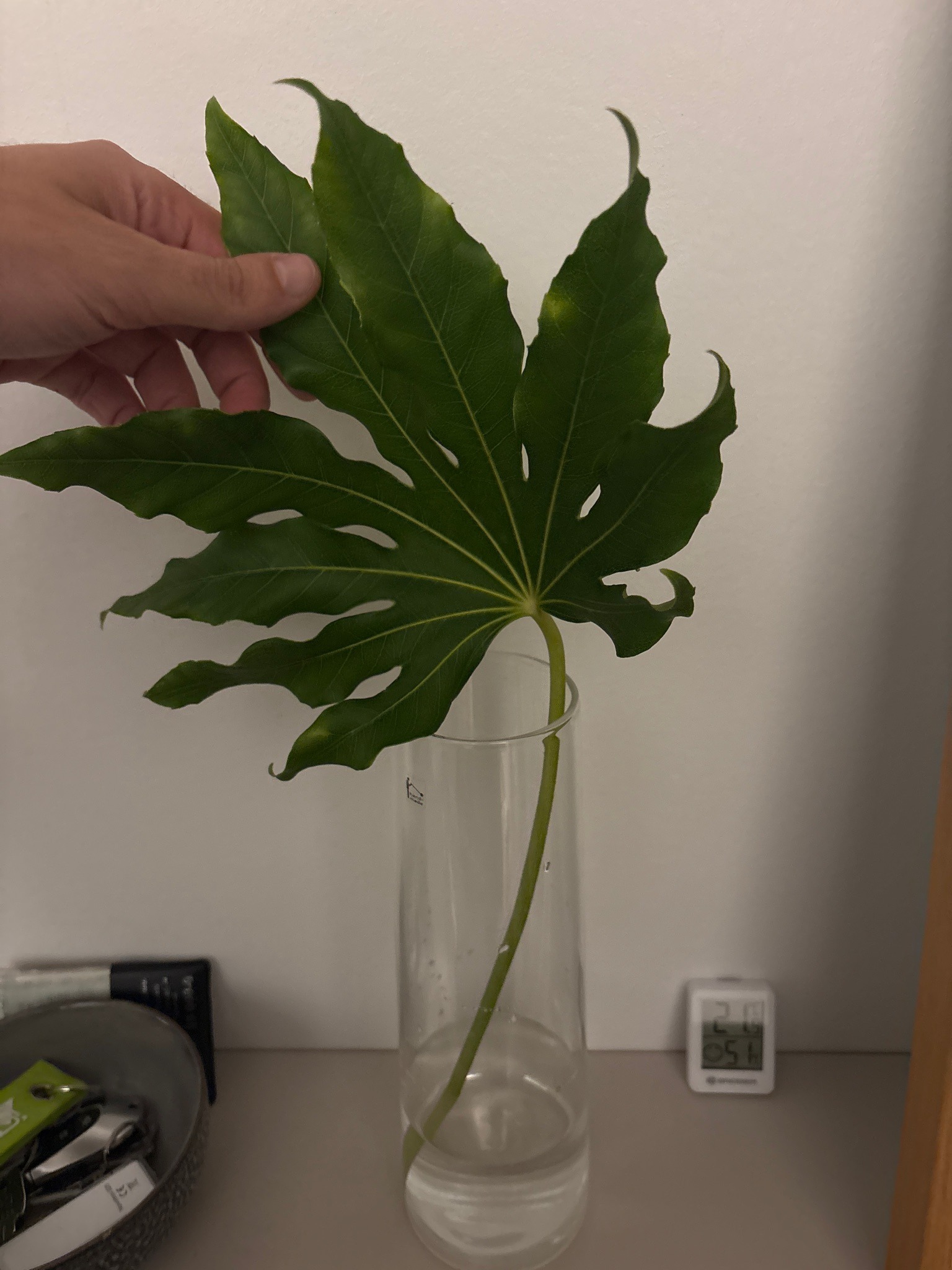
Japanese aralia
Fatsia japonica
An evergreen shrub featuring large, glossy, dark green palmately lobed leaves with 7 to 9 lobes, creating a distinct tropical appearance.
- Light
- Partial shade to full shade, or bright indirect indoor light for about 4 to 6 hours daily.
- Water
- Water thoroughly whenever the top 1 to 2 inches of soil dries out. Reduce watering frequency slightly during winter months.
- Growth
- Evergreen shrub with an upright, multi-stemmed growth habit, reaching mature heights of 6 to 10 feet and a similar spread at a moderate growth rate.
Care instructions
Provide bright indirect light and maintain consistently moist, well-draining soil. Water when the top inch of soil feels dry and apply a balanced liquid fertilizer monthly during the growing season.
Growing details
Sunlight
Partial shade to full shade, or bright indirect indoor light for about 4 to 6 hours daily.
Watering
Water thoroughly whenever the top 1 to 2 inches of soil dries out. Reduce watering frequency slightly during winter months.
Soil
Rich, organic, well-draining loamy soil with a neutral to slightly acidic pH range of 6.0 to 6.5.
Hardiness zone
USDA hardiness zones 8 through 10, tolerating light frosts but requiring protection from freezing winds.
Growth habit
Evergreen shrub with an upright, multi-stemmed growth habit, reaching mature heights of 6 to 10 feet and a similar spread at a moderate growth rate.
Bloom season
Blooms in autumn with rounded clusters of small creamy-white flowers followed by small black fruits.
Propagation
Propagated easily through semi-ripe stem cuttings taken in summer or by sowing seeds in spring.
Common pests & issues
Susceptible to mealybugs, scale insects, and spider mites, especially when kept in dry indoor environments. Root rot can occur in poorly draining soils.
Similar species
Tetrapanax papyrifer (rice-paper plant), which features larger, felted leaves and a more robust growth habit compared to the glossy, deeply lobed leaves of Fatsia japonica.