
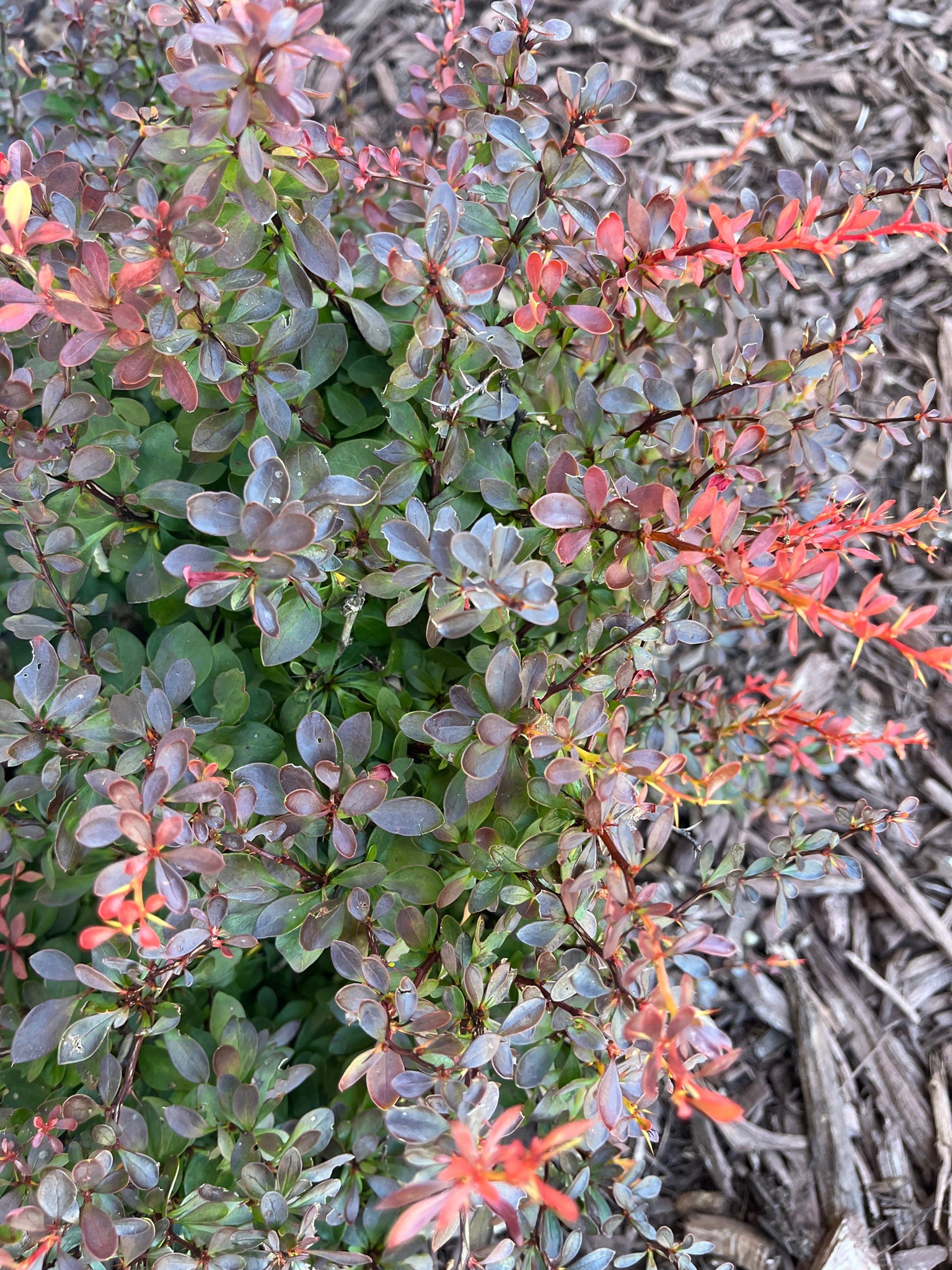
Japanese Barberry
Berberis thunbergii
A dense, deciduous shrub characterized by arching spiny branches, small spatula-shaped leaves that range from deep purple-red to green, and bright reddish-orange new growth.
- Light
- Full sun to partial shade, requiring at least 6 hours of direct sunlight daily for optimal leaf coloration.
- Water
- Low to moderate water needs. Allow the soil to dry out between watering sessions. Drought tolerant once mature.
- Growth
- Deciduous perennial shrub with a dense, rounded, and branching growth habit. Typically reaches a mature height and spread of 3 to 6 feet with a moderate growth rate.
Care instructions
Provide full sun to partial shade in well-draining soil. Water regularly during the first growing season to establish a deep root system, then water occasionally as it exhibits good drought tolerance once established. Apply a balanced, slow-release fertilizer in early spring.
Growing details
Sunlight
Full sun to partial shade, requiring at least 6 hours of direct sunlight daily for optimal leaf coloration.
Watering
Low to moderate water needs. Allow the soil to dry out between watering sessions. Drought tolerant once mature.
Soil
Adaptable to various soil types including clay, loam, and sandy soils, provided they are well-draining. Prefers a neutral to slightly acidic pH range of 6.0 to 7.0.
Hardiness zone
USDA zones 4 through 8, demonstrating strong cold hardiness and heat adaptability.
Growth habit
Deciduous perennial shrub with a dense, rounded, and branching growth habit. Typically reaches a mature height and spread of 3 to 6 feet with a moderate growth rate.
Bloom season
Blooms in mid to late spring with small, inconspicuous, pale yellow drooping flowers appearing along the stems.
Propagation
Propagated easily from softwood or hardwood cuttings taken in summer or autumn, or by sowing seeds in cold frames after stratification.
Common pests & issues
Generally resilient against major pests and diseases, though occasionally susceptible to root rot in poorly draining soils or powdery mildew in humid environments.
Similar species
Common barberry (Berberis vulgaris), which can be distinguished by its larger serrated leaves and longer flower clusters compared to the smooth margins of Japanese barberry.