
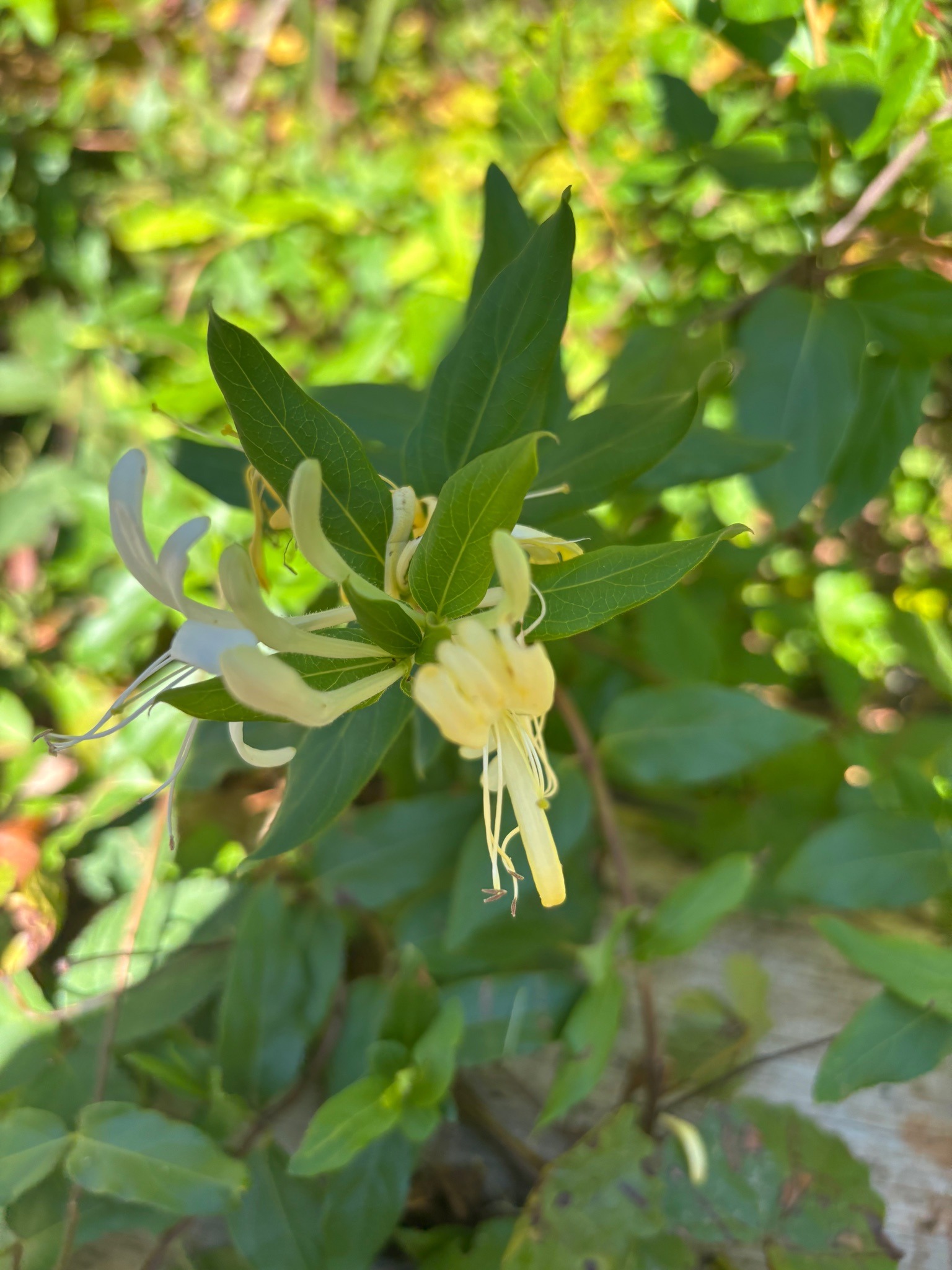
Japanese Honeysuckle
Lonicera japonica
A vigorous woody vine or climber with opposite, ovate green leaves and tubular, two-lipped flowers that typically open white and age to yellow, featuring prominent protruding stamens.
- Light
- Full sun to partial shade, ideally 6 or more hours of direct sunlight per day for optimal flowering
- Water
- Moderate watering needs. Allow the soil to dry slightly between waterings; once established, it tolerates dry spells quite well.
- Growth
- A perennial woody vine and twining climber that can reach lengths of 15 to 30 feet (4.5 to 9 meters) or more, with a fast growth rate and dense branching habit.
Care instructions
Provide full sun to partial shade with well-draining soil. Water regularly during establishment, but established vines show good drought tolerance. Prune annually after flowering to maintain desired shape and manage growth, as it tends to spread rapidly.
Growing details
Sunlight
Full sun to partial shade, ideally 6 or more hours of direct sunlight per day for optimal flowering
Watering
Moderate watering needs. Allow the soil to dry slightly between waterings; once established, it tolerates dry spells quite well.
Soil
Adaptable to a wide range of soil types including clay, loam, and sandy soils, provided they have good drainage. Prefers a neutral pH range between 6.0 and 7.5.
Hardiness zone
USDA Hardiness Zones 4 through 9
Growth habit
A perennial woody vine and twining climber that can reach lengths of 15 to 30 feet (4.5 to 9 meters) or more, with a fast growth rate and dense branching habit.
Bloom season
Blooms from late spring through mid-summer, producing tubular white flowers that gradually turn yellow over time, known for a strong fragrance.
Propagation
Easily propagated through softwood or hardwood cuttings taken in spring or summer, as well as by layering or seed.
Common pests & issues
Generally resilient, but may occasionally be affected by aphids, powdery mildew, or leaf spot. Ensure adequate air circulation and avoid overhead watering to prevent fungal issues.
Similar species
Native honeysuckles such as Lonicera sempervirens (Coral Honeysuckle), which can be distinguished by its distinct tubular red-orange flowers and fused upper leaves.