
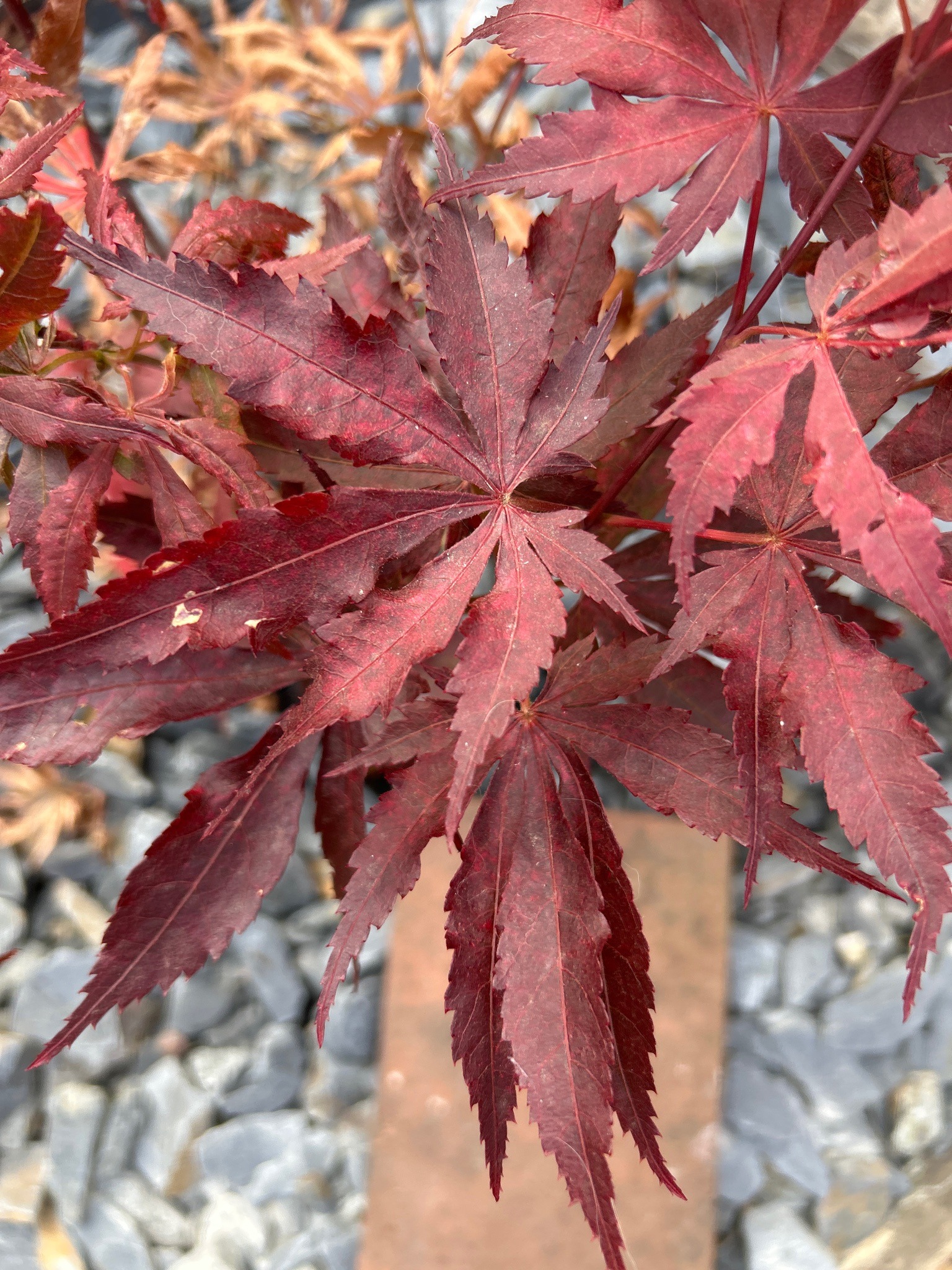
Japanese Maple
Acer palmatum
A deciduous shrub or small tree known for its elegant habit, delicate branches, and deeply lobed leaves that display vibrant red, purple, orange, or green coloration.
- Light
- Partial shade to full sun, ideally receiving 4 to 6 hours of morning sun with afternoon shade in hotter regions.
- Water
- Moderate water needs; requires consistent moisture, especially during dry spells. Allow the top inch of soil to dry slightly between waterings, and protect from drought stress to prevent leaf scorch.
- Growth
- Perennial woody deciduous tree or large shrub with a rounded, vase-shaped, or weeping habit. Typically reaches a mature height and spread of 15 to 25 feet for standard varieties, with a slow to moderate growth rate.
Care instructions
Provide partial shade or full sun in cooler climates, ensuring protection from harsh afternoon heat and drying winds. Water deeply and regularly to keep the soil consistently moist but never waterlogged. Apply a balanced, slow-release fertilizer in early spring as new growth begins, and mulch annually to retain moisture and regulate soil temperature.
Growing details
Sunlight
Partial shade to full sun, ideally receiving 4 to 6 hours of morning sun with afternoon shade in hotter regions.
Watering
Moderate water needs; requires consistent moisture, especially during dry spells. Allow the top inch of soil to dry slightly between waterings, and protect from drought stress to prevent leaf scorch.
Soil
Rich, well-draining loam or sandy soil with a slightly acidic to neutral pH range of 5.5 to 6.5.
Hardiness zone
USDA Hardiness Zones 5 to 8
Growth habit
Perennial woody deciduous tree or large shrub with a rounded, vase-shaped, or weeping habit. Typically reaches a mature height and spread of 15 to 25 feet for standard varieties, with a slow to moderate growth rate.
Bloom season
Spring; produces small, inconspicuous reddish-purple flowers in drooping clusters that are followed by winged samaras.
Propagation
Propagated primarily through softwood cuttings taken in summer, grafting onto rootstock in late winter, or occasionally from seeds, though named cultivars are usually grafted or grown from cuttings to maintain specific traits.
Common pests & issues
Susceptible to verticillium wilt, powdery mildew, leaf spot, and stem Canker. Pests include aphids, scale insects, and spider mites. Prevent issues by ensuring proper drainage, good air circulation, and avoiding overhead watering.
Similar species
Acer japonicum (Fullmoon Maple), which features rounder leaves with a higher number of lobes, and Acer shirasawanum (Shirasawa Maple), which typically has more rounded, fan-like leaves.