
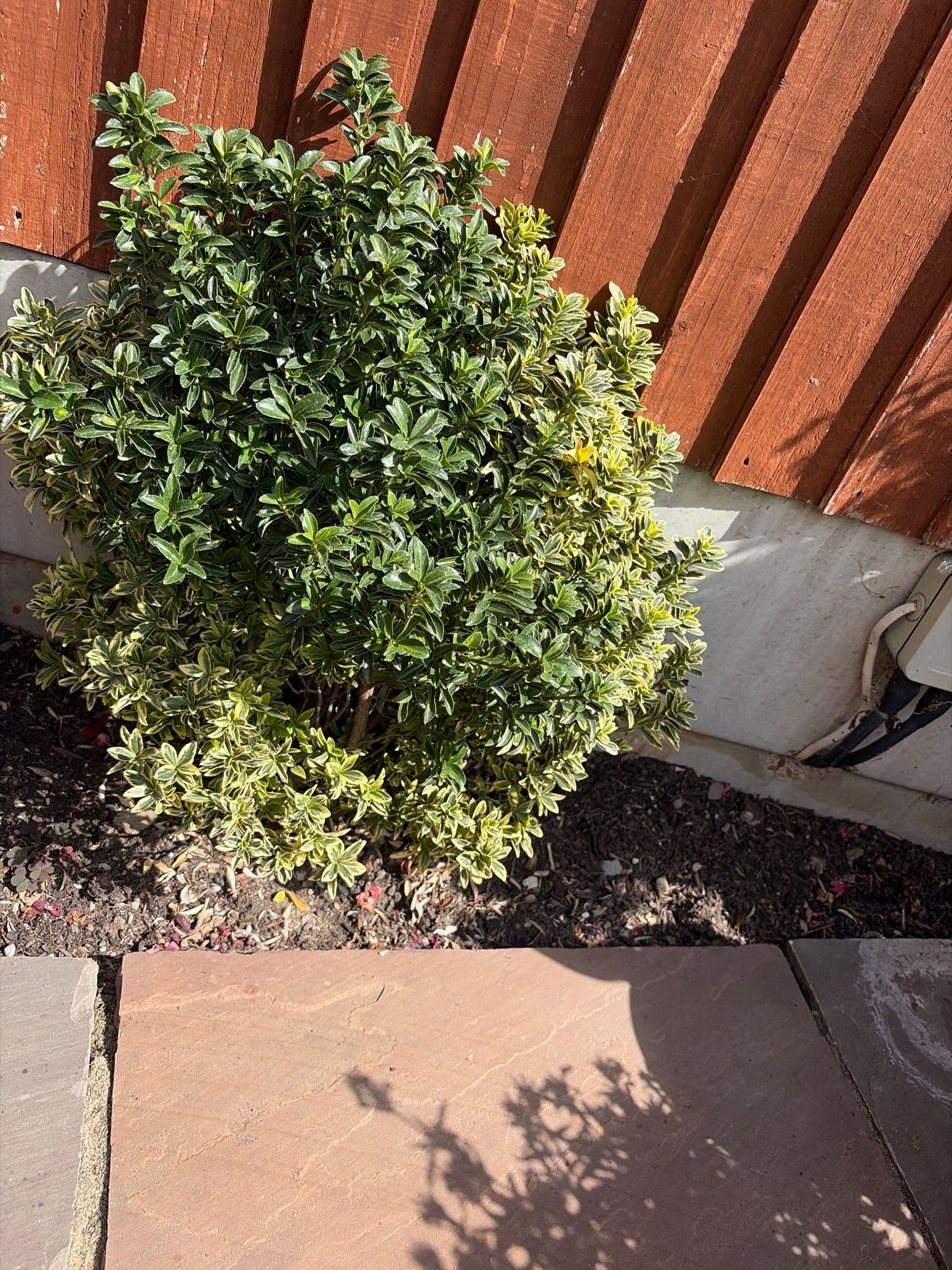
Japanese Spindle
Euonymus japonicus
A dense, upright evergreen shrub featuring glossy, dark green leaves, often with variegated margins of cream or yellow. It has a compact and bushy growth habit.
- Light
- Full sun to partial shade, approximately 6 hours or more of direct sunlight daily for optimal foliage color.
- Water
- Moderate watering needs. Allow the top few inches of soil to dry out between waterings. Drought tolerant once established.
- Growth
- Perennial evergreen shrub with a dense, upright, and rounded growth habit. Reaches mature heights of 6 to 10 feet with a spread of 4 to 6 feet, exhibiting a moderate growth rate.
Care instructions
Provide full sun to partial shade with well-draining soil. Water regularly during the first growing season to establish a deep root system, then reduce frequency as it develops drought tolerance. Apply a balanced, slow-release fertilizer in early spring.
Growing details
Sunlight
Full sun to partial shade, approximately 6 hours or more of direct sunlight daily for optimal foliage color.
Watering
Moderate watering needs. Allow the top few inches of soil to dry out between waterings. Drought tolerant once established.
Soil
Adaptable to a wide range of well-draining soils, including loam, clay, or sandy soils, with a preferred pH range between 6.0 and 7.5.
Hardiness zone
USDA Hardiness Zones 6 through 9
Growth habit
Perennial evergreen shrub with a dense, upright, and rounded growth habit. Reaches mature heights of 6 to 10 feet with a spread of 4 to 6 feet, exhibiting a moderate growth rate.
Bloom season
Inconspicuous, small greenish-white flowers bloom in late spring to early summer, followed by decorative capsules.
Propagation
Easily propagated through semi-hardwood stem cuttings taken in the summer, or through hardwood cuttings in the autumn.
Common pests & issues
Susceptible to scale insects, powdery mildew, and leaf spot. Prevent by ensuring good air circulation and avoiding overhead watering.
Similar species
Euonymus fortunei (Wintercreeper), which often exhibits a more vine-like or trailing habit compared to the strictly upright shrub form of Euonymus japonicus.