
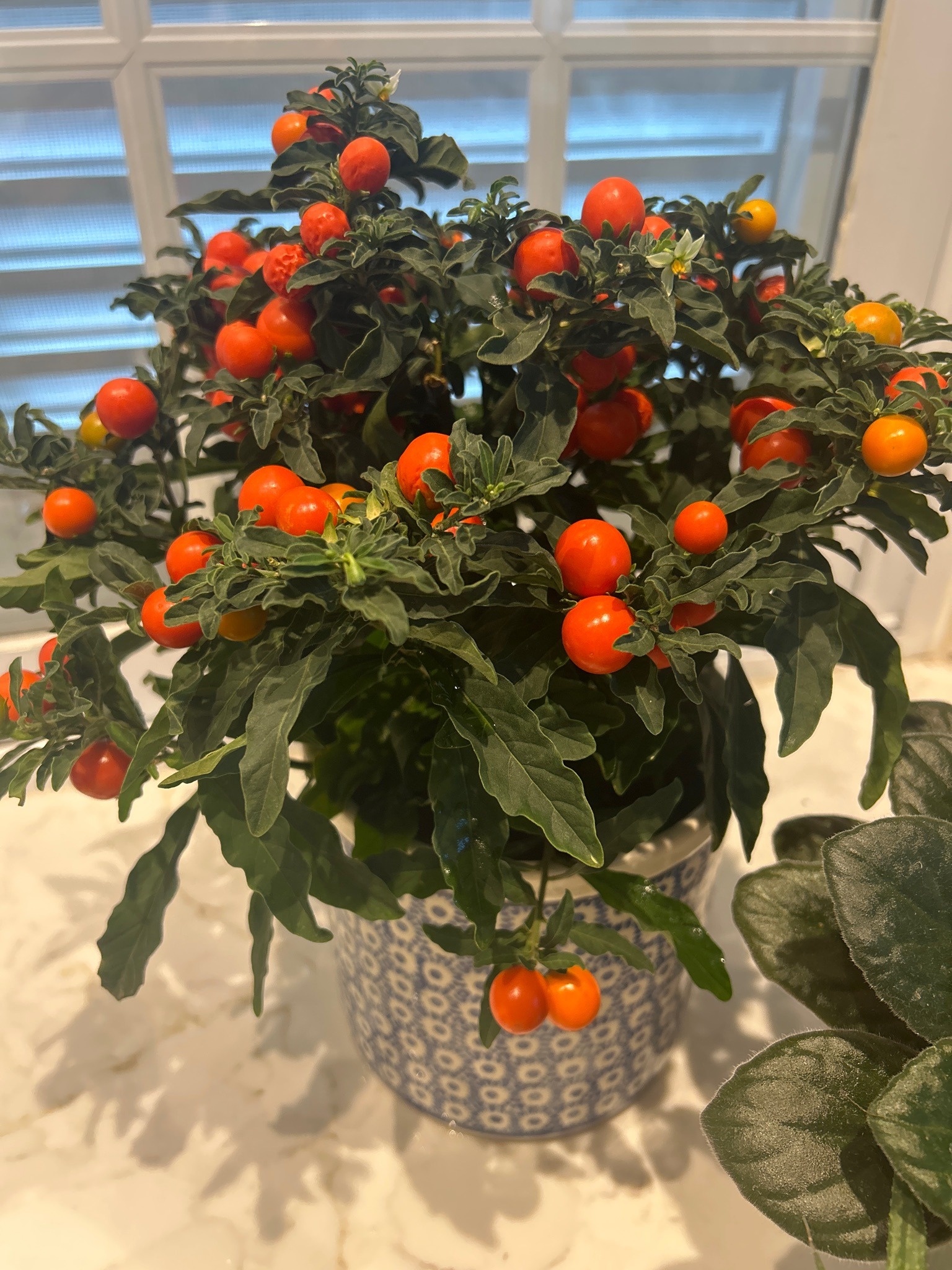
Jerusalem Cherry
Solanum pseudocapsicum
An evergreen shrub featuring dark green, glossy, lance-shaped leaves and abundant round, fleshy fruits that transition in color from green to yellow, orange, and bright red.
- Light
- Bright indirect light or partial sun, requiring at least 4 to 6 hours of bright light daily for optimal fruit development.
- Water
- Water thoroughly when the top inch of soil feels dry. Avoid letting the plant sit in standing water, and prevent complete soil drying to avoid leaf and fruit drop.
- Growth
- Perennial shrub grown as an ornamental, typically reaching a mature height and spread of 1 to 3 feet with a bushy, branching form.
Care instructions
Provide bright, indirect sunlight to partial sun and maintain consistently moist soil with good drainage. Feed monthly during the growing season with a balanced, water-soluble fertilizer.
Growing details
Sunlight
Bright indirect light or partial sun, requiring at least 4 to 6 hours of bright light daily for optimal fruit development.
Watering
Water thoroughly when the top inch of soil feels dry. Avoid letting the plant sit in standing water, and prevent complete soil drying to avoid leaf and fruit drop.
Soil
Well-draining potting mix rich in organic matter, with a preferred neutral to slightly acidic pH range of 6.0 to 6.8.
Hardiness zone
USDA zones 9 through 11, grown primarily as an annual or indoor potted plant in cooler climates.
Growth habit
Perennial shrub grown as an ornamental, typically reaching a mature height and spread of 1 to 3 feet with a bushy, branching form.
Bloom season
Blooms in spring to early summer with small, white, star-shaped flowers, followed by long-lasting colorful spherical fruits persisting through winter.
Propagation
Propagated easily from seeds harvested from mature fruits or through stem cuttings taken in spring or summer.
Common pests & issues
Susceptible to aphids, whiteflies, and spider mites. Over-watering can lead to root rot, while insufficient light may cause premature dropping of flowers and fruit.
Similar species
Winter Cherry (Solanum capsicastrum), which features slightly pubescent leaves and stems compared to the smoother foliage of Solanum pseudocapsicum.